Article Information

Authors:
Evangelia Demerouti1
Arnold B. Bakker2

Affiliations:
1Eindhoven University of Technology, Department of Industrial Engineering and Innovation Sciences,
The Netherlands

2Erasmus University Rotterdam, Department of Work and Organisational Psychology, Rotterdam,
The Netherlands

Correspondence to:
Evangelia Demerouti

Email:
e.demerouti@tue.nl

Postal address:
PO Box 513, 5600 MB Eindhoven, The Netherlands

How to cite this article:
Demerouti, E., & Bakker, A.B. (2011). The Job Demands–Resources model: Challenges for future research. SA Journal of Industrial Psychology/SA Tydskrif vir Bedryfsielkunde, 37(2), Art. #974, 9 pages. doi:10.4102/sajip.v37i2.974

Copyright Notice:
© 2011. The Authors. Licensee: OpenJournals Publishing. This work is licensed under the Creative Commons Attribution License.

ISSN: 0258-5200 (print)
ISSN: 2071-0768 (online)
The Job Demands–Resources model: Challenges for future research
In This Editorial...
Open Access
Abstract
Introduction
   • The Job DemandsResources model
      • Dual processes
      • Interactions between job demands and resources
Challenges for future research
   • Personal resources
   • Job demands as challenge and hindrance stressors
   • Integrating multilevel constructs in the JDR Mode
   • Diary studies
   • Linking the JDR model with objective health indicators
   • Measurement issues
   • Answering the question How high is high?
   • Job crafting
   • Overview of articles in this special issue
References
Abstract

Motivation: The motivation of this overview is to present the state of the art of Job Demands–Resources (JD–R) model whilst integrating the various contributions to the special issue.

Research purpose: To provide an overview of the JD–R model, which incorporates many possible working conditions and focuses on both negative and positive indicators of employee well-being. Moreover, the studies of the special issue were introduced.

Research design: Qualitative and quantitative studies on the JD–R model were reviewed to enlighten the health and motivational processes suggested by the model.

Main findings: Next to the confirmation of the two suggested processes of the JD–R model, the studies of the special issue showed that the model can be used to predict work-place bullying, incidences of upper respiratory track infection, work-based identity, and early retirement intentions. Moreover, whilst psychological safety climate could be considered as a hypothetical precursor of job demands and resources, compassion satisfaction moderated the health process of the model.

Contribution/value-add: The findings of previous studies and the studies of the special issue were integrated in the JD–R model that can be used to predict well-being and performance at work. New avenues for future research were suggested.

Practical/managerial implications: The JD–R model is a framework that can be used for organisations to improve employee health and motivation, whilst simultaneously improving various organisational outcomes.

Introduction

The Job Demands–Resources (JD–R) model is a theoretical framework that tries to integrate two fairly independent research traditions: the stress research tradition and the motivation research tradition. According to the JD–R model, job demands are initiators of a health impairment process and job resources are initiators of a motivational process. In addition, the model specifies how demands and resources interact, and predict important organisational outcomes. Previous research has shown that the assumptions of the model hold not only for self-reports but also for objective data. Moreover, studies have shown that the JD–R model can predict the experience of burnout and of work engagement (e.g. Demerouti, Bakker, Nachreiner, & Schaufeli, 2001; Schaufeli & Bakker, 2004). However, there are still several open questions related to the processes postulated in the model.

The purpose of this special issue is to bring together innovative studies on the JD–R model, which is relevant for both individuals and organisations at large. We were particularly interested in theory-guided studies that focus on the health impairment and motivational processes as well as possible moderators and mediators (cultural, organisational, and individual characteristics) of these processes. To a large extent this objective was achieved as we received a variety of submissions that add to our knowledge in several respects. The aim of the present editorial paper is threefold. First we will introduce the model. As a second step we will discuss several issues that to our opinion are essential for future research and practice related to the model. Finally, the editorial will end with an introduction of the different studies included in this special issue.

The Job Demands–Resources model
The main assumption of the Job Demands–Resources (JD–R) model (Bakker & Demerouti, 2007; Bakker, Demerouti, De Boer, & Schaufeli, 2003a; Bakker, Demerouti, Taris, Schaufeli, & Schreurs, 2003b; Demerouti, Bakker, Nachreiner, & Schaufeli, 2001) is that every occupation has its own specific risk factors associated with job-related stress. These factors can be classified in two general categories (i.e. job demands and job resources), thus constituting an overarching model that may be applied to various occupational settings, irrespective of the particular demands and resources involved. Job demands refer to those physical, psychological, social, or organisational aspects of the job that require sustained physical and/or psychological (cognitive and emotional) effort or skills and are therefore associated with certain physiological and/or psychological costs. Examples include high work pressure, an unfavourable physical environment and irregular working hours. Although job demands are not necessarily negative, they may turn into job stressors when meeting those demands require high effort from which the employee fails to recover adequately (Meijman & Mulder, 1998).

Job resources refer to those physical, psychological, social, or organisational aspects of the job that are either/or:

1. functional in achieving work goals
2. reduce job demands and the associated physiological and psychological costs
3. stimulate personal growth, learning, and development.

Hence, resources are not only necessary to deal with job demands, but they also are important in their own right. This corresponds with Hackman and Oldham’s (1980) job characteristics model that emphasises the motivational potential of job resources at the task level, including autonomy, feedback, and task significance. In addition, this agrees on a more general level with conservation of resources (COR) theory (Hobfoll, 2001) that states that the prime human motivation is directed towards the maintenance and accumulation of resources. Accordingly, resources are valued in their own right or because they are means to achieve or protect other valued resources. Job resources may be located at the macro, organisational level (e.g. salary or wages, career opportunities, job security), the interpersonal level (e.g. supervisor and coworker support, team climate), the specific job position (e.g. role clarity, participation in decision making), and at the level of the task (e.g. skill variety, task identity, task significance, autonomy, and performance feedback).

Dual processes
A second premise of the JD–R model is that two different underlying psychological processes play a role in the development of job-related strain and motivation (see Figure 1). The first is a process of health impairment, which suggests that demanding jobs or jobs with chronic job demands (e.g. work overload, emotional demands) exhaust employees’ mental and physical resources and may therefore lead to the depletion of energy (i.e. a state of exhaustion) and to health problems (e.g. general health and repetitive strain injury) (Bakker, Demerouti, & Schaufeli, 2003; Demerouti et al., 2000, 2001; Leiter, 1993). According to Hockey (1993), individuals use performance-protection strategies under the influence of environmental demands. Such strategies are the mobilisation of sympathetic activation (autonomic and endocrine) and increased subjective effort (use of active control in information processing). Even though the use of these strategies may inhibit decrements in primary task performance, according to Hockey’s theory, indirect degradation may be identified. Such degradation may take the form of strategy adjustments (narrowing of attention, increased selectivity, redefinition of task requirements), and fatigue after-effects (risky choices, high levels of subjective fatigue). The long-term effect of such compensatory strategies may be a draining of an individual’s energy, which could eventually result in a breakdown.

The second process proposed by the JD–R model is motivational in nature, whereby it is assumed that job resources have motivational potential and lead to high work engagement, low levels of cynicism and excellent performance (see also Figure 1). As follows from our definition, job resources may play an intrinsic motivational role because they foster employees’ growth, learning and development, or they may play an extrinsic motivational role because they are instrumental in achieving work goals. In the former case, job resources fulfil basic human needs (Deci & Ryan, 1985), such as the needs for autonomy (DeCharms, 1968), competence (White, 1959), and relatedness (Baumeister & Leary, 1995). For instance, proper feedback fosters learning, thereby increasing job competence, whereas decision latitude and social support satisfy the need for autonomy and the need to belong, respectively (see Van den Broeck, Vansteenkiste, De Witte, & Lens, 2008). Job resources may also play an extrinsic motivational role, because, according to the effort-recovery model (Meijman & Mulder, 1998), work environments that offer many resources foster the willingness to dedicate one’s efforts and abilities to the work task. In such a case it is likely that the task will be completed successfully and that the work goal will be attained. For instance, supportive colleagues and proper feedback from one’s superior increase the likelihood of being successful in achieving one’s work goals. In either case, be it through the satisfaction of basic needs or through the achievement of work goals, the presence of job resources leads to engagement, whereas their absence evokes a cynical attitude towards work (see Figure 1; Demerouti et al., 2001; Lewig, Xanthopoulou, Bakker, Dollard, & Metzer, 2007; Schaufeli, Bakker, & Van Rhenen, 2009).
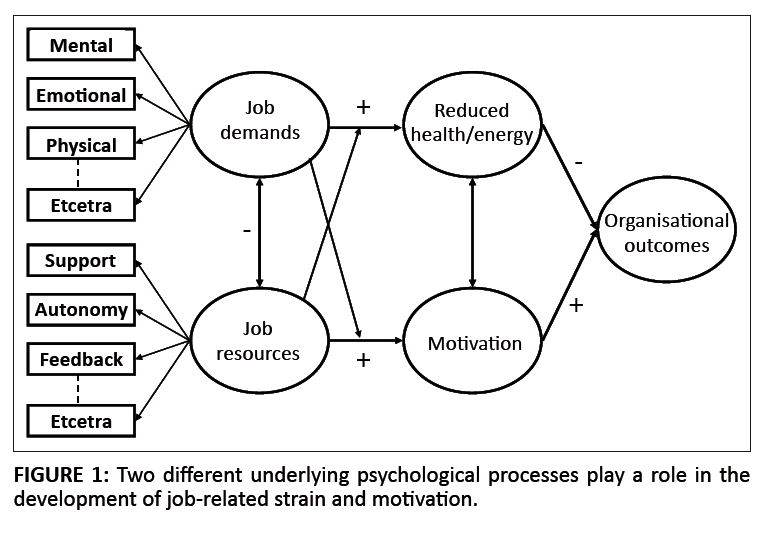
FIGURE 1: Two different underlying psychological processes play a role in the development of job-related strain and motivation.

Interactions between job demands and resources
Next to the suggested main effects of job demands and resources, the JD–R model proposes that the interaction between job demands and job resources is important for the development of job strain and motivation. Inherent in the definition of job resources is the assumption that these resources may buffer the impact of job demands on job strain, including burnout (Bakker, Demerouti, & Euwema, 2005; Bakker et al., 2003b; Xanthopoulou et al., 2007b). The buffering role of job resources is consistent with the Demand–Control Model (DCM; Karasek, 1998) and the Effort–Reward Imbalance Model (ERIM; Siegriest, 1996). Whereas the DCM states that control over the execution of tasks (autonomy) may buffer the impact of work overload on job stress; and the ERIM states that rewards may minimise the unfavourable effects of effort expedition, the JD–R model expands these views and states that different types of job demands and job resources may interact in predicting job strain. Which job demands and resources play a role in a certain organisation and a certain job function depends upon the specific job characteristics.

The buffer hypothesis is consistent with Kahn and Byosiere (1992), who argue that the buffering or interaction effect can occur between any pair of variables in the stress–strain sequence. They claim that properties of the work situation, as well as characteristics of the individual, can buffer the effects of a stressor. The buffering variable can reduce the tendency of organisational properties to generate specific stressors, alter the perceptions and cognitions evoked by such stressors, moderate responses that follow the appraisal process, or reduce the health-damaging consequences of such responses (Kahn & Byosiere, 1992, p. 622).

The final and more recent fourth proposition of the JD–R model is that job resources particularly influence motivation or work engagement when job demands are high. This represents the so-called coping hypothesis (Bakker, Hakanen, Demerouti, & Xanthopoulou, 2007; Bakker, Van Veldhoven, & Xanthopoulou 2010; Hakanen, Bakker, & Demerouti, 2005). To illustrate, Bakker et al. (2007) tested this hypothesis in a sample of Finnish teachers. It was predicted and found that job resources are most beneficial in maintaining work engagement under conditions of high job demands (e.g. pupil misbehaviour). For example, innovativeness, appreciation, and positive organisational climate boosted work engagement particularly when pupil misbehaviour was high. Similarly, Bakker et al. (2010) tested in a large heterogeneous sample of employees whether work attitudes (task enjoyment and organisational commitment) are most positive when job demands and job resources are both high. Results of moderated structural equation modelling analyses provided strong support for the hypothesis: 15 of the 16 hypothesised interactions were significant for task enjoyment and 13 of the 16 interactions were significant for organisational commitment. Job resources (skill utilisation, learning opportunities, autonomy, colleague support, leader support, performance feedback, participation in decision making, and career opportunities) predicted task enjoyment and organisational commitment particularly under conditions of high job demands (workload and emotional demands). This indicates that resources become most salient under demanding conditions. In other words, there is a need for a challenge (i.e. a demanding condition) in order for job resources to be translated into task enjoyment and work engagement. This is in line with Hobfoll (2002) who has argued that resource gain in itself has only a modest effect, but instead acquires its saliency in the context of resource loss. This implies that job resources gain their motivational potential particularly when employees are confronted with high job demands. In other words, the coping hypothesis suggests that under stressful conditions individuals will be more like to use resources as a coping mechanism or stress-reducing action.

Challenges for future research

Personal resources
An important extension of the JD–R model is the inclusion of personal resources. Xanthopoulou, Bakker, Demerouti and Schaufeli (2007) examined the role of three personal resources (self-efficacy, organisational-based self-esteem and optimism) in predicting exhaustion and work engagement. Results of structural equation modeling analyses showed that personal resources did not manage to offset the relationship between job demands and exhaustion. In contrast, personal resources were found to partly mediate the relationship between job resources and work engagement, suggesting that job resources foster the development of personal resources. Also the longitudinal study by Xanthopoulou et al. (2009) suggested that personal resources were reciprocal with job resources and work engagement over time. Thus, job resources predict personal resources and work engagement; and personal resources and work engagement, in turn, predict job resources. Although we do have evidence that personal resources can be conceptualised as mediator or outcome in the JD–R model, we expect that they might have an even more complex role in modifying the impact of the work environment into positive or negative outcomes. If we turn back to stress research, Lazarus and Folkman (1984) argued that people suffer from stress when they believe they lack the resources to deal with difficult events. They also noted the complex interaction between individuals and their environment and emphasised the role of cognitive processes and individual characteristics (such as appraisal and coping) that may affect the outcome of potentially stressful events. Illustrative of this idea is the study conducted by Riolli and Savicki (2003). These authors showed that information service workers’ personal resources like optimism were particularly beneficial when work resources were low. Other researchers have recognised additional factors that may affect stress, such as personality dimensions (Costa & McCrae, 1990). Avey, Luthans and Jensen (2009) suggest that psychological capital (i.e. the personal resources of self-efficacy, hope, optimism, and resilience) may be the key to understanding the variation in perceived symptoms of stress, as well as intentions to quit and job search behaviours better. Future research should therefore examine whether the complex interaction of individual resources with the work environment may take the form of three-way interactions between job demands, job resources, and personal resources so that personal resources qualify the two-way interactions between job demands and job resources. Thus, we propose that employees may be particularly at risk for burnout if confronted with high job demands and low job resources and if their personal resources – such as self-efficacy and optimism – are low. In addition, employees may be particularly engaged in their work and flourish if job demands and job resources are high, and if their personal resources – such as resilience and hope – are high as well.

Job demands as challenge and hindrance stressors
Job demands are defined as aspects of work that require effort and therefore are associated with costs. Although this definition does not imply that demands are necessarily bad, within the JD–R model the main role of demands is seen in the health impairment process. Recently, LePine, Podsakoff and LePine (2005) and Podsakoff et al. (2007) made a distinction between challenge stressors and hindrance stressors. Hindrance job stressors are defined as job demands or work circumstances that involve excessive or undesirable constraints that interfere with or inhibit an individual’s ability to achieve valued goals (Cavanough et al., 2000). This description is very similar to the definition of job demands within the JD–R model. Examples of hindrance job demands are role conflict, role overload, and role ambiguity. These job stressors are considered as ‘bad’. Stressors are defined as challenging when potentially promoting the personal growth and achievement of the employee (Podsakoff et al., 2007), which demonstrates a high similarity to the definition of job resources as stated in the JD–R model. Examples of challenge stressors are high levels of workload, time pressure, and responsibility (McCauley, Ruderman, Ohlott, & Marrow, 1994), which represent examples of job demands within the JD–R model. These demands have the potential to be seen as rewarding work experiences well worth the discomfort involved, and are therefore considered as ‘good’ stressors.

Van den Broeck, De Cuyper, De Witte, and Vansteenkiste, M. (in press) integrated the differentiation between job hindrances and job challenges in the JD–R model. Results of confirmatory factor analyses supported the differentiation between the two types of demands and job resources in two samples (N1 = 261 and N2 = 441). Further, structural equation modeling confirmed the hypotheses that job hindrances associate positively with exhaustion and negatively with vigour. Job resources displayed the reversed pattern of relations. Job challenges were unrelated to exhaustion and positively related to vigour.

Whether the differentiation between challenge and hindrance demands is valid is still unknown as there is not sufficient empirical evidence on this issue. Moreover, whether the differentiation between these two kinds of demands is valid for every job is still an unclear issue. It is, for instance, possible that high cognitive load is motivating for an academic job but demanding for a designer. Therefore, more research is necessary to clarify the role of the specific demands within the JD–R. To answer this question, it seems important to investigate various different jobs, using various measurement instruments for the demands and several measurement points (as finding a cross-sectional correlation has implications that are different from finding a lagged effect).

Integrating multilevel constructs in the JD–R Model
As scholars recognise that organisations are complex constellations consisting of different structural, functional or hierarchical levels, it is not surprising that organisational researchers have conceptualised several multilevel constructs, namely constructs that are meaningful across multiple levels of analysis. For instance, Lindsley, Brass and Thomas (1995) have conceptualised efficacy beliefs at the individual, group and organisational level and hypothesised that efficacy beliefs and performance are related in a similar way across levels. Other examples of multilevel constructs include affect (George, 1990) and creativity (Drazin, Glynn, & Kazanjian, 1999). Advantages of integrating multilevel constructs in research are that they can help to capture the complexity of organisational phenomena and develop more sophisticated theoretical models. Chen, Mathieu and Bliese suggest that:

… whenever researchers aggregate data over one or more facets (e.g. items, time, people, units) they must justify the procedure in terms of establishing an alignment between the nature of the construct, its measurement, and its analysis vis--vis other constructs of interests. (Chen et al., 2004, p. 275)

Whilst research on the JD–R model has been exclusively at the individual level, there are some attempts to integrate other levels of analysis as well. The first study on the JD–R model (Demerouti et al., 2001) tested the assumptions of the model on the individual level using self-report data and on the job function level using observer ratings for job demands and job resources and averaged scores (at the group level) for burnout. This study found similar relationships for both the individual and the group level. Moreover, individual scores on job demands and job resources as well as their outcomes have been used to predict team level outcomes like actual turnover (Bakker, Van Emmerik, & Van Riet, 2008) and daily team financial turnover (Xanthopoulou, Bakker, Demerouti, & Schaufeli, 2009b). Finally, Dollard and Bakker (2010) constructed a model of workplace psychosocial safety climate (PSC) to explain the origins of job demands and resources, worker psychological health, and employee engagement. PSC refers to policies, practices, and procedures for the protection of worker psychological health and safety. Organisation-level PSC predicted change in individual psychological health problems (psychological distress, emotional exhaustion) through its relationship with individual job demands (work pressure and emotional demands) and moderated the relationship between emotional demands and emotional exhaustion.

We applaud such attempts and encourage researchers to integrate multiple levels in their research using the JD–R model. This can be achieved not only by integrating predictors or outcomes from another level in the model, but also by looking whether constructs maintain their meaning across levels of analysis (i.e. isomorphic variables). It is, for instance, possible that a supportive team atmosphere is a clear resource on the individual level but on the team level it can represent a factor that restricts individual freedom. In this way, the same construct might have different functions on different levels of analysis. From a theoretical point of view, multilevel constructs result in a better understanding of psychological phenomena unfolding within organisations. From a practical point of view, knowledge gathered by following a multilevel approach can help guide the development of more effective interventions. For instance, detecting similarities or differences in the meaning of performance across levels of analysis can allow organisations to employ similar or different strategies for managing performance at the individual, group and organisational level.

Diary studies
Testing between-person variation as is performed in cross-sectional and longitudinal survey research is important because it highlights how employees differ in their general reactions to work, well-being, and performance. However, it is also important to take into account that working conditions and reactions to them may vary from day to day (Butler, Grzywacz, Bass, & Linney, 2005; Simbula, 2010). Such variations may explain why employees who are engaged in their jobs sometimes have ‘off-days’, or why employees who are usually exhausted feel satisfied on certain days. Diary studies enable us to examine, in addition to general predictors such as stable resources specified in the JD–R model (Demerouti et al., 2001), the more proximal predictors of outcomes like state work engagement or fatigue. Thus, this approach promises answers to questions, such as: When do persons feel engaged or exhausted? Are there specific situational features that have to be present during a specific day in order to feel engaged or exhausted? Knowledge about the more proximal situational and person-related predictors of JD–R outcomes, such as state-like or daily fluctuating experiences of work engagement or burnout tendencies, is crucial to create a setting that optimally supports positive states in volatile organisational environments.

Recently, Simbula (2010) conducted the first diary study that tests the dynamic nature of the JD–R model with regard to both motivational and health impairment processes. Specifically, this study examined whether daily fluctuations in coworkers’ support (i.e. a typical job resource) and daily fluctuations in work-family conflict (i.e. a typical demand) predicted day-levels of job satisfaction and mental health through work engagement and exhaustion, respectively. A total of 61 schoolteachers completed a general questionnaire and a daily survey over a period of five consecutive work-days. Consistent with the assumptions of the JD–R model, results showed that day-level work engagement mediated the impact of day-level coworkers’ support on day-level job satisfaction and day-level mental health, after controlling for general levels of work engagement and the outcome variables. Moreover, day-level exhaustion mediated the relationship between day-level work-family conflict and day-level job satisfaction and day-level mental health after general levels of exhaustion and the outcome variables had been controlled for.

Thus, Simbula’s (2010) study confirms that the assumptions of the JD–R model hold also on a day level. However, the findings of other diary studies do not completely overlap with those of studies using a between person approach. Although job demands have rarely been addressed as potential predictors of state-like work engagement, the diary study by Bakker, van Emmerik, Geurts, and Demerouti (2010) found that day-level workload was positively related to day-level state work engagement on days that employees felt recovered – suggesting that workload acted as a challenge stressor or demand. This means that although the assumptions of the JD–R model might apply on a longer term as well as on a daily level, the role of specific demands might be different depending on whether it is viewed from a the short-term or a long-term perspective. Daily demands can have positive effects on states like work engagement. In the longer run they may, however be damaging. Future studies are necessary to clarify such differences in proximal and distal processes in the context of the JD–R model.

Linking the JD–R model with objective health indicators
Until recently, researchers studying outcomes in the context of the JD–R model focused on interpersonal, attitudinal, and organisational consequences (Schaufeli & Enzmann, 1998). In the past decade, however, growing evidence has pointed to the fact that outcomes like burnout have negative repercussions for health as well. Previous reviews on this topic have mainly focused on burnout and the risk to mental health (see Leiter & Maslach, 2001; Schaufeli & Enzmann, 1998; Shirom, 2009). Melamed et al. (2006) in their review provided accumulated evidence suggesting that burnout might also pose a risk to physical health. Specifically, they provide evidence suggesting that even after adjusting for potential confounding variables, the relative risk (RR) associated with burnout, approached, was equal to, and sometimes (depending on the outcome studied) even exceeded the risk conferred by classical risk factors, such as age, body mass index (BMI), smoking, blood pressure, and lipid levels. The authors present evidence supporting several potential mechanisms linking burnout with ill health, including metabolic syndrome, deregulation of the hypothalamic–pituitary–adrenal axis along with sympathetic nervous system activation, sleep disturbances, systemic inflammation, impaired immunity functions, and poor health behaviours. Recent studies show that burnout is also related to an increased risk of future hospitalisation due to mental and cardiovascular disorders (Toppinen-Tanner, Ahola, Koskinen, & Vnnen, 2009), and the development of musculoskeletal pain over time (Melamed, 2009).

Other studies have reported that a lack of positive affect rather than heightened negative affect predicts mortality (Blazer & Hybels, 2004), and the development of disability (Ostir, Markides, Black, & Goodwin, 2000) in older adults. According to Steptoe, Wardle, Marmot (2005), two sets of mechanisms could theoretically mediate the relationship between affective states and physical health. Firstly, positive well-being might be associated with favourable health habits and prudent lifestyles. For example, cigarette smoking is associated with psychological distress (Jarvis, 2002), and depression and anxiety are inversely related to leisure-time physical activity (Biddle & Mutrie, 2001). The second possibility is that associations are mediated through psychobiological processes so that psychosocial factors might stimulate biological systems through central nervous system activation of autonomic, neuroendocrine, inflammatory, and immune responses. For instance, depression has been linked with increased levels of C-reactive protein and inflammatory cytokines (Panagiotakos et al., 2004), prolonged norepinephrine responses to stress (Gold, Zakowski, Valdimarsdottir, & Bovbjerg, 2004), and deficient immune responses after vaccination (Rosenkranz et al., 2003). Similarly, Steptoe et al. (2005) found that positive affect was inversely related to cortisol output and to heart rate throughout the day. Taken together, evidence suggests that affective outcomes of job demands and resources might be related to profiles of functioning in several biological systems and may therefore be relevant to the risk of development of physical illness. The challenge of future research is to examine not only the relationship between affective outcomes of the JD–R model and physical health but also to integrate the role of job demands and resources over time in such processes.

Measurement issues
Another important issue concerning the further development of the JD–R model is how the different components of the model should be operationalised. Specifically, is it important to develop a JD–R instrument that includes various demands, resources, health and motivational indicators and outcomes; or should the model be tested using different instruments? The first option would offer a universally applicable instrument including different components. The researcher could then select the dimensions to be measured in each specific study and depending on the focal job. For instance, whilst physical demands are relevant for a farmer, mental demands are more relevant for a teacher. Next to the high applicability, such an instrument has the advantage that it would facilitate the comparison of mean scores between different job functions and organisations. The use of different instruments in the various studies to capture demands and resources or the outcomes of the JD–R model has the advantage that the flexibility of the model is increased as different dimensions can be measured than those included in a universal instrument. Moreover, the validity of the model is underscored when the model assumptions are confirmed using different measurement instruments. With the increasing popularity of the model, future researchers and practitioners will be confronted with this dilemma even more often, and the answer could be somewhere in the middle, that is, the combination of both options.

Answering the question ‘How high is high?’
When conducting studies with the JD–R framework, organisations and employees are very interested to know whether the specific demands and resources are on such a risk level that they should undertake action. This question cannot be answered with the correlational analyses that are typically conducted with such studies. Whilst a researcher is interested in uncovering effects and relationships between variables (how high is the impact of A on B?), organisations need to know whether they are doing well or not (whether their score on A is high). Future researchers cannot ignore this need of organisations and should try to integrate the issue of cut-off scores of job demands and job resources in their research. There are several ways to achieve this. One way is to integrate odds ratios in the analysis. The odds ratio is the ratio of the odds in favour of getting the disease, if exposed, to the odds in favour of getting a disease, if not exposed (Ogunbanjo, 2004). In other words, it is a measure of association, which quantifies the relationship between an exposure and health outcome from a comparative study. The odds of an event are the probability of it occurring compared to the probability of it not occurring. Reporting the odds ratio or relative risk as a measure of association is typical in epidemiologic studies of etiologic risk factors and is now common in studies of predictive markers as well, although this is not without criticism (Pepe, Janes, Longton, Leisenring, Polly, & Newcomb, 2004). Although the odds ratio does not characterise a marker’s accuracy for classifying persons, its association with the relative risk has long made it valuable for characterising population variations in risk. A binary marker with a relative risk of 3, for example, can be used to identify a population with the risk factor that has three times the risk as the population without the risk factor. This method may be used to target prevention or screening strategies.

A second and related way is to conduct a clinical validation study. This method was applied by Schaufeli et al. (2001) to investigate the clinical validity of the MBI burnout measure (Maslach et al., 1996). More specifically, the authors compared the scores of a group of ‘burned out’ outpatients from a psychotherapeutic treatment centre specialised in work-related problems with a comparison ‘nonburned out’ group who was on treatment for problems other than burnout (e.g. panic disorders, or obsessive-compulsive disorder etc.) as well as with a sample of employees from different organisations. Based on the scores of the burned-out group, clinically validated empirical cut-off points could be determined for the Dutch version of the MBI instrument (Schaufeli & van Dierendonck, 2000). Such methodology could be extended and applied to uncover the meaningful cut-off scores for the job demands and job resources so that the critical risk values are recognised and highlighted.

Job crafting
Studies on the JD-R model have consistently shown that employees show the best job performance in challenging, resourceful work environments because such environments facilitate their work engagement (Bakker & Bal, 2010; Demerouti & Cropanzano, 2010). This implies that organisations should offer their employees sufficient job resources, including feedback, social support, and skill variety. Research indeed suggests that management can influence employees’ job demands and resources (Nielsen, Randall, Yarker, & Brenner, 2008), and may indirectly influence employee engagement and performance (Tims, Bakker, & Xanthopoulou, in press).

However, it may be equally important that employees mobilise their own job resources. Managers are not always available for feedback, and organisations that are confronted with economic turmoil may set other priorities. Under such conditions, it may be particularly important for employees to mobilise their own resources, and to show proactive behaviour. Parker and Ohly (2008) have argued that employees may actively change the design of their jobs by choosing tasks, negotiating different job content, and assigning meaning to their tasks or jobs. This process of employees shaping their jobs has been referred to as job crafting (Wrzesniewski & Dutton, 2001). Job crafting is defined as the physical and cognitive changes individuals make in their task or relational boundaries. Physical changes refer to changes in the form, scope or number of job tasks, whereas cognitive changes refer to changing how one sees the job.

Tims, Bakker and Derks (2010) recently defined job crafting as the changes employees may make regarding their job demands and job resources. This conceptualisation takes the JD–R model (Demerouti et al., 2001) as a starting point. According to Tims and her colleagues, job crafting can take the form of three different types of behaviours: increasing (structural or social) job resources; increasing job demands or challenges; and decreasing job demands. They argued that employees who optimise their work environment would report the highest levels of engagement. It would be very interesting to integrate job crafting in the JD–R model. It can be hypothesised that job crafting is the missing link in the reversed causal path from work engagement to future job demands and job resources (Bakker, in press).

Overview of articles in this special issue
This special issue includes a selected number of interesting articles that each tap into new directions in which research on Job Demands–Resources model might go. Idris, Dollard and Winefield expand the JD–R model by proposing psychosocial safety climate (PSC) as a precursor to job demands and job resources. As PSC theoretically influences the working environment, the authors hypothesise that PSC has an impact on performance via both health erosion (i.e. burnout) and motivational pathways (i.e. work engagement). This study was conducted in Malaysia, amongst 291 employees. Results indicated that PSC was negatively related to job demands and positively related to job resources. Job demands, in turn, predicted burnout (i.e. exhaustion and cynicism), whereas job resources predicted engagement. Both burnout and engagement were associated with performance. These findings suggest that JD–R model may be expanded to include PSC as an antecedent, and that the expanded JD–R model is largely valid in an Eastern, developing economy setting.

Schreurs, De Cuyper, Van Emmerik, Notelaers and De Witte examine the mechanisms through which job characteristics associate with early retirement intention, using the JD–R model as a theoretical framework. Two parallel processes were theorised to shape early retirement intention: a health impairment process (i.e. job demands → recovery need → early retirement intention) and a motivational process (i.e. job resources → work enjoyment → early retirement intention). Survey data were collected from a heterogeneous sample of 1812 older workers (age > 45). Results showed that job demands and job resources were both associated with work enjoyment, which was associated with early retirement intention. Recovery need did not add to the prediction of early retirement intention. This study suggests that – for early retirement intention – the motivational process is more prominent than the health impairment process.

Van den Broeck, Baillien, and De Witte aim to extend the outcomes examined in the JD–R model to a specific form of counterproductive interpersonal behaviour: workplace bullying. They expected job demands and job resources to relate to both perpetrators’ and actors’ reports of workplace bullying. Using questionnaire data of 749 Flemish employees they found that neither job demands nor job resources showed a main effect on perpetrators’ reports of bullying. Job demands and job resources however interacted: rather unexpectedly, the positive association between job demands and perpetrators’ reports of bullying was particularly strong under the condition of high job resources. Furthermore, job demands related positively to targets’ reports of bullying, and job resources negatively. Emotional exhaustion (partially) mediated these associations. These results suggest that workplace bullying may indeed be reduced by good job design, that is, by limiting the job demands and increasing job resources.

De Braine and Roodt explore possible differences in the JD–R model as predictor of overall work engagement, dedication only and work-based identity, through comparative predictive analyses. A survey was conducted amongst a population of 2429 employees. The JD–R model explained a greater amount of variance in dedication than in work engagement. It, however, yielded the greatest amount of explained variance in work-based identity, with job resources being its strongest predictor. Managing job resources and demands can improve identification and work engagement levels. This study builds on the literature of the JD–R model by showing that it can be used to predict work-based identity. Doosje, De Goede, Van Doornen and Van Den Schoot extend our understanding of the role of traditional variables like job demands and job control with humorous coping styles and affective variables with regard to the explanation of the frequency of upper respiratory tract infection (URTI). Using a sample of 2094 employees they found that job demands were indirectly related to the frequency of URTI, mediated by their relationships with job control and negative job-related affect. Generic and response-focused humorous coping were less relevant for the explanation of the frequency of URTI than the presumably ‘healthy’ antecedent-focused humorous coping style. The latter showed a negative association with negative job-related affect. The frequency of URTI was better predicted by job control and negative job-related affect than by humorous coping. Although it was shown that healthy humorous coping does contribute to decreases in URTI; job demands, job resources and negative affective state seem the most important predictors.

Finally, Tremblay and Messervey examine the role of compassion satisfaction, conceptualised as a personal resource, in buffering the relationship between job demands and job strain. Accordingly, four demanding aspects of the job (i.e. role overload, insufficiency, ambiguity, and conflict) and one personal resource (i.e. compassion satisfaction) were used to test the central hypothesis that the interaction between (high) job demands and (low) personal resources produces the highest levels of anxiety and depression as indicators of job strain. The authors tested these hypotheses amongst 122 military chaplains. Results showed that compassion satisfaction moderated the relationship between job demands and job strain. More specifically, when compassion satisfaction was high, the effect of role overload on job strain was significantly reduced. However, the relationships between the other three role stressors and job strain were not offset by compassion satisfaction.

We hope that this special issue will inspire and encourage researchers to expand their research horizon to conduct research within the Job Demands–Resources model.

References

Avey, J.M., Luthans, F., & Jensen, S. M. (2009). Psychological capital: A positive resource for combating employee stress and turnover. Human Resource Management, 48, 677–693.

Bakker, A.B. (2010). Engagement and job crafting: Engaged employees create their own great place to work. In S. Albrecht (Ed.), Handbook on employee engagement (pp. 229–244).

Bakker, A.B., & Bal, P.M. (2010). Weekly work engagement and performance: A study among starting teachers. Journal of Occupational and Organisational Psychology, 83, 189–206. doi:10.1348/096317909X402596

Bakker, A.B., & Demerouti, E. (2007). The Job Demands-Resources model: State of the art. Journal of Managerial Psychology, 22, 309–328.

Bakker, A.B., Demerouti, E., & Euwema, M.C. (2005). Job resources buffer the impact of job demands on burnout. Journal of Occupational Health Psychology, 10, 170–180. doi:10.1037/1076–8998.10.2.170, PMid:15826226

Bakker, A.B., Demerouti, E., De Boer, E., & Schaufeli, W.B. (2003a). Job demands and job resources as predictors of absence duration and frequency. Journal of Vocational Behavior, 62, 341–356. doi:10.1016/S0001–8791(02)00030–1

Bakker, A.B., Demerouti, E., & Schaufeli, W.B. (2003). Dual processes at work in a call centre: An application of the Job Demands – Resources model. European Journal of Work and Organizational Psychology, 12, 393–417. doi:10.1080/13594320344000165

Bakker, A.B., Demerouti, E., Taris, T., Schaufeli, W.B., & Schreurs, P. (2003). A multigroup analysis of the Job Demands – Resources model in four home care organisations. International Journal of Stress Management, 10, 16–38. doi:10.1037/1072–5245.10.1.16

Bakker, A.B., Van Emmerik, H., & Van Riet, P. (2008). How job demands, resources, and burnout predict objective performance: A constructive replication. Anxiety, Stress, and Coping, 21, 309–324. doi:10.1080/10615800801958637

Bakker, A.B., Van Emmerik, H., Demerouti, E., & Geurts, S. (2010). Recovery turns job demands into challenges: A diary study on work engagement and performance. Unpublished manuscript.

Bakker, A.B., Van Veldhoven, M.J.P.M., & Xanthopoulou, D. (2010). Beyond the Demand-Control model: Thriving on high job demands and resources. Journal of Personnel Psychology, 9, 3–16. doi:10.1027/1866–5888/a000006

Baumeister, R.F., & Leary, M.R. (1995). The need to belong: Desire for interpersonal attachments as a fundamental human motivation. Psychological Bulletin, 117, 497–529. doi:10.1037/0033–2909.117.3.497, PMid:7777651

Biddle, S.J.H., & Mutrie, N. (2001). Psychology of physical activity. London: Routledge.

Blazer, D.G., & Hybels, C.F. (2004). What symptoms of depression predict mortality in community–dwelling elders? Journal of the American Geriatrics Society, 52, 2052–2056. doi:10.1111/j.1532–5415.2004.52564.x, PMid:15571541

Butler, A.B., Grzywacz, J.G., Bass, B.L., & Linney, K.D. (2005). Extending the demands–control model: A daily diary study of job characteristics, work–family conflict and work–family facilitation. Journal of Occupational and Organizational Psychology, 78, 155169. doi:10.1348/096317905X40097

Cavanaugh, M.A., Boswell, W.R., Roehling, M.V., & Boudreau, J.W. (2000). An empirical examination of self-reported work stress among U.S. managers. Journal of Applied Psychology, 85, 65–74. doi:10.1037/0021–9010.85.1.65, PMid:10740957

Chen, G., Mathieu, J.E., & Bliese, P.D. (2004) A Framework for Conducting Multilevel Construct Validation. In F.J. Dansereau & F. Yamarino (eds.). Research in Multilevel Issues: Multilevel Issues in Organizational Behavior and Processes vol. 3, (pp. 273–303). Elsevier: Oxford UK.

Costa Jr, P.T., & McCrae, R.R. (1990). Personality disorders and the five-factor model of personality. Journal of Personality Disorders, 4, 362–371.

DeCharms, R. (1968). Personal causation. New Jersey: Lawrence Erlbaum Associates.

Deci, E.L., & Ryan, R.M. (1985). Intrinsic motivation and self-determination in human behavior. New York: Plenum Press.

Demerouti, E., Bakker, A.B., Nachreiner, F., & Schaufeli, W.B. (2000). A model of burnout and life satisfaction among nurses. Journal of Advanced Nursing, 32, 454–464.

Demerouti, E., & Cropanzano, R. (2010). From thought to action: Employee work engagement and job performance. In A.B. Bakker & M.P. Leiter (Eds.), Work engagement: A handbook of essential theory and research (pp. 147–163). New York: Psychology Press.

Demerouti, E., Bakker, A.B., Nachreiner, F., & Schaufeli, W.B. (2001). The job demands–resources model of burnout. Journal of Applied Psychology, 86, 499–512. doi:10.1037/0021–9010.86.3.499, PMid:11419809

Dollard, M.F., & Bakker, A.B. (2010). Psychosocial safety climate as a precursor to conducive work environments, psychological health problems, and employee engagement. Journal of Occupational and Organizational Psychology, 83, 579–599. doi:10.1348/096317909X470690

Drazin, R., Glynn, M.A., & Kazanjian, R.K. (1999). Multilevel theorizing about creativity in organizations: A sensemaking perspective. Academy of Management Review, 24, 286–307. doi:10.2307/259083

George, J.M. (1990) Personality, affect, and behaviour in groups. Journal of Applied Psychology, 75, 107–116. doi:10.1037/0021–9010.75.2.107

Gold, S.M., Zakowski, S.G., Valdimarsdottir, H.B., & Bovbjerg, D.H. (2004). Higher Beck depression scores predict delayed epinephrine recovery after acute psychological stress independent of baseline levels of stress and mood. Biological Psychology, 67, 261–273. doi:10.1016/j.biopsycho.2003.12.001, PMid:15294385

Hackman, J. R., & Oldham, G.R. (1980). Work redesign. Reading, MA: Addison–Wesley.

Hakanen, J.J., Bakker, A.B., & Demerouti, E. (2005). How dentists cope with their job demands and stay engaged: The moderating role of job resources. European Journal of Oral Sciences, 113, 479–487. doi:10.1111/j.1600-0722.2005.00250.x, PMid:16324137

Hobfoll, S.E. (2001). The influence of culture, community, and the nested-self in the stress process: Advancing conservation of resources theory. Applied Psychology: An International Review, 50, 337–370. doi:10.1111/1464–0597.00062

Hobfoll, S.E. (2002). Social and psychological resources and adaptation. Review of General Psychology, 6, 307–324. doi:10.1037/1089–2680.6.4.307

Hockey, G.R.J. (1993). Cognitive–energetical control mechanisms in the management of work demands and psychological health. In A. Baddely & L. Weiskrantz (Eds.), Attention: Selection, awareness, and control (pp. 328–345). Oxford: Clarendon Press.

Jarvis, M. (2002) Smoking and stress. In S.A. Stansfeld, & M. Marmot (eds.), Stress and the Heart (pp. 150–157). London: BMJ Books.

Karasek, R.A. (1998). Demand/Control Model: A social, emotional, and physiological approach to stress risk and active behaviour development. In J.M. Stellman (Ed.), Encyclopaedia of occupational health and safety (pp. 34.6–34.14). Geneva: ILO.

Lazarus, R.S., & Folkman, S. (1984). Stress, appraisal, and coping. New York: Springer.

Leiter, M.P. (1993). Burnout as a developmental process: Consideration of models. In W.B. Schaufeli, C. Maslach & T. Marek (Eds.), Professional burnout: Recent developments in theory and research (pp. 237–250). Washington, DC: Taylor & Francis.

Leiter, M.P., & Maslach, C. 2001. Burnout and quality in a speed–up world. Journal for Quality & Participation, 24, 48–51.

LePine, J.A., Podsakoff, N.P., & LePine, M.A. (2005). A meta–analytic test of the challenge stressor-hindrance stressor framework: An explanation for inconsistent relationships among stressors and performance. Academy of Management Journal, 48, 764–775.

Lewig, K., Xanthopoulou, D., Bakker, A.B., Dollard, M., & Metzer, J. (2007). Burnout and connectedness among Australian volunteers: A test of the Job Demands–Resources model. Journal of Vocational Behavior, 71, 429–445. doi:10.1016/j.jvb.2007.07.003

Lindsley, D.H., Brass, D.J., & Thomas, J.B. (1995) Efficacy–performance spirals: A multilevel perspective. Academy of Management Review, 20, 645–678. doi:10.2307/258790

Maslach, C., Jackson, S.E., & Leiter, M.P. (1996). MBI: The Maslach Burnout Inventory: Manual. Palo Alto: Consulting Psychologists Press.

McCauley, C.D., Ruderman, M.N., Ohlott, P.J., & Morrow, J.E. (1994). Assessing the developmental components of managerial jobs. Journal of applied psychology, 79, 544–560. doi:10.1037/0021–9010.79.4.544

Meijman, T.F., & Mulder, G. (1998). Psychological aspects of workload. In P.J. Drenth, H. Thierry, & C.J. de Wolff (Eds.), Handbook of Work and Organisational Psychology (2nd ed.; pp. 5–33). Hove, UK: Erlbaum.

Melamed, S. (2009). Burnout and risk of regional musculoskeletal pain: A prospective study of apparently healthy employed adults. Stress and Health, 25, 313– 321. doi:10.1002/smi.1265

Melamed, S., Shirom, A., Toker, S., Berliner, S., & Shapira, I. (2006). Burnout and risk of cardiovascular disease: Evidence, possible causal paths, and promising research directions. Psychological Bulletin, 132, 327–353. doi:10.1037/0033–2909.132.3.327, PMid:16719565

Nielsen, K., Randall, R., Yarker, J., & Brenner, S.O. (2008). The effects of transformational leadership on followers’ perceived work characteristics and psychological well–being: A longitudinal study. Work & Stress, 22, 16–32. doi:10.1080/02678370801979430

Ogunbanjo, G.A. (2004). Making sense of statistics for family practitioners: ‘What is odds ratio?’ South African Family Practice, 46, 44.

Ostir, G.V., Markides, K.S., Black, S.A., & Goodwin, J.S. (2000). Emotional well-being predicts subsequent independent functioning and survival. Journal of the American Geriatrics Society, 48, 473–478.

Panagiotakos, D.B., Pitsavos, C., Chrysohoou, C., Tsetsekou, E., Papageorgiou, C., Christodoulou, G., & Stefanadis, C. (2004). Inflammation, coagulation, and depressive symptomatology in cardiovascular disease-free people; the ATTICA study. European. Heart Journal, 25, 492–499. doi:10.1016/j.ehj.2004.01.018, PMid:15039129

Parker, S.K., & Ohly, S. (2008). Designing motivating jobs. In R. Kanfer, G. Chen & R. Pritchard (Eds.), Work motivation: Past, present, and future (pp. 233–284). SIOP Organizational Frontiers Series.

Pepe, M.S., Janes, H., Longton, G., Leisenring, W., & Newcomb, P. (2004). Limitations of the odds ratio in gauging the performance of a diagnostic, prognostic, or screening marker. American Journal of Epidemiology, 159, 882–890. doi:10.1093/aje/kwh101, PMid:15105181

Podsakoff, N.P., LePine, J.A., & LePine, M.A. (2007). Differential challenge stressor–hindrance stressor relationships with job attitudes, turnover intentions, turnover and withdrawal behavior: A meta–analysis, Journal of Applied Psychology, 92, 438–454. doi:10.1037/0021–9010.92.2.438, PMid:17371090

Riolli, L., & Savicki, V. (2003). Optimism and coping as moderators of the relationship between work resources and burnout in information service workers. International Journal of Stress Management, 10, 235–252. doi:10.1037/1072-5245.10.3.235

Rosenkranz, M.A., Jackson, D.C., Dalton, K.M., Dolski, I., Ryff, C.D., Singer, B.H., Muller, D., Kalin, N.H., & Davidson, R.J. (2003). Affective style and in vivo immune response: Neurobehavioral mechanisms. Proceedings of the National Academy of S ciences of the United States of America, 100, 11148–11152. doi:10.1073/pnas.1534743100, PMid:12960387, PMid:196942

Schaufeli, W.B., & Bakker, A.B. (2004). Job demands, job resources, and their relationship with burnout and engagement: A multi–sample study. Journal of Organizational Behavior, 25, 293–315.

Schaufeli, W.B., Bakker, A.B., Schaap, C., Kladler, A., & Hoogduin, C.A.L. (2001). On the clinical validity of the Maslach Burnout Inventory and the Burnout Measure. Psychology & Health, 16, 565–582. doi:10.1080/08870440108405527

Schaufeli, W.B., Bakker, A.B., & Van Rhenen, W. (2009). How changes in job demands and resources predict burnout, work engagement, and sickness absenteeism. Journal of Organizational Behavior, 30, 893–917. doi:10.1002/job.595

Schaufeli, W.B., & Enzmann, D. (1998). The burnout companion to study and practice: A critical analysis. Washington, DC: Taylor & Francis.

Schaufeli, W.B., & Van Dierendonck, D. (2000). UBOS—Utrechtse Burnout Schaal. Handleiding [UBOS—Test Manual]. Lisse. The Netherlands: Swets Test Services.

Shirom, A. (2009). Editorial; Burnout and health: Expanding our knowledge. Stress and Health, 25, 281–285. doi:10.1002/smi.1283

Shirom, A. (2009). Epilogue: mapping future research on burnout and health. Stress and Health, 25, 375–380. doi:10.1002/smi.1284

Siegrist J. (1996). Adverse health effects of high effort-low reward conditions. Journal of Occupational Health Psychology, 1, 27–41. doi:10.1037/1076–8998.1.1.27, PMid:9547031

Simbula, S. (2010). Daily fluctuations in teachers’ well–being: A diary study using the Job Demands–Resources model. Anxiety, Stress & Coping: An International Journal, 23, 563–584.

Steptoe, A., Wardle, J., & Marmot, M. (2005). Positive affect and health–related neuroendocrine, cardiovascular, and inflammatory processes. Proceedings of the National Academy of Sciences, 102, 6508–6512. doi:10.1073/pnas.0409174102, PMid:15840727, PMid:1088362

Tims, M., Bakker, A.B., & Derks, D. (2010). The development and validation of the job crafting scale. Manuscript submitted for publication.

Tims, M., Bakker, A.B., & Xanthopoulou, D. (in press). Do transformational leaders enhance their followers’ work engagement? The Leadership Quarterly.

Toppinen-Tanner, S., Ahola, K., Koskinen, A., & Vnnen, A. (2009). Burnout predicts hospitalization for mental and cardiovascular disorders: 10-year prospective results from industrial sector. Stress and Health, 25, 287–296. doi:10.1002/smi.1282

Van den Broeck, A., Vansteenkiste, M., De Witte, H., & Lens, W. (2008). Explaining the relationships between job characteristics, burnout and engagement: The role of basic psychological need satisfaction. Work & Stress, 22, 277–294.

Van den Broeck, A., De Cuyper, N., De Witte, H., & Vansteenkiste, M. (in press). Not all job demands are equal: Differentiating job hindrances and job challenges in the Job Demands–Resources model . European Journal of Work and Organizational Psychology. doi:10.1080/02678370802393672

White, R. (1959). Motivation reconsidered: The concept of competence. Psychological Review, 66, 297–333. doi:10.1037/h0040934, PMid:13844397

Wrzesniewski, A., & Dutton, J. E. (2001). Crafting a job: Revisioning employees as active crafters of their work. Academy of Management Review, 26, 179–201. doi:10.2307/259118

Xanthopoulou, D. Bakker, A.B., Demerouti, E., & Schaufeli, W.B. (2009a). Reciprocal relationships between job resources, personal resources, and work engagement. Journal of Vocational Behavior, 74, 235–244. doi:10.1016/j.jvb.2008.11.003

Xanthopoulou, D., Bakker, A.B., Demerouti, E., & Schaufeli, W.B. (2009b). Work engagement and financial turnover: A diary study on the role of job and personal resources. Journal of Occupational and Organizational Psychology, 82, 183–200. doi:10.1348/096317908X285633

Xanthopoulou, D., Bakker, A.B., Demerouti, E., Schaufeli, W.B. (2007a). The role of personal resources in the job demands-resources model. International Journal of Stress Management, 14, 121–141. doi:10.1037/1072–5245.14.2.121

Xanthopoulou, D., Bakker, A.B., Dollard, M.F., Demerouti, E., Schaufeli, W.B., Taris, T.W., & Schreurs, P.J.G. (2007b). When do job demands particularly predict burnout? The moderating role of job resources. Journal of Managerial Psychology, 22, 766–786. doi:10.1108/02683940710837714


Crossref Citations

1. Engaged Versus Workaholic Employees Job Crafting Behavior: The Moderating Role of Perceived Organization Support
Sadia Ishaque, Khawaja Khalid Mehmood
Sustainable Business and Society in Emerging Economies  vol: 3  issue: 4  first page: 591  year: 2021  
doi: 10.26710/sbsee.v3i4.2092

2. Professional status and well-being in healthcare organizations
Andrea Tomo, Stefania De Simone
Health Services Management Research  vol: 33  issue: 1  first page: 43  year: 2020  
doi: 10.1177/0951484819885053

3. Developing a tool for disability accommodation complexity: A sequential mixed study
Mohammad Shahin Alam, DuckJung Shin
Work  vol: 74  issue: 2  first page: 575  year: 2023  
doi: 10.3233/WOR-210988

4. Effects of self‐rated workload and nurse staffing on work engagement among nurses: A cross‐sectional survey
Limin Wang, Hongbo Chen, Qiaoqin Wan, Ting Cao, Xu Dong, Xiuxiu Huang, Han Lu, Shaomei Shang
Journal of Nursing Management  vol: 29  issue: 5  first page: 1329  year: 2021  
doi: 10.1111/jonm.13274

5. Influence of role overload on the intellectual stimulation and self-efficacy of public employees according to the hierarchical level
Ana Martínez-Díaz, Pedro A. Díaz-Fúnez, Carmen Salvador-Ferrer, Juan Llopis-Marín, Brizeida Hernández-Sánchez, Miguel Ángel Mañas-Rodríguez
Journal of General Management  year: 2025  
doi: 10.1177/03063070251341004

6. The job demands-resources model and the international work context – a systematic review
Lucy T.B. Rattrie, Markus G. Kittler
Journal of Global Mobility  vol: 2  issue: 3  first page: 260  year: 2014  
doi: 10.1108/JGM-06-2014-0018

7. Unveiling the key drivers of continuity in the Indian IT domain: an integrated IRP-TISM approach
Areeba Khan, Saboohi Nasim
The TQM Journal  vol: 38  issue: 2  first page: 324  year: 2026  
doi: 10.1108/TQM-11-2023-0362

8. Job Demands and Resources as Predictors of Burnout Dimensions in Special Education Teachers
Vesna R. Jovanović, Čedo Miljević, Darko Hinić, Dragica Mitrović, Slađana Vranješ, Biljana Jakovljević, Sanja Stanisavljević, Ljiljana Jovčić, Katarina Pavlović Jugović, Neda Simić, Goran Mihajlović
European Journal of Investigation in Health, Psychology and Education  vol: 15  issue: 12  first page: 258  year: 2025  
doi: 10.3390/ejihpe15120258

9. In Search of the Holy Grail in Public Service: A Study on the Mediating Effect of Public Service Motivation on Organizational Politics and Outcomes
Rowena Clemino Alcoba, Boon-anan Phinaitrup
International Journal of Public Administration  vol: 43  issue: 1  first page: 73  year: 2020  
doi: 10.1080/01900692.2019.1650280

10. Spoiling for a fight: A relational model of daily work‐family balance satisfaction
Min (Maggie) Wan, Margaret A. Shaffer, Romila Singh, Yejun Zhang
Journal of Occupational and Organizational Psychology  vol: 95  issue: 1  first page: 60  year: 2022  
doi: 10.1111/joop.12368

11. The effect of job and personal demands and resources on healthcare workers’ wellbeing: A cross-sectional study
Consuela Cheriece Yousef, Ali Farooq, Gigi Amateau, Laila Carolina Abu Esba, Keisha Burnett, Omar Anwar Alyas, Othman A. Alfuqaha
PLOS ONE  vol: 19  issue: 5  first page: e0303769  year: 2024  
doi: 10.1371/journal.pone.0303769

12. Does mindfulness matter on employee outcomes? Exploring its effects via perceived stress
Ilgin Sentin, Selin Metin Camgoz, Pinar Bayhan Karapinar, Eren Miski Aydin, Ozge Tayfur Ekmekci
BMC Psychology  vol: 13  issue: 1  year: 2025  
doi: 10.1186/s40359-025-02626-y

13. The Impact of Job Expectations, Workload, and Autonomy on Work-Related Stress Among Prison Wardens in the United States
Mara Schiff, Leslie Leip
Criminal Justice and Behavior  vol: 46  issue: 1  first page: 136  year: 2019  
doi: 10.1177/0093854818802876

14. A Review on the Impact of Workplace Culture on Employee Mental Health and Well-Being
Elvira Monteiro, James Joseph
International Journal of Case Studies in Business, IT, and Education  first page: 291  year: 2023  
doi: 10.47992/IJCSBE.2581.6942.0274

15. The impact of job and family demands on partner’s fatigue: A study of Japanese dual-earner parents
Mayumi Watanabe, Akihito Shimazu, Arnold B. Bakker, Evangelia Demerouti, Kyoko Shimada, Norito Kawakami, Daisuke Nishi
PLOS ONE  vol: 12  issue: 2  first page: e0172291  year: 2017  
doi: 10.1371/journal.pone.0172291

16. Sometimes It Drains, Sometimes It Sustains: The Dual Role of the Relationship with Students for University Professors
Mara Martini, Gloria Guidetti, Sara Viotti, Barbara Loera, Daniela Converso
BioMed Research International  vol: 2019  first page: 1  year: 2019  
doi: 10.1155/2019/9875090

17. Research on the effect of platform workers' algorithmic stigma on work engagement: A double-moderated mediation model
Tingting Tu, Chenhui Zhao, Hongyi Li, Rong Hu
Acta Psychologica  vol: 264  first page: 106454  year: 2026  
doi: 10.1016/j.actpsy.2026.106454

18. Service-oriented job crafting for employee well-being in hotel industry: a job demands-resources perspective
Yustisia Kristiana, Rosdiana Sijabat, Niko Sudibjo, Innocentius Bernarto
Cogent Business & Management  vol: 12  issue: 1  year: 2025  
doi: 10.1080/23311975.2025.2463816

19. [Proposal of a method for assessing burnout risk in teachers: the VA.RI.B.O (VAlutazione RIschio Burn-Out)]
Francesco Chirico, Giuseppe Taino, Nicola Magnavita, Ines Giorgi, Giuseppe Ferrari, Maria Carmela Mongiovì, Marcello Imbriani
Giornale Italiano di Medicina del Lavoro ed Ergonomia  vol: 41  issue: 3  first page: 221  year: 2025  
doi: 10.4081/gimle.562

20. Impact of Job Demands, Resources, Shift Patterns, and Regulatory Focus on Nurses’ Presenteeism and Work Engagement: A Cross‐Sectional Study
JooHyun Lee, Matthew Vandermeulen
Journal of Nursing Management  vol: 2026  issue: 1  year: 2026  
doi: 10.1155/jonm/5589138

21. Perceived Impact of Promotional Support: Issues and Scale
Harindranath R. M., Bharadhwaj Sivakumaran
Journal of Promotion Management  vol: 27  issue: 1  first page: 77  year: 2021  
doi: 10.1080/10496491.2020.1809592

22. Effect of Citizen Incivility on Self-Sacrifice of Public Service Motivation and Turnover Intention of Street-Level Bureaucrats: Mediating Effect of Emotional Exhaustion
Kyoung-Joo Lee, Jisun Youm
Public Performance & Management Review  vol: 47  issue: 6  first page: 1376  year: 2024  
doi: 10.1080/15309576.2024.2390621

23. Buffering effects of job resources on the association of overtime work hours with psychological distress in Japanese white-collar workers
Ayako Hino, Akiomi Inoue, Norito Kawakami, Kanami Tsuno, Kimiko Tomioka, Mayuko Nakanishi, Kosuke Mafune, Hisanori Hiro
International Archives of Occupational and Environmental Health  vol: 88  issue: 5  first page: 631  year: 2015  
doi: 10.1007/s00420-014-0990-1

24. The Effect of Work-Family Conflict on Occupational Well-Being Among Primary and Secondary School Teachers: The Mediating Role of Psychological Capital
Mengmeng Zhou, Dawei Wang, Lianyong Zhou, Yiying Liu, Yixin Hu
Frontiers in Public Health  vol: 9  year: 2021  
doi: 10.3389/fpubh.2021.745118

25. Navigating office politics: How do self-concept and upward voice influence women's workplace well-being?
Apoorva Goel, Nabila Khan, Lata Dyaram
IIMB Management Review  vol: 37  issue: 1  first page: 100526  year: 2025  
doi: 10.1016/j.iimb.2024.04.001

26. Perfectionism and Academic Burnout in High-Achieving Undergraduate Students
Hannah B. Faiman, Gabrielle A. Strouse
Gifted Child Quarterly  vol: 69  issue: 3  first page: 269  year: 2025  
doi: 10.1177/00169862251326467

27. Testing the Job Demands–Job Resources Model for Police Officer Job Burnout in a Sample of Indian Police Officers
Eric G. Lambert, Hanif Qureshi, James Frank, Vaijayanthee Anand, Nivethitha Santhanam, Atipriya Grover
International Criminology  vol: 2  issue: 2  first page: 188  year: 2022  
doi: 10.1007/s43576-022-00046-1

28. The Double-Edged Sword Effect of Relational Crafting on Job Well-Being
Shanshan Li, Bin Meng, Qingjin Wang
Frontiers in Psychology  vol: 13  year: 2022  
doi: 10.3389/fpsyg.2022.713737

29. Navigating job demands and resources in policing: the role of self-efficacy in work burnout and engagement
Chang-Ho Lim, Kwang Hyun Ra, Seung Hyun Kim
Policing: An International Journal  vol: 48  issue: 1  first page: 230  year: 2025  
doi: 10.1108/PIJPSM-07-2024-0108

30. Job demands, job resources, and work engagement among South African nurses
Mercia Gerida Patience, Roslyn De Braine, Nelesh Dhanpat
Journal of Psychology in Africa  vol: 30  issue: 5  first page: 408  year: 2020  
doi: 10.1080/14330237.2020.1821315

31. Organizational measures to protect the mental health of healthcare and social services staff during COVID-19: perspectives of human resources advisors
Mariève Pelletier, Nektaria Nicolakakis, Caroline Biron, Nathalie Jauvin, Marie-Claude Letellier, Maryline Vivion, Roxanne Beaupré, Marie-Ève Audy, Michel Vézina
International Journal of Workplace Health Management  vol: 18  issue: 2  first page: 200  year: 2025  
doi: 10.1108/IJWHM-12-2023-0187

32. Re-visiting the six-item Stanford presenteeism scale (SPS-6) and its psychometric properties
Frank Bezzina, Agnieszka Zielińska, Vincent Cassar
Frontiers in Psychology  vol: 14  year: 2023  
doi: 10.3389/fpsyg.2023.1251357

33. The role of rewards and demands in burnout among surgical nurses
Beata Basińska, Ewa Wilczek-Rużyczka
International Journal of Occupational Medicine and Environmental Health  vol: 26  issue: 4  year: 2013  
doi: 10.2478/s13382-013-0129-8

34. Two sides of the same coin: motivating and demotivating mediation paths of time pressure and their relationship with strain
Anja Baethge, Ann-Kristin Menhardt, Yannick Frontzkowski, Miriam Schilbach
Anxiety, Stress, & Coping  vol: 37  issue: 1  first page: 86  year: 2024  
doi: 10.1080/10615806.2023.2183389

35. Discussing the Subjective Well-Being of Hospital Volunteers from a Mental Health Perspective with Health Care System Sustainability during the COVID-19 Pandemic
Kuan-Chieh Tseng, Chun-Hao Yen, Chin-Shyang Shyu, Chih-Hung Tseng, Cheng-Ping Li, Fang-Wei Lin
Sustainability  vol: 16  issue: 6  first page: 2404  year: 2024  
doi: 10.3390/su16062404

36. Coping with the unexpected: A job demands/resources study exploring Italian teachers’ remote working experience during the COVID‐19 lockdown
Amelia Manuti, Maria Luisa Giancaspro, Cataldo Giuliano Gemmano, Francesca Morrelli
Teaching and Teacher Education: Leadership and Professional Development  vol: 1  first page: 100010  year: 2022  
doi: 10.1016/j.tatelp.2022.100010

37. How and When Job Crafting Relates to Employee Creativity: The Important Roles of Work Engagement and Perceived Work Group Status Diversity
Wenqing Tian, Huatian Wang, Sonja Rispens
International Journal of Environmental Research and Public Health  vol: 18  issue: 1  first page: 291  year: 2021  
doi: 10.3390/ijerph18010291

38. What is specific about employment status, workplace experiences and requirements in individuals with autism in Germany?
Julia Espelöer, Julia Proft, Phyllis Kemmer, Christine M. Falter‐Wagner, Kai Vogeley
Autism Research  vol: 16  issue: 7  first page: 1389  year: 2023  
doi: 10.1002/aur.2958

39. The impact of redeployment during COVID-19 on nurse well-being, performance and retention: a mixed-methods study (REDEPLOY)
Hannah Hartley, Alice Dunning, Jenni Murray, Ruth Simms-Ellis, Kerrie Unsworth, Angela Grange, Michael Dunn, Jayne Marran, Olivia Joseph, Pam Essler, Uduak Archibong, Judith Johnson, Rebecca Lawton
Health and Social Care Delivery Research  first page: 1  year: 2025  
doi: 10.3310/EWPE7103

40. Copenhagen Psychosocial Questionnaire - A validation study using the Job Demand-Resources model
Hanne Berthelsen, Jari J. Hakanen, Hugo Westerlund, Iratxe Puebla
PLOS ONE  vol: 13  issue: 4  first page: e0196450  year: 2018  
doi: 10.1371/journal.pone.0196450

41. Relationship between stress due to COVID-19 pandemic, telecommuting, work orientation and work engagement: Evidence from India
Vijayabanu Chidambaram, Gayathri Ramachandran, Therasa Chandrasekar, Satyanarayana Parayitam
Journal of General Management  vol: 49  issue: 3  first page: 192  year: 2024  
doi: 10.1177/03063070221116512

42. Managers’ Turnover in the Public Sector—The Role of Psychosocial Working Conditions
Linda Corin, Erik Berntson, Annika Härenstam
International Journal of Public Administration  vol: 39  issue: 10  first page: 790  year: 2016  
doi: 10.1080/01900692.2015.1035786

43. Estrés de rol y satisfacción laboral: examinando el papel mediador del engagement en el trabajo
Alejandro Orgambídez-Ramos, Pedro J. Pérez-Moreno, Yolanda Borrego-Alés
Revista de Psicología del Trabajo y de las Organizaciones  vol: 31  issue: 2  first page: 69  year: 2015  
doi: 10.1016/j.rpto.2015.04.001

44. How to create genuine happiness for flight attendants: Effects of internal marketing and work-family interface
Au Due Tang, Man-Ling Chang, Tsu-Hui Wang, Cheng-Hao Lai
Journal of Air Transport Management  vol: 87  first page: 101860  year: 2020  
doi: 10.1016/j.jairtraman.2020.101860

45. Burnout of school principals in Poland: work demands, resources, and stressors
Joanna Kołodziejczyk, Grzegorz Mazurkiewicz, Jakub Kołodziejczyk
Frontiers in Public Health  vol: 13  year: 2025  
doi: 10.3389/fpubh.2025.1610378

46. Working conditions in hospitals revisited: A moderated-mediated model of job context and presenteeism
Merce Mach, Aristides I. Ferreira, Luis F. Martinez, Antonina Lisowskaia, Grace K. Dagher, Amalia R. Perez-Nebra, Candace C. Nelson
PLOS ONE  vol: 13  issue: 10  first page: e0205973  year: 2018  
doi: 10.1371/journal.pone.0205973

47. Prevalence and determinants of burnout among South African doctors during the COVID-19 pandemic
Saajida Khan, Itumeleng Ntatamala, Roslynn Baatjies, Shahieda Adams
South African Journal of Psychiatry  vol: 30  year: 2024  
doi: 10.4102/sajpsychiatry.v30i0.2225

48. Effects of the paradox mindset on work engagement: The mediating role of seeking challenges and individual unlearning
Jun Yin
Current Psychology  vol: 42  issue: 4  first page: 2708  year: 2023  
doi: 10.1007/s12144-021-01597-8

49. Exploring Managerial Job Demands and Resources in Transition to Distance Management: A Qualitative Danish Case Study
Nelda Andersone, Giulia Nardelli, Christine Ipsen, Kasper Edwards
International Journal of Environmental Research and Public Health  vol: 20  issue: 1  first page: 69  year: 2022  
doi: 10.3390/ijerph20010069

50. The interaction effect between role overload and skill training on older workers’ work engagement: the mediating role of job crafting
Yan Wang, Minghui Yao, Herman H. M. Tse, Zhenyuan Wang, Chaohai Shen, Yang Chen
The International Journal of Human Resource Management  vol: 35  issue: 18  first page: 3024  year: 2024  
doi: 10.1080/09585192.2024.2391946

51. Psychological effects of relational job characteristics: validation of the scale for hospital nurses
Alda Santos, Filipa Castanheira, Maria José Chambel, Michael Vieira Amarante, Carlos Costa
Journal of Nursing Management  vol: 25  issue: 5  first page: 329  year: 2017  
doi: 10.1111/jonm.12468

52. Big five personality traits and physician-certified sickness absence
Gøril Kvamme Løset, Tilmann von Soest
European Journal of Personality  vol: 37  issue: 2  first page: 239  year: 2023  
doi: 10.1177/08902070211065236

53. Teachers’ perceived autonomy support and adaptability: An investigation employing the job demands-resources model as relevant to workplace exhaustion, disengagement, and commitment
Rebecca J. Collie, Helena Granziera, Andrew J. Martin
Teaching and Teacher Education  vol: 74  first page: 125  year: 2018  
doi: 10.1016/j.tate.2018.04.015

54. Occupational resource profiles for an addressee orientation in occupational health management: a segmentation analysis
Julian Friedrich, Anne-Kristin Münch, Ansgar Thiel, Susanne Voelter-Mahlknecht, Gorden Sudeck
Frontiers in Psychology  vol: 14  year: 2023  
doi: 10.3389/fpsyg.2023.1200798

55. Exploring the association between organizational justice and job stress among Nigerian correctional staff
O. Oko Elechi, Eric G. Lambert, Smart Otu
Journal of Ethnicity in Criminal Justice  vol: 18  issue: 4  first page: 265  year: 2020  
doi: 10.1080/15377938.2020.1786485

56. Examining the impact of consumers’ showrooming behavior on sales staff job conditions: insights from the Indian apparel retail sector
Manoj Kumar, Neha Gahlawat, Sumanjeet Singh, Pankaj Chamola, Devkant Kala, Minakshi Paliwal
American Journal of Business  vol: 39  issue: 4  first page: 193  year: 2024  
doi: 10.1108/AJB-11-2023-0190

57. The relative effect of job demands, resources, and personal resources on teaching quality and students’ engagement during the COVID-19 pandemic
Žan Lep, Eva Klemenčič Mirazchiyski, Plamen V. Mirazchiyski
Frontiers in Psychology  vol: 14  year: 2023  
doi: 10.3389/fpsyg.2023.1282775

58. Mediating role of self-efficacy in the association between multidimensional resource support and postdoctoral job satisfaction
Xinqiao Liu, Xinyuan Zhang, Yan Li, Huirui Zhang
Scientific Reports  vol: 16  issue: 1  year: 2026  
doi: 10.1038/s41598-026-43454-3

59. Are They Created Equal? A Relative Weights Analysis of the Contributions of Job Demands and Resources to Well-Being and Turnover Intention
Corey Hoare, Christian Vandenberghe
Psychological Reports  vol: 127  issue: 1  first page: 392  year: 2024  
doi: 10.1177/00332941221103536

60. Does workplace friendship promote or hinder hotel employees’ work engagement? The role of role ambiguity
Chu-Hwa Yan, Jia-Jen Ni, Yuan-Yu Chien, Chi-Feng Lo
Journal of Hospitality and Tourism Management  vol: 46  first page: 205  year: 2021  
doi: 10.1016/j.jhtm.2020.12.009

61. Enhancing Workplace Readiness of Interns: A Case Study at a University in Germany.
Jennifer Hynes, Hasan Koç, Evamaria Wagner
European Education  vol: 57  issue: 1  first page: 45  year: 2025  
doi: 10.1080/10564934.2025.2480650

62. Testing the Job Demands‐Resources Model for Nigerian Prison Staff Job Stress
SMART OTU, ERIC G. LAMBERT, O. OKO ELECHI
The Howard Journal of Crime and Justice  vol: 57  issue: 2  first page: 152  year: 2018  
doi: 10.1111/hojo.12245

63. Mapping common job demands and job resources for large-scale community health worker programmes in Southern Africa: protocol for a scoping review
Rachel S Coley, Linda Shuro, Renier Coetzee, Hanani Tabana
BMJ Open  vol: 16  issue: 5  first page: e116412  year: 2026  
doi: 10.1136/bmjopen-2026-116412

64. Leader-follower congruence in proactive personality and work engagement: A polynomial regression analysis
Kejian Yang, Xiaofei Yan, Jieyi Fan, Zhengxue Luo
Personality and Individual Differences  vol: 105  first page: 43  year: 2017  
doi: 10.1016/j.paid.2016.09.033

65. The Crossover Effects of Supervisors’ Workaholism on Subordinates’ Turnover Intention: The Mediating Role of Two Types of Job Demands and Emotional Exhaustion
Nanhee Kim, Yun Jin Kang, Jinsoo Choi, Young Woo Sohn
International Journal of Environmental Research and Public Health  vol: 17  issue: 21  first page: 7742  year: 2020  
doi: 10.3390/ijerph17217742

66. Trauma, Mental Health Workforce Shortages, and Health Equity: A Crisis in Public Health
Suha Ballout
International Journal of Environmental Research and Public Health  vol: 22  issue: 4  first page: 620  year: 2025  
doi: 10.3390/ijerph22040620

67. Empowering leadership in crisis: a natural experiment
Henrico van Roekel, Jost Sieweke, Carina Schott, Arnold B. Bakker, Lars Tummers
Public Management Review  vol: 27  issue: 12  first page: 3177  year: 2025  
doi: 10.1080/14719037.2025.2459162

68. The Importance of Contextualized Psychosocial Risk Indicators in Workplace Stress Assessment: Evidence from the Healthcare Sector
Luca Menghini, Cristian Balducci
International Journal of Environmental Research and Public Health  vol: 18  issue: 6  first page: 3263  year: 2021  
doi: 10.3390/ijerph18063263

69. Employee engagement index: A graph‐theoretic matrix approach
Komal Goyal, Ashutosh Nigam, Neha Goyal
Global Business and Organizational Excellence  vol: 43  issue: 5  first page: 35  year: 2024  
doi: 10.1002/joe.22253

70. Adaptive Caregiving Beliefs and Professional Competence Among Chinese Childcare Center Teachers: A Moderated Mediation Model
Xiumin Hong, Sijie Zhao, Qiongyi Shan
Early Education and Development  vol: 35  issue: 4  first page: 824  year: 2024  
doi: 10.1080/10409289.2023.2243188

71. Hospital-in-the-Home nursing work design: A scoping review using the Job Demands–Resources Framework
Rajni Krishnan Nair, Andrew Rixon, Robyn King, Hamish Robertson, Reece Hinchcliff
Collegian  vol: 33  issue: 2  first page: 77  year: 2026  
doi: 10.1016/j.colegn.2025.12.002

72. Working time and animal shelter save rates in the United States
Michael D. Briscoe
Discover Animals  vol: 2  issue: 1  year: 2025  
doi: 10.1007/s44338-025-00056-z

73. Bidirectional relationship between burnout and perceived work ability: Evidence from a two‐wave study among teachers
Petr Hlado, Tomáš Lintner, Libor Juhaňák, Klara Harvankova
Applied Psychology: Health and Well-Being  vol: 17  issue: 5  year: 2025  
doi: 10.1111/aphw.70075

74. Job Satisfaction, Quality of Life, and Turnover Intention Among Nurses: A Comparative Study of Pattern-Based and Rotating Shift Schedules
Yu Jin Jung, Haejin Kim
Healthcare  vol: 13  issue: 20  first page: 2551  year: 2025  
doi: 10.3390/healthcare13202551

75. Servant leadership as a vector of cohesion and social identification in the military training of Spanish officers
Carlos García-Guiu, Ana Laguía, Nerea Vadillo, Juan Antonio Moriano, Narciso Lozano, Francisco Trujillo, Sergio Edú-Valsania, Fernando Molero
Journal of Leadership Education  first page: 1  year: 2026  
doi: 10.1108/JOLE-03-2025-0029

76. Coworking Spaces: The Better Home Office? A Psychosocial and Health-Related Perspective on an Emerging Work Environment
Swantje Robelski, Helena Keller, Volker Harth, Stefanie Mache
International Journal of Environmental Research and Public Health  vol: 16  issue: 13  first page: 2379  year: 2019  
doi: 10.3390/ijerph16132379

77. Experiences and challenges related to wellbeing faced by Australian higher degree research candidates prior to and during the COVID-19 pandemic
Caroline A. Smith, Kylie Barr, Ghufran Alhassani, Emma Taylor, Janet Conti
Higher Education Research & Development  vol: 43  issue: 2  first page: 421  year: 2024  
doi: 10.1080/07294360.2023.2246411

78. Job crafting and employees’ innovative behaviour in hotels: Exploring the role of employees’ psychological state and workplace gossip
Mohammad Soliman, Elham Anasori, Aditya Ranjan, Mohammad Ali Obaid
Tourism and Hospitality Research  year: 2024  
doi: 10.1177/14673584241307308

79. Teachers’ job crafting: The complicated relationship with teacher self-efficacy and teacher engagement
Xianhan Huang, Chan Wang, Si Man Lam, Peng Xu
Professional Development in Education  vol: 51  issue: 4  first page: 625  year: 2025  
doi: 10.1080/19415257.2022.2162103

80. Experiências de Recuperação e o Stress Ocupacional em Psicólogos(as), no exercício da sua função
José Pedro Carvalho, Fatíma Lobo
Revista de Estudios e Investigación en Psicología y Educación  first page: 077  year: 2015  
doi: 10.17979/reipe.2015.0.14.941

81. Comparing self-employment aspirants with the presently self-employed
Nicholas J. Beutell, Joy A. Schneer, Jeffrey W. Alstete
Journal of Small Business & Entrepreneurship  vol: 27  issue: 5  first page: 407  year: 2014  
doi: 10.1080/08276331.2015.1071006

82. Organizational context matters: Psychosocial safety climate as a precursor to team and individual motivational functioning
Qiao Hu, Maureen F. Dollard, Toon W. Taris
Safety Science  vol: 145  first page: 105524  year: 2022  
doi: 10.1016/j.ssci.2021.105524

83. Job Demands, Job Resources, and Job Performance in Japanese Workers: A Cross-sectional Study
Yuko NAKAGAWA, Akiomi INOUE, Norito KAWAKAMI, Kanami TSUNO, Kimiko TOMIOKA, Mayuko NAKANISHI, Kosuke MAFUNE, Hisanori HIRO
Industrial Health  vol: 52  issue: 6  first page: 471  year: 2014  
doi: 10.2486/indhealth.2014-0036

84. The Effects of Job Demands and Job Resources on Miners’ Unsafe Behavior—The Mediating and Moderating Role of a Sense of Calling
Lixia Niu, Xiaotong Li, Xiaomeng Li, Jie Liu
Sustainability  vol: 14  issue: 21  first page: 14294  year: 2022  
doi: 10.3390/su142114294

85. Stress, sense of meaningful work, and well-Being among social workers during Covid-19
Ayelet Gur, Vered Shenaar-Golan, Ayala Cohen
European Journal of Social Work  vol: 25  issue: 5  first page: 840  year: 2022  
doi: 10.1080/13691457.2022.2067136

86. Reimagining attraction and retention of hospitality management talent– A multilevel identity perspective
Ceridwyn King, Juan M. Madera, Lindsey Lee, Enrique Murillo, Tom Baum, David Solnet
Journal of Business Research  vol: 136  first page: 251  year: 2021  
doi: 10.1016/j.jbusres.2021.07.044

87. From Psychological Theoretical Assumptions to New Research Perspectives in Sustainability and Sustainable Development: Motivation in the Workplace
Aleksandra Tokarz, Diana Malinowska
Sustainability  vol: 11  issue: 8  first page: 2222  year: 2019  
doi: 10.3390/su11082222

88. The Ambivalent Appraisal of Job Demands and the Moderating Role of Job Control and Social Support for Burnout and Job Satisfaction
Joachim Gerich, Christoph Weber
Social Indicators Research  vol: 148  issue: 1  first page: 251  year: 2020  
doi: 10.1007/s11205-019-02195-9

89. Configurational paths to turnover intention among primary public health workers in Liaoning Province, China: a fuzzy-set qualitative comparative analysis
Xueying Li, Chenxin Yang, Libing Liu, Yuanlu Ding, Jianchun Xue, Jiani He, Hui Wu, Li Liu
BMC Public Health  vol: 24  issue: 1  year: 2024  
doi: 10.1186/s12889-024-17881-8

90. Inspiring teacher creativity through leader-teacher exchange (LMX): a job demands-resources perspective
Julia Levin, Mehmet Şükrü Bellibaş, Farida Ryskulueva, Marcus Pietsch
Social Psychology of Education  vol: 29  issue: 1  year: 2026  
doi: 10.1007/s11218-026-10180-7

91. Exploring How Workplace Factors Are Associated With Role Strain Among Jail Staff: A Replication and Expansion Study
Eric G. Lambert, Eugene A. Paoline, Nancy L. Hogan
Criminal Justice and Behavior  vol: 45  issue: 7  first page: 1008  year: 2018  
doi: 10.1177/0093854818780480

92. Enhancing the well-being of support services staff in higher education: The power of appreciation
Laurika Van Straaten, Annelize Du Plessis, S.P. Fanus Van Tonder
SA Journal of Industrial Psychology  vol: 42  issue: 1  year: 2016  
doi: 10.4102/sajip.v42i1.1301

93. Are Telecommuters Remotely Good Citizens? Unpacking Telecommuting's Effects on Performance Via I‐Deals and Job Resources
Ravi S. Gajendran, David A. Harrison, Kelly Delaney‐Klinger
Personnel Psychology  vol: 68  issue: 2  first page: 353  year: 2015  
doi: 10.1111/peps.12082

94. Privacy invasion perception and service performance on service gig platforms: a weekly experience sampling method analysis
Huan Xiao, Zhenduo Zhang, Jing Xiu, Lunwen Wu, Jessica Liao
Current Psychology  vol: 44  issue: 16  first page: 13976  year: 2025  
doi: 10.1007/s12144-025-08158-3

95. The Relationship Between Financial Stress and Job Performance in China: The Role of Work Engagement and Emotional Exhaustion
Xing Wei, Xinyi Wei, Xiaotong Yu, Feifei Ren
Psychology Research and Behavior Management  vol: Volume 17  first page: 2905  year: 2024  
doi: 10.2147/PRBM.S446520

96. Joint effects of job demands and job resources on vocational teachers’ innovative work behavior
Gerhard Messmann, Jol Stoffers, Beatrice Van der Heijden, Regina H. Mulder
Personnel Review  vol: 46  issue: 8  first page: 1948  year: 2017  
doi: 10.1108/PR-03-2016-0053

97. The Duality of Big Data in Explaining Decision-Making Quality
Maryam Ghasemaghaei, Ofir Turel
Journal of Computer Information Systems  vol: 63  issue: 5  first page: 1093  year: 2023  
doi: 10.1080/08874417.2022.2125103

98. How the Workplace Plays a Role in a Good Life: Using the Job Demands-Resources Model in Predicting Correctional Staff Life Satisfaction
Eric G. Lambert, Nancy L. Hogan, Robert M. Worley, Vidisha Barua Worley
American Journal of Criminal Justice  vol: 47  issue: 2  first page: 202  year: 2022  
doi: 10.1007/s12103-021-09621-0

99. Psychometric properties of the Burnout Assessment Tool - General version in nursing workers
Lacir José Santin Júnior, Bianca Gonzalez Martins, Juliana Alvares Duarte Bonini Campos, Ana Claudia Souza Vazquez, Maria Helena Palucci Marziale, Isabel Amelia Costa Mendes, Neyson Pinheiro Freire, Wilmar B. Schaufeli, Hans De Witte, Fernanda Ludmilla Rossi Rocha
Revista Latino-Americana de Enfermagem  vol: 33  year: 2025  
doi: 10.1590/1518-8345.7367.4425

100. The Lagged Effects of Job Demands and Resources on Organizational Commitment in Federal Government Agencies: A Multi-Level Analysis
Jaehee Jong, Michael T. Ford
Journal of Public Administration Research and Theory  vol: 26  issue: 3  first page: 475  year: 2016  
doi: 10.1093/jopart/muv040

101. Perceived Job Demands and Resources in the Sport Management Academic Environment
Elizabeth A. Taylor, Molly Hayes Sauder, Cheryl R. Rode
Sport Management Education Journal  vol: 14  issue: 1  first page: 25  year: 2020  
doi: 10.1123/smej.2019-0025

102. Why Is Outsourcing Good for Some Employees and Bad for Others? How Demands and Resources Moderate the Outcome
Gustav Egede Hansen
Review of Public Personnel Administration  vol: 45  issue: 2  first page: 285  year: 2025  
doi: 10.1177/0734371X231214967

103. Le rôle de la dissonance émotionnelle sur l’épuisement professionnel des conseillers en insertion
Tony Machado, Pascale Desrumaux
Les Cahiers Internationaux de Psychologie Sociale  vol: Numéro 108  issue: 4  first page: 629  year: 2016  
doi: 10.3917/cips.108.0629

104. New work: New motivation? A comprehensive literature review on the impact of workplace technologies
Yvonne Schmid, Michael Dowling
Management Review Quarterly  vol: 72  issue: 1  first page: 59  year: 2022  
doi: 10.1007/s11301-020-00204-7

105. One element of the emergency department nurse burnout epidemic – who can help? Based on a qualitative exploratory case study
April LaFontaine
International Journal of Healthcare Management  vol: 18  issue: 1  first page: 141  year: 2025  
doi: 10.1080/20479700.2024.2405324

106. How the configurations of job autonomy, work–family interference, and demographics boost job satisfaction: an empirical study using fsQCA
Jing Wu, Jianan Zhou
Asian Business & Management  vol: 21  issue: 4  first page: 547  year: 2022  
doi: 10.1057/s41291-020-00138-8

107. Developing an Extended Model of the Relation between Work Motivation and Health as Affected by the Work Ability as Part of a Corporate Age Management Approach
Annemarie Feißel, Richard Peter, Enno Swart, Stefanie March
International Journal of Environmental Research and Public Health  vol: 15  issue: 4  first page: 779  year: 2018  
doi: 10.3390/ijerph15040779

108. Causes and remedial measures of presenteeism in the post Covid-19 era workplace: Insight from job demands-resources theory
Ugochukwu D. Abasilim, Oluwatumininu O. Adebajo, Daniel E. Gberevbie
Masyarakat, Kebudayaan dan Politik  vol: 35  issue: 2  first page: 242  year: 2022  
doi: 10.20473/mkp.V35I22022.242-251

109. Employees’ Well-Being in Organizational Studies
Massimo Franco Stefania De Simone
American International Journal of Contemporary Research  year: 2023  
doi: 10.30845/aijcr.v13n1p3

110. Predictive performance models in the South African Business Process Services industry
Chris T.G. Jacobs, Gerhard Roodt
SA Journal of Industrial Psychology  vol: 45  year: 2019  
doi: 10.4102/sajip.v45i0.1493

111. A Loss Cycle of Burnout Symptoms and Reduced Coping Self-Efficacy: A Latent Change Score Modelling Approach
Liselotte M.J. Koning-Eikenhout, Roos Delahaij, Wim Kamphuis, Inge L. Hulshof, Joris Van Ruysseveldt
Chronic Stress  vol: 8  year: 2024  
doi: 10.1177/24705470241286948

112. Predicting Sustainable Employability in Swedish Healthcare: The Complexity of Social Job Resources
Marta Roczniewska, Anne Richter, Henna Hasson, Ulrica von Thiele Schwarz
International Journal of Environmental Research and Public Health  vol: 17  issue: 4  first page: 1200  year: 2020  
doi: 10.3390/ijerph17041200

113. I Can’t Get No Satisfaction! An Examination of Correctional Officers’ Perceptions of Staff–Inmate Boundary Violations and Willingness to Follow Institutional Rules within the Texas Department of Criminal Justice
Robert M. Worley, Eric G. Lambert, Vidisha Barua Worley
Deviant Behavior  vol: 40  issue: 8  first page: 1007  year: 2019  
doi: 10.1080/01639625.2018.1456714

114. The role of collective affective commitment in the relationship between work–family conflict and emotional exhaustion among nurses: a multilevel modeling approach
Maura Galletta, Igor Portoghese, Paola Melis, Cesar Ivan Aviles Gonzalez, Gabriele Finco, Ernesto D’Aloja, Paolo Contu, Marcello Campagna
BMC Nursing  vol: 18  issue: 1  year: 2019  
doi: 10.1186/s12912-019-0329-z

115. Antecedents of flourishing at work in a fast-moving consumer goods company
Cindy Rautenbach, Sebastiaan Rothmann
Journal of Psychology in Africa  vol: 27  issue: 3  first page: 227  year: 2017  
doi: 10.1080/14330237.2017.1321846

116. “Be Happy” While You Can: How Expatriates’ Accomplishments Affect Their Subjective Well-Being and Job Satisfaction
María Bastida, Belén Bande Vilela, Luisa H. Pinto, Sandra Castro-Gonzalez
Sage Open  vol: 13  issue: 3  year: 2023  
doi: 10.1177/21582440231184872

117. Engajamento com o Trabalho e Exaustão Emocional de Profissionais da Socioeducação
Isadora Machado Maia, Normanda Araujo de Morais
Psicologia: Ciência e Profissão  vol: 43  year: 2023  
doi: 10.1590/1982-3703003247960

118. Early Childhood Teachers’ Job Demands and Relationships with Children: The Moderating Role of Work Climate
Junghyun Min, Weiyi Cheng, Sun Geun Kim, Kyong-Ah Kwon, Timothy G. Ford, Wonkyung Jang
Early Childhood Education Journal  vol: 54  issue: 3  first page: 1755  year: 2026  
doi: 10.1007/s10643-025-01957-0

119. Daily Challenge/Hindrance Demands and Cognitive Wellbeing: A Multilevel Moderated Mediation Model
Huangen Chen, Hongyan Wang, Mengsha Yuan, Shan Xu
Frontiers in Psychology  vol: 12  year: 2021  
doi: 10.3389/fpsyg.2021.616002

120. Balancing sustainability and safety: examining the moderating effect of health and safety management on indigenous sustainable construction practices and musculoskeletal injuries
Oluseye Olugboyega, Immaculate Nwadike, Abiola Odunayo Ajayi, Paul Tosin Ajayi, Adurapemi Joseph Olusola
Smart Construction and Sustainable Cities  vol: 4  issue: 1  year: 2026  
doi: 10.1007/s44268-026-00091-z

121. Imagining positive workplaces: extrapolating relationships between job crafting, mental toughness and authentic happiness in millennial employees
Namita Ruparel, Rajneesh Choubisa, Himanshu Seth
Management Research Review  vol: 45  issue: 5  first page: 599  year: 2022  
doi: 10.1108/MRR-01-2021-0083

122. Change in Health Complaints When Transitioning to Retirement: A Stress-Theoretical Perspective on the Role of Working Time
Anne Marit Wöhrmann, Alexandra Michel, Julia Härtel, Johanna Gödde
sozialpolitik.ch  issue: 1/2025  year: 2025  
doi: 10.18753/2297-8224-7045

123. Strategic management of human skills in Big Data initiatives: from SLR to skills taxonomy and human resource management framework
Nicolò Gianmauro Totaro, Giorgia Specchia, Angelo Corallo, Massimiliano Gervasi
International Journal of Data Science and Analytics  vol: 22  issue: 1  year: 2026  
doi: 10.1007/s41060-025-01004-6

124. COVID-19-Related Job Demands and Resources, Organizational Support, and Employee Well-Being: A Study of Two Nordic Countries
Johanna Lilja, Silje Fladmark, Sanna Nuutinen, Laura Bordi, Riitta-Liisa Larjovuori, Siw Tone Innstrand, Marit Christensen, Kirsi Heikkilä-Tammi
Challenges  vol: 13  issue: 1  first page: 10  year: 2022  
doi: 10.3390/challe13010010

125. The influence of job demands and job resources on the health of migrant domestic workers: a diary study with Ugandan housemaids in Saudi Arabia
Eria Wambi, Cornelius J. König, Nida ul H. Bajwa
European Journal of Work and Organizational Psychology  vol: 34  issue: 6  first page: 703  year: 2025  
doi: 10.1080/1359432X.2025.2547594

126. The Roles of Sales Technologies for Salespeople: Techno Demands and Resources Model Perspective
Kangsun Shin, Seonggoo Ji, Ihsan Ullah Jan, Younghoon Kim
Journal of Theoretical and Applied Electronic Commerce Research  vol: 19  issue: 1  first page: 362  year: 2024  
doi: 10.3390/jtaer19010019

127. Exploring New-business Employee Factors Related to Work Engagement
Shoi TAKI, Ippeita DAN, Yuko MINAMI, Toru HANDA, Yasushi KYUTOKU
International Journal of Affective Engineering  vol: 25  issue: 1  first page: 169  year: 2026  
doi: 10.5057/ijae.IJAE-D-25-00003

128. Challenge versus hindrance job demands and well‐being: A diary study on the moderating role of job resources
Maja Tadić, Arnold B. Bakker, Wido G. M. Oerlemans
Journal of Occupational and Organizational Psychology  vol: 88  issue: 4  first page: 702  year: 2015  
doi: 10.1111/joop.12094

129. Retiring early for being emotionally exhausted or staying committed at workplace: a mediation analysis
Himanshu Singla, Amandeep Singh, Pooja Mehta
Organization Management Journal  vol: 18  issue: 2  first page: 54  year: 2020  
doi: 10.1108/OMJ-01-2020-0860

130. Association Between a Global Competency and Cross-cultural Adaptation
YoungShik Kim, SeungHye Kang, SangChoong Roh
Korean Journal of Industrial and Organizational Psychology  vol: 34  issue: 4  first page: 773  year: 2021  
doi: 10.24230/kjiop.v34i4.773-804

131. The influence of technostress, work–family conflict, and perceived organisational support on workplace flourishing amidst COVID-19
Martha Harunavamwe, Chené Ward
Frontiers in Psychology  vol: 13  year: 2022  
doi: 10.3389/fpsyg.2022.921211

132. Influence of Perceived Job Demands on Professional Quality of Life and Turnover Intentions of Haematology Nurses: A Cross-Sectional Study
Sheng Lian Tan, Huaqiong Zhou, Huimin J. Thian, Phillip R. Della, Hayfa Almutary
Journal of Nursing Management  vol: 2024  first page: 1  year: 2024  
doi: 10.1155/2024/6626516

133. Propiedades psicométricas del Burnout Assessment Tool – Versión general en trabajadores de enfermería
Lacir José Santin Júnior, Bianca Gonzalez Martins, Juliana Alvares Duarte Bonini Campos, Ana Claudia Souza Vazquez, Maria Helena Palucci Marziale, Isabel Amelia Costa Mendes, Neyson Pinheiro Freire, Wilmar B. Schaufeli, Hans De Witte, Fernanda Ludmilla Rossi Rocha
Revista Latino-Americana de Enfermagem  vol: 33  year: 2025  
doi: 10.1590/1518-8345.7367.4424

134. Predictors of job burnout among Southern prison staff
Eric G. Lambert, Stacy H. Haynes, David May, Matthew C. Leone, Monica Solinas-Saunders
Criminal Justice Studies  first page: 1  year: 2026  
doi: 10.1080/1478601X.2026.2654451

135. Flexible working practices and job-related anxiety: Examining the roles of trust in management and job autonomy
Suhaer Yunus, Ahmed Mohammed Sayed Mostafa
Economic and Industrial Democracy  vol: 43  issue: 3  first page: 1340  year: 2022  
doi: 10.1177/0143831X21995259

136. How job crafting builds organizational agility in a government-dependent NSO: the mediating role of organizational climate
Mohsen Loghmani, Tom Webb, Graham Cuskelly, Seyed Hossein Alavi
Managing Sport and Leisure  vol: 28  issue: 5  first page: 522  year: 2023  
doi: 10.1080/23750472.2021.1937286

137. Proactively Seeking Feedback From Diverse Networks: A Weekly Diary Study on Nurses’ Work Engagement and Task Performance
Li Wan, Jiakun Liu, Huatian Wang, Kongqi Li, Yaping Zhong
Journal of Nursing Management  vol: 2025  issue: 1  year: 2025  
doi: 10.1155/jonm/8119182

138. The Influence of Employee Engagement on Organizational Performance: A Systematic Review
Nurul Imani Kurniawati, Edy Raharja
WSEAS TRANSACTIONS ON BUSINESS AND ECONOMICS  vol: 20  first page: 203  year: 2022  
doi: 10.37394/23207.2023.20.20

139. EXIGÊNCIAS MENTAIS E PROSPERIDADE DOS TRABALHADORES MAIS VELHOS: O PAPEL DA CAPACIDADE PARA O TRABALHO
Inês C. Sousa, Daniela Baltazar
Revista de Administração de Empresas  vol: 64  issue: 1  year: 2024  
doi: 10.1590/s0034-759020240102

140. Reorganisation of healthcare services for children and families: Improving collaboration, service quality, and worker well-being
Monica Martinussen, Sabine Kaiser, Frode Adolfsen, Joshua Patras, Astrid M. Richardsen
Journal of Interprofessional Care  vol: 31  issue: 4  first page: 487  year: 2017  
doi: 10.1080/13561820.2017.1316249

141. Grenzwertdiskussion – Gefährdungsbeurteilung Psychischer Belastung
Renate Rau
Zeitschrift für Arbeitswissenschaft  vol: 76  issue: 2  first page: 229  year: 2022  
doi: 10.1007/s41449-022-00313-x

142. Autonomy, competence and relatedness – the facilitators of academic engagement in education-driven university-business cooperation
Balzhan Orazbayeva, Peter van der Sijde, Thomas Baaken
Studies in Higher Education  vol: 46  issue: 7  first page: 1406  year: 2021  
doi: 10.1080/03075079.2019.1679764

143. Exploring the Links Between Ageism and Career Outcomes: A Systematic Review
Yafan Yu, Mina Beigi, Jane Parry
Human Resource Development Review  year: 2026  
doi: 10.1177/15344843261451382

144. Participative kindergarten culture, teacher psychological capital, well-being, and teaching for creativity: A job demands–resources analysis
Chan Wang, Hongbiao Yin
Early Childhood Research Quarterly  vol: 74  first page: 175  year: 2026  
doi: 10.1016/j.ecresq.2025.09.009

145. AI Self-Efficacy and Innovative Work Behavior in Hospitality and Tourism: A Job Demands-Resources Perspective on Work Engagement and Schedule I-Deals
Xiaomeng Li, Ziyi Gong, Hyeran Choi, Seung-Wan Kang
Behavioral Sciences  vol: 16  issue: 3  first page: 431  year: 2026  
doi: 10.3390/bs16030431

146. Providing and receiving of autonomy support promotes self-efficacy and value for group activities in university and the workplace
Takamichi Ito, Takatoyo Umemoto, Motoyuki Nakaya
International Journal of Educational Research Open  vol: 7  first page: 100339  year: 2024  
doi: 10.1016/j.ijedro.2024.100339

147. Resilience through digitalisation: How individual and organisational resources affect public employees working from home during the COVID-19 pandemic
Caroline Fischer, John Siegel, Isabella Proeller, Nicolas Drathschmidt
Public Management Review  vol: 25  issue: 4  first page: 808  year: 2023  
doi: 10.1080/14719037.2022.2037014

148. The nexus between cyberloafing and employee well-being: role of creativity in the Nigerian service sector
Adacha Felix Kwala, Mary Agoyi
Humanities and Social Sciences Communications  vol: 11  issue: 1  year: 2024  
doi: 10.1057/s41599-024-03928-z

149. Cancer–work management during active treatment: towards a conceptual framework
Jennifer E. Swanberg, Robin C. Vanderpool, J. Kathleen Tracy
Cancer Causes & Control  vol: 31  issue: 5  first page: 463  year: 2020  
doi: 10.1007/s10552-020-01285-1

150. New insights into self-initiated work design: the role of job crafting, self-undermining and five types of job satisfaction for employee’s health and work ability
Antonia-Sophie Döbler, André Emmermacher, Stefanie Richter-Killenberg, Joshua Nowak, Jürgen Wegge
German Journal of Human Resource Management: Zeitschrift für Personalforschung  vol: 36  issue: 2  first page: 113  year: 2022  
doi: 10.1177/23970022211029023

151. Testing the job demands-resources model in explaining life satisfaction of Nigerian correctional staff
Eric G. Lambert, O. Oko Elechi, Smart Otu
Psychology, Crime & Law  vol: 28  issue: 5  first page: 435  year: 2022  
doi: 10.1080/1068316X.2021.1909020

152. Framing the roles and responsibilities of Excellent Teachers: Evidence from Malaysia
Tengku Faekah Tengku Ariffin, Tony Bush, Hasniza Nordin
Teaching and Teacher Education  vol: 73  first page: 14  year: 2018  
doi: 10.1016/j.tate.2018.03.005

153. Determinants of Job Satisfaction Among Work-From-Home Malaysians During Pandemic: Application of Job Demands-Resources Model
CHOW MEI MIN, AUDREY CHEAK POH CHOO
International Journal of Economics and Management  vol: 17  issue: 2  first page: 151  year: 2023  
doi: 10.47836/ijeam.17.2.01

154. What drives teacher engagement? The critical role of efficacy
Muhammet Fatih Alkan, Çiğdem Biroğul, Sedat Biroğul
Journal of Professional Capital and Community  first page: 1  year: 2026  
doi: 10.1108/JPCC-09-2025-0101

155. A Job Demand-Resource Based Integration of Employee Branding and Corporate Social Responsibility
Jing Liu, Yiran Wang, Jie Cao, Jiawei Wang
Journal of Quality Assurance in Hospitality & Tourism  first page: 1  year: 2026  
doi: 10.1080/1528008X.2026.2667845

156. Burnout and self‐regulation failure: A diary study of self‐undermining and job crafting among nurses
Marta Roczniewska, Arnold B. Bakker
Journal of Advanced Nursing  vol: 77  issue: 8  first page: 3424  year: 2021  
doi: 10.1111/jan.14872

157. Effectiveness and Feasibility of Workplace-Based Mental Health Interventions for University Academic Staff: A Systematic Review
Veena Abraham, Johanna C. Meyer, Kebogile Elizabeth Mokwena, Edward Duncan, Xuan Luu, Kathryn Hinsliff-Smith
International Journal of Environmental Research and Public Health  vol: 22  issue: 12  first page: 1787  year: 2025  
doi: 10.3390/ijerph22121787

158. Determinants of Burnout among Teachers: A Systematic Review of Longitudinal Studies
Dragan Mijakoski, Dumitru Cheptea, Sandy Carla Marca, Yara Shoman, Cigdem Caglayan, Merete Drevvatne Bugge, Marco Gnesi, Lode Godderis, Sibel Kiran, Damien M. McElvenny, Zakia Mediouni, Olivia Mesot, Jordan Minov, Evangelia Nena, Marina Otelea, Nurka Pranjic, Ingrid Sivesind Mehlum, Henk F. van der Molen, Irina Guseva Canu
International Journal of Environmental Research and Public Health  vol: 19  issue: 9  first page: 5776  year: 2022  
doi: 10.3390/ijerph19095776

159. Does self-efficacy help enough? Quantitative analyses of Swiss school principals’ commitment and work overload based on the job demands-resources model
Maria-Luisa Schmitz, Pierre Tulowitzki
Educational Management Administration & Leadership  year: 2025  
doi: 10.1177/17411432251378410

160. A Job Demands–Resources Approach to Public Service Motivation
Arnold B. Bakker
Public Administration Review  vol: 75  issue: 5  first page: 723  year: 2015  
doi: 10.1111/puar.12388

161. Human resource management practices, employee engagement and organizational citizenship behaviours (ocb) in selected firms in Uganda
Jakisa Owor Joseph
African Journal of Business Management  vol: 10  issue: 1  first page: 1  year: 2016  
doi: 10.5897/AJBM2015.7954

162. Can Hindrance Stressors Change the Nature of Perceived Employability? An Empirical Study in the Hotel Industry
Nazanin Naderiadib Alpler, Huseyin Arasli
Sustainability  vol: 12  issue: 24  first page: 10574  year: 2020  
doi: 10.3390/su122410574

163. Managing differential effects of salespersons’ regulatory foci–a dual process model of dominant and supplemental pathways
Fred Miao, Yi Zheng, Zhimei Zang, Douglas B. Grisaffe, Kenneth Evans
Journal of the Academy of Marketing Science  vol: 50  issue: 3  first page: 563  year: 2022  
doi: 10.1007/s11747-021-00821-y

164. “Always online”: How and when task interdependence and dispositional workplace anxiety affect workplace telepressure after hours
Xiaoyan He, Qin Gao, Ya Cao, Ran Bian, Xiao‐Hua (Frank) Wang
PsyCh Journal  vol: 13  issue: 4  first page: 639  year: 2024  
doi: 10.1002/pchj.747

165. Technology as a source of complexity and challenge for special victims unit (SVU) investigators
Colin Watson, Laura Huey
International Journal of Police Science & Management  vol: 22  issue: 4  first page: 419  year: 2020  
doi: 10.1177/1461355720962525

166. Propriedades psicométricas do Burnout Assessment Tool – Versão geral em trabalhadores de enfermagem
Lacir José Santin Júnior, Bianca Gonzalez Martins, Juliana Alvares Duarte Bonini Campos, Ana Claudia Souza Vazquez, Maria Helena Palucci Marziale, Isabel Amelia Costa Mendes, Neyson Pinheiro Freire, Wilmar B. Schaufeli, Hans De Witte, Fernanda Ludmilla Rossi Rocha
Revista Latino-Americana de Enfermagem  vol: 33  year: 2025  
doi: 10.1590/1518-8345.7367.4426

167. Στρεσογόνοι παράγοντες, επαγγελματική εξουθένωση και ανθεκτικότητα στο επάγγελμα του εκπαιδευτικού: Διερεύνηση των μεταξύ τους σχέσεων και του ρόλου των δημογραφικών χαρακτηριστικών
Ευθυμία Γεωργίου, Σπυρίδων Κάμτσιος
Έρευνα στην Εκπαίδευση  vol: 13  issue: 1  first page: 125  year: 2024  
doi: 10.12681/hjre.36445

168. Enhancing Nurses’ Well-Being: Exploring the Relationship between Transformational Leadership, Organizational Justice, and Quality of Nursing Work Life
Ibrahim Abdullatif Ibrahim, Ahmed Hashem El-Monshed, Mohamed Gamal El-Sehrawy, Hossam Elamir, Samah Mohamed Abdelrahim, Majed Alamri
Journal of Nursing Management  vol: 2023  first page: 1  year: 2023  
doi: 10.1155/2023/2337975

169. Nurses' work experiences 5 years after hospital merger in the province of Quebec/Canada—An exploratory qualitative study
Sarah Nogues, Diane‐Gabrielle Tremblay
The International Journal of Health Planning and Management  vol: 38  issue: 6  first page: 1851  year: 2023  
doi: 10.1002/hpm.3706

170. People Make the Difference: An Explorative Study on the Relationship between Organizational Practices, Employees’ Resources, and Organizational Behavior Enhancing the Psychology of Sustainability and Sustainable Development
Amelia Manuti, Maria Luisa Giancaspro
Sustainability  vol: 11  issue: 5  first page: 1499  year: 2019  
doi: 10.3390/su11051499

171. Mental Stress and Strain Assessment in Digital Work
Vera Hagemann, Jonathan Meinecke, Martina Schaper, Christina Debbing, Caroline Ruiner, Matthias Klumpp, Marc Hesenius
Zeitschrift für Arbeits- und Organisationspsychologie A&O  vol: 67  issue: 1  first page: 16  year: 2023  
doi: 10.1026/0932-4089/a000387

172. From customers' fingertips to employees’ well-being: The impact of mobile application ordering from a job demand-resource perspective
Misun (Sunny) Kim, Melissa A. Baker, Emily Ma
Tourism Management  vol: 96  first page: 104695  year: 2023  
doi: 10.1016/j.tourman.2022.104695

173. The relationship among idiosyncratic deals, psychological empowerment, and internal locus of control: A moderated mediation model
Muhammad Shahid Shams, Tang Swee Mei, Zurina Adnan, Murtaza Masud Niazi, Kaleemullah Khan
Frontiers in Psychology  vol: 13  year: 2022  
doi: 10.3389/fpsyg.2022.923874

174. A descriptive analysis of the Fire service Organizational Culture of Safety (FOCUS) survey: FOCUS 3.0 survey wave
Madison E. Raposa, Ashley M. Geczik, Alexandra B. Fisher, Victoria H. Gallogly, Jin Lee, Brisa N. Sánchez, Sandra L. Bloom, Suzy B. Gulliver, Jennifer A. Taylor
Injury Epidemiology  vol: 13  issue: 1  year: 2026  
doi: 10.1186/s40621-026-00682-5

175. Burnout and its relationship with work-related factors among occupational therapists working in public sector in Turkey
Hatice Abaoğlu, Tarık Demirok, Hülya Kayıhan
Scandinavian Journal of Occupational Therapy  vol: 28  issue: 4  first page: 294  year: 2021  
doi: 10.1080/11038128.2020.1735513

176. Does the economic crisis contribute to the burnout and engagement of Spanish nurses?
Guadalupe Manzano García, Mª Pilar Montañés Muro, Jesús López Megías
Current Psychology  vol: 42  issue: 2  first page: 1609  year: 2023  
doi: 10.1007/s12144-021-01527-8

177. Life satisfaction and job and personal resources among public workers with non-standard work schedules
Jennifer M. Cavallari, Sierra M. Trudel, Megan N. Miskovsky, Rick A. Laguerre, Alicia G. Dugan
BMC Public Health  vol: 24  issue: 1  year: 2024  
doi: 10.1186/s12889-024-18575-x

178. The influence of emotional intelligence and resilience on work engagement amongst nurses in public hospitals
Pardon Chikobvu, Martha Harunavamwe
SA Journal of Industrial Psychology  vol: 48  year: 2022  
doi: 10.4102/sajip.v48i0.1919

179. Le conflit travail-famille médiatise-t-il les effets des conditions de travail sur le stress professionnel ? Une étude auprès du personnel en contact dans le secteur hôtelier
Sari Mansour, Nathalie Commeiras
Revue de gestion des ressources humaines  vol: N° 95  issue: 1  first page: 3  year: 2015  
doi: 10.3917/grhu.095.0003

180. Transformational leadership in a crisis: Dimensional analysis with psychological capital
Faith Njaramba
Heliyon  vol: 10  issue: 16  first page: e35900  year: 2024  
doi: 10.1016/j.heliyon.2024.e35900

181. Health promotion in the workplaces: fostering resilience in times of organizational change
Mathieu Roy, Robert Simard, Férêt Anaïs, Mélissa Généreux
Canadian Journal of Public Health  vol: 110  issue: 6  first page: 792  year: 2019  
doi: 10.17269/s41997-019-00229-w

182. There Is Hope in Safety Promotion! How Can Resources and Demands Impact Workers’ Safety Participation?
Simona Margheritti, Alessia Negrini, Sílvia Agostinho da Silva
Safety  vol: 9  issue: 4  first page: 79  year: 2023  
doi: 10.3390/safety9040079

183. La dégradation du bien-être au travail en EHPAD : une analyse par le concept de contrat psychologique et le modèle Exigences-Ressources
Khaled Saboune
@GRH  vol: N° 42  issue: 1  first page: 35  year: 2022  
doi: 10.3917/grh.042.0035

184. Tipping the scales: how paid work hours thresholds impact health and gender wage disparities
Sunjin Pak, Amit Kramer, Yun-Kyoung Kim
The International Journal of Human Resource Management  vol: 36  issue: 13  first page: 2342  year: 2025  
doi: 10.1080/09585192.2025.2554674

185. The Human Capital Risk Reporting of Listed South African Companies: Exploring a Reporting Framework to Support Corporate Governance
Monique Bruwer, Salomé Elizabeth Scholtz, Leon Tielman De Beer, Johanna Christina Rothmann
Administrative Sciences  vol: 12  issue: 4  first page: 123  year: 2022  
doi: 10.3390/admsci12040123

186. Surface Acting and Job-Related Affective Wellbeing: Preventing Resource Loss Spiral and Resource Loss Cycle for Sustainable Workplaces
Seongwook Ha
Sustainability  vol: 10  issue: 4  first page: 1099  year: 2018  
doi: 10.3390/su10041099

187. Association Between Job Stress and Organizational Commitment in Three Types of Chinese University Teachers: Mediating Effects of Job Burnout and Job Satisfaction
Peng Wang, Pengpeng Chu, Jun Wang, Runsheng Pan, Yu Sun, Meng Yan, Longzhen Jiao, Xiangping Zhan, Denghao Zhang
Frontiers in Psychology  vol: 11  year: 2020  
doi: 10.3389/fpsyg.2020.576768

188. Characteristics of the job demands of healthcare workers in different segments of the healthcare sector
Marina Bachanovikj
Archives of Public Health  vol: 15  issue: 1  first page: 33  year: 2023  
doi: 10.3889/aph.2023.6096

189. High-Value, Cost-Conscious Care Attitudes in the Graduate Medical Education Learning Environment: Various Stakeholder Attitudes That Residents Misjudge
Serge B. R. Mordang, Andrea N. Leep Hunderfund, Frank W. J. M. Smeenk, Laurents P. S. Stassen, Karen D. Könings
Journal of General Internal Medicine  vol: 36  issue: 3  first page: 691  year: 2021  
doi: 10.1007/s11606-020-06261-8

190. Stretching Boundaries: Nurses’ Perceptions on Job Demands and Resources in Hospital Float Pools
Caroline Fischer, Gréanne Leeftink, Anke Lenferink, Shashank Kaushik
Journal of Nursing Management  vol: 2025  issue: 1  year: 2025  
doi: 10.1155/jonm/5468634

191. Participatory workplace activities, employee-level outcomes and the mediating role of work intensification
Chidiebere Ndukwe Ogbonnaya, Danat Valizade
Management Research Review  vol: 38  issue: 5  first page: 540  year: 2015  
doi: 10.1108/MRR-01-2014-0007

192. Diplomats’ quality of life: The role of risk factors and coping resources
Herbert Fliege, Stine Waibel, Heiko Rüger, Julika Hillmann, Silvia Ruppenthal, Norbert F. Schneider, Maria M. Bellinger
International Journal of Intercultural Relations  vol: 51  first page: 14  year: 2016  
doi: 10.1016/j.ijintrel.2016.01.001

193. Mental health status of medical staff in Xinjiang Province of China based on the normalisation of COVID-19 epidemic prevention and control
Qiong Wu, Dao Li, Min Yan, Yihua Li
International Journal of Disaster Risk Reduction  vol: 74  first page: 102928  year: 2022  
doi: 10.1016/j.ijdrr.2022.102928

194. Preliminary development of the Higher Education Hindrance Demands Scale amongst academics in the South African context
Nelesh Dhanpat, Roslyn De Braine, Madelyn Geldenhuys
SA Journal of Industrial Psychology  vol: 45  year: 2019  
doi: 10.4102/sajip.v45i0.1595

195. Innovative Behavior in the Workplace: An Empirical Study of Moderated Mediation Model of Self-Efficacy, Perceived Organizational Support, and Leader–Member Exchange
Woo-Sung Choi, Seung-Wan Kang, Suk Bong Choi
Behavioral Sciences  vol: 11  issue: 12  first page: 182  year: 2021  
doi: 10.3390/bs11120182

196. Do I Fit In? Perceptions of Organizational Fit as a Resource in the Workplace Stress Process
Jeremy D. Mackey, Pamela L. Perrewé, Charn P. McAllister
Group & Organization Management  vol: 42  issue: 4  first page: 455  year: 2017  
doi: 10.1177/1059601115625155

197. Organisational support as a moderator between emotional exhaustion and turnover intentions
Jeremy Mitonga-Monga, Masase Mageza-Mokhethi
Acta Commercii  vol: 1  issue: 25  year: 2025  
doi: 10.4102/ac.v25i1.1344

198. Exploration of Psychosocial Factors in Peruvian Workers: A Quantitative Analysis of Qualitative Categorizations
Arturo Juárez-García, César Merino-Soto, Javier García-Rivas
Hygiene  vol: 5  issue: 4  first page: 43  year: 2025  
doi: 10.3390/hygiene5040043

199. Testing the Job Demands-Resources Model for Nigerian Prison Staff Job Involvement
Smart E. Otu, Eric G. Lambert, O. Oko Elechi
Corrections  vol: 7  issue: 4  first page: 319  year: 2022  
doi: 10.1080/23774657.2020.1800434

200. RETRACTED: Occupational Stress and Insomnia Symptoms Among Nurses During the Outbreak of COVID-19 in China: The Chain Mediating Effect of Perceived Organizational Support and Psychological Capital
Juan Du, Zhuo Liu, Xuejing Zhang, Pei Shao, Yan Hua, Yang Li, Hongjuan Lang, Chunping Ni
Frontiers in Psychiatry  vol: 13  year: 2022  
doi: 10.3389/fpsyt.2022.882385

201. Longitudinal meta-analysis of job crafting shows positive association with work engagement
Donald E. Frederick, Tyler J. VanderWeele, Gabriela Topa
Cogent Psychology  vol: 7  issue: 1  year: 2020  
doi: 10.1080/23311908.2020.1746733

202. Heard But Not Seen—Swedish Opera Choristers’ Thoughts on Occupational Environment and Vocal Health, an Explorative Qualitative Study
Pontus Wiegert, Roland Rydell, Anna Houmann, David Thorarinn Johnson, Viveka Lyberg Åhlander
Journal of Voice  year: 2025  
doi: 10.1016/j.jvoice.2025.01.036

203. Étude qualitative sur les facteurs qui contribuent à la décision d’un groupe de travailleurs seniors de se maintenir en emploi dans le secteur de l’éducation au Québec
Alessia Negrini, Jessica Dubé, Julie Hupé, Andrea Gragnano, Marc Corbière
Humain et Organisation  vol: 4  issue: 1  first page: 1  year: 2023  
doi: 10.7202/1095895ar

204. Exploring the Predictors of Teacher Well-Being: An Analysis of Teacher Training Preparedness, Autonomy, and Workload
Hui-Ling Wendy Pan, Chih-Hung Chung, Yi-Chun Lin
Sustainability  vol: 15  issue: 7  first page: 5804  year: 2023  
doi: 10.3390/su15075804

205. How does perceived career support make employees bright-eyed and bushy-tailed? The mediating role of career self-efficacy
Rana Muhammad Naeem, Khalil Ahmed Channa, Zahid Hameed, Muhammad Akram, Irshad Hussain Sarki
Australian Journal of Career Development  vol: 28  issue: 2  first page: 92  year: 2019  
doi: 10.1177/1038416218822122

206. Worked to Death: The Relationships of Job Demands and Job Control with Mortality
Erik Gonzalez‐Mulé, Bethany Cockburn
Personnel Psychology  vol: 70  issue: 1  first page: 73  year: 2017  
doi: 10.1111/peps.12206

207. The role of ergonomics in enhancing work motivation and performance of virtual assistants in e-commerce
Ma. Janice J. Gumasing, Jazmin C. Tangsoc, Ezekiel L. Bernardo, Charmine Sheena R. Saflor
Acta Psychologica  vol: 259  first page: 105379  year: 2025  
doi: 10.1016/j.actpsy.2025.105379

208. The employee wellness and employee engagement relationship in a parastatal
A. Kumar, A.J. De Bruyn, M.J. Bushney
Journal of Contemporary Management  vol: 17  issue: 1  first page: 1  year: 2020  
doi: 10.35683/jcm19094.53

209. Quand les technologies nomades influencent simultanément le bien-être et le stress au travail
Pierre Loup, Jonathan Maurice, Florence Rodhain
Systèmes d'information & management  vol: Volume 25  issue: 3  first page: 9  year: 2021  
doi: 10.3917/sim.203.0009

210. Predictors of Work Engagement: Leadership, Job Crafting and Restoration
Mariana Martins Pedersoli, Emmanuel Gonçalves e Silva, Elaine Rabelo Neiva
Paidéia (Ribeirão Preto)  vol: 34  year: 2024  
doi: 10.1590/1982-4327e3436

211. Hydrophilic nanosilica as a new larvicidal and molluscicidal agent for controlling of major infectious diseases in Egypt
Marwa M. Attia, Soliman M. Soliman, Mahmoud A. Khalf
Veterinary World  vol: 10  issue: 9  first page: 1046  year: 2017  
doi: 10.14202/vetworld.2017.1046-1051

212. The shared principalship: invitation at the top
Marianne Döös, Lena Wilhelmson, Jenny Madestam, Åsa Örnberg
International Journal of Leadership in Education  vol: 21  issue: 3  first page: 344  year: 2018  
doi: 10.1080/13603124.2017.1321785

213. Positive psychology in the working environment. Job demands-resources theory, work engagement and burnout: A systematic literature review
Michael D. Galanakis, Elli Tsitouri
Frontiers in Psychology  vol: 13  year: 2022  
doi: 10.3389/fpsyg.2022.1022102

214. Stressors and Social Resources at Work: Examining the Buffering Effects of LMX, POS, and Their Interaction on Employee Attitudes
Andra Serban, Alex L. Rubenstein, Frank A. Bosco, Christopher S. Reina, Leah K. Grubb
Journal of Business and Psychology  vol: 37  issue: 4  first page: 717  year: 2022  
doi: 10.1007/s10869-021-09774-z

215. Job demands and psychological well-being: Moderating role of occupational self-efficacy and job social support among mid-career academics
Ike E. Onyishi, Fabian O. Ugwu, Charity N. Onyishi, Felicia O. Okwueze
Journal of Psychology in Africa  vol: 28  issue: 4  first page: 267  year: 2018  
doi: 10.1080/14330237.2018.1501908

216. Followers’ PsyCap and Job Performance: A Longitudinal COR Approach to Transformational Leadership as a Key Resource
Sunu Widianto, Celeste P. M. Wilderom
Sage Open  vol: 13  issue: 3  year: 2023  
doi: 10.1177/21582440231201702

217. Can you buy work engagement? The relationship between pay, fringe benefits, financial bonuses and work engagement
Konrad Kulikowski, Piotr Sedlak
Current Psychology  vol: 39  issue: 1  first page: 343  year: 2020  
doi: 10.1007/s12144-017-9768-4

218. Impact of job demands-resources model on burnout and employee's well-being: Evidence from the pharmaceutical organisations of Karachi
Muhammad Shahnawaz Adil, Mayra Baig
IIMB Management Review  vol: 30  issue: 2  first page: 119  year: 2018  
doi: 10.1016/j.iimb.2018.01.004

219. The roles of teacher autonomy and personal accountability in explaining Turkish teachers’ job satisfaction
Muhammet Fatih Alkan, Hasan Aydın, Şeyda Özyurt
Irish Educational Studies  first page: 1  year: 2025  
doi: 10.1080/03323315.2025.2488810

220. Exploring teacher wellbeing in educational reforms: a Chinese perspective
Narentuya Ao, Sitong Zhang, Guoxiu Tian, Xiaoshuang Zhu, Xiaowei Kang
Frontiers in Psychology  vol: 14  year: 2023  
doi: 10.3389/fpsyg.2023.1265536

221. The job demands-resources model of work engagement in South African call centres
Yolandi Janse van Rensburg, Billy Boonzaier, Michèle Boonzaier
SA Journal of Human Resource Management  vol: 11  issue: 1  year: 2013  
doi: 10.4102/sajhrm.v11i1.484

222. Understanding the Dynamics of Telework: A Job Demands–Resources Model-Based Qualitative Analysis of Employee and Managerial Experiences in Romania
Cristina Veith, Mihaela Minciu, Daniel Constantin Bojin
Journal of Theoretical and Applied Electronic Commerce Research  vol: 20  issue: 2  first page: 104  year: 2025  
doi: 10.3390/jtaer20020104

223. Fostering healthy outcomes in hotels: The effects of healthy organizational resources on employees’ stress reduction, resilience, and task performance
Osman Ahmed El-Said, Hanan Kattara, Michael Smith, Marwa Youssif
Tourism and Hospitality Research  vol: 26  issue: 1  first page: 99  year: 2026  
doi: 10.1177/14673584241276171

224. Russian Manager's Criteria of Effectiveness: Managerial Work Experience and Its Consequences
Fayruza Ismagilova, Galina Mirolyubova
Procedia - Social and Behavioral Sciences  vol: 86  first page: 441  year: 2013  
doi: 10.1016/j.sbspro.2013.08.594

225. Between acceptance and change – a qualitative study about how leaders deal with bureaucracy
Jule Uhl, Maren M. Michaelsen, Johanna Hertzberg, Mira Kriegesmann, Magdalena Wallkamm, Tobias Esch
Frontiers in Psychology  vol: 17  year: 2026  
doi: 10.3389/fpsyg.2026.1739144

226. Examining the Double-Edged Nature of PSM on Burnout: The Mediating Role of Challenge Stress and Hindrance Stress
Ying Zhang, Bangcheng Liu
Public Personnel Management  vol: 53  issue: 2  first page: 203  year: 2024  
doi: 10.1177/00910260231196569

227. From suffering firm to suffering family? How perceived firm performance relates to managers' work-to-family conflict
Kimberly A. Eddleston, Philipp Sieger, Fabian Bernhard
Journal of Business Research  vol: 104  first page: 307  year: 2019  
doi: 10.1016/j.jbusres.2019.07.024

228. Właściwości polskiej wersji skali oldenburskiego kwestionariusza wypalenia zawodowego (OLBI) w badaniu dyrektorów szkół i przedszkoli
Grzegorz Mazurkiewicz, Joanna Kołodziejczyk, Jakub Kołodziejczyk
Zarządzanie Publiczne  vol: 63  issue: 1  first page: 1  year: 2026  
doi: 10.4467/20843968ZP.25.001.23497

229. Well-being and innovativeness: motivational trigger points for mutual enhancement
Laura Honkaniemi, Mikko H. Lehtonen, Mervi Hasu
European Journal of Training and Development  vol: 39  issue: 5  first page: 393  year: 2015  
doi: 10.1108/EJTD-11-2014-0078

230. How Does Sustainable Leadership Influence Sustainable Performance? Empirical Evidence From Selected ASEAN Countries
Qaisar Iqbal, Noor Hazlina Ahmad, Hasliza Abdul Halim
Sage Open  vol: 10  issue: 4  year: 2020  
doi: 10.1177/2158244020969394

231. The impact of flexible work arrangements on an older grieving population
Marlee E. Mercer
Society and Business Review  vol: 19  issue: 4  first page: 717  year: 2024  
doi: 10.1108/SBR-09-2023-0285

232. The AAA (appraisals, attributions, adaptation) model of job stress
Jeremy D. Mackey, Pamela L. Perrewé
Organizational Psychology Review  vol: 4  issue: 3  first page: 258  year: 2014  
doi: 10.1177/2041386614525072

233. Stressors, Achievement Motivation, and Academic Performance Among University Faculty in China: The Moderating Effect of Self‐Efficacy
Mao Zhao, Siti Mistima Maat, Norzaini Azman, En Zheng
Psychology in the Schools  vol: 62  issue: 4  first page: 1182  year: 2025  
doi: 10.1002/pits.23388

234. Do HR Practices Influence Job Satisfaction? Examining the Mediating Role of Employee Engagement in Indian Public Sector Undertakings
Rabindra Kumar Pradhan, Sangya Dash, Lalatendu Kesari Jena
Global Business Review  vol: 20  issue: 1  first page: 119  year: 2019  
doi: 10.1177/0972150917713895

235. The antecedents of job involvement: An exploratory study among Chinese prison staff
Eric G. Lambert, Jianhong Liu, Shanhe Jiang, Jinwu Zhang, Thomas M. Kelley
International Journal of Law, Crime and Justice  vol: 54  first page: 21  year: 2018  
doi: 10.1016/j.ijlcj.2018.06.002

236. Relationship Between Total Rewards Perceptions and Work Engagement Among Chinese Kindergarten Teachers: Organizational Identification as a Mediator
Dongying Ji, Li Cui
Frontiers in Psychology  vol: 12  year: 2021  
doi: 10.3389/fpsyg.2021.648729

237. A meta-analysis of teacher well-being: A job demands and resources perspective
Yingxiu Li, Junjun Chen, Junying Lu, Xiang Wang
Educational Research Review  vol: 49  first page: 100719  year: 2025  
doi: 10.1016/j.edurev.2025.100719

238. Safe but drained – investigating reciprocal relationships between defensive decision making and exhaustion in a cross-lagged panel study
Stefanie Marx-Fleck, Martin Schultze, Rolf van Dick, Nina M. Junker
European Journal of Work and Organizational Psychology  vol: 35  issue: 3  first page: 284  year: 2026  
doi: 10.1080/1359432X.2025.2595256

239. The potential of transformational leadership and self-regulation for enhanced occupational well-being among early-career teachers
Claudia Menge, Julia Gerick
Teaching and Teacher Education  vol: 169  first page: 105238  year: 2026  
doi: 10.1016/j.tate.2025.105238

240. Analyzing the Mediating Role of Work Engagement and Organizational Justice in the Relationship between Emotional Intelligence and Job Satisfaction among Employees in Kenya
Kilach Judith, Rachmawati Riani
Open Journal of Business and Management  vol: 12  issue: 04  first page: 2458  year: 2024  
doi: 10.4236/ojbm.2024.124127

241. Institutional stress and job performance among hospital employees
Gunhild Bjaalid, Espen Olsen, Kjersti Melberg, Aslaug Mikkelsen
International Journal of Organizational Analysis  vol: 28  issue: 2  first page: 365  year: 2020  
doi: 10.1108/IJOA-10-2018-1560

242. Job demands and resources related to burn-out symptoms and work engagement in supervisors working with people with severe disabilities in social firms: a cross-sectional study
Ann-Christin Kordsmeyer, Ilona Efimov, Volker Harth, Stefanie Mache
BMJ Open  vol: 12  issue: 9  first page: e063118  year: 2022  
doi: 10.1136/bmjopen-2022-063118

243. Project leaders’ control resources and role overload as predictors of project success: developing the job demands–resources model
Kai-Kristina Lattrich, Marion Büttgen
Business Research  vol: 13  issue: 2  first page: 767  year: 2020  
doi: 10.1007/s40685-020-00115-z

244. Management, HRM and a multi-level phenomenon: the impact of job demands and job resources on medical radiation practitioners
Min Ku, Jillian Cavanagh, Timothy Bartram, Leila Afshari
Personnel Review  first page: 1  year: 2026  
doi: 10.1108/PR-03-2025-0296

245. The mediating role of workplace milieu resources on the relationship between emotional intelligence and burnout among leaders in social care
Anna Kozák, Réka Schutzmann, Klára Soltész-Várhelyi, Fruzsina Albert, Supaprawat Siripipatthanakul
PLOS ONE  vol: 20  issue: 1  first page: e0317280  year: 2025  
doi: 10.1371/journal.pone.0317280

246. An investigation into managerial support for the psychological wellbeing of national health service doctors during the Covid‐19 pandemic: A cross sectional study
Salman Ahmed Abdul Jabbar, Carol Marshall
The International Journal of Health Planning and Management  vol: 38  issue: 1  first page: 85  year: 2023  
doi: 10.1002/hpm.3564

247. Where are eustress and distress from? An examination of smart healthcare system use
Dongxiao Gu, Yu (Audrey) Zhao, Xuejie Yang, Hemant K. Jain, Mark Srite, Changyong Liang, Rui Li
Industrial Management & Data Systems  first page: 1  year: 2026  
doi: 10.1108/IMDS-05-2025-0651

248. The relationship of trust in the principal and servant leadership’s interaction with work engagement and teacher passion: a multilevel moderated mediation analysis
Alper Uslukaya, Zulfu Demirtas, Muslim Alanoglu
Current Psychology  vol: 43  issue: 45  first page: 35066  year: 2024  
doi: 10.1007/s12144-024-06926-1

249. When contracts crack and family becomes a resource: a daily diary study of psychological contract breach, work–family conflict and mindfulness
Ana Junça Silva, Ana Dias, João Costa
International Journal of Organizational Analysis  year: 2025  
doi: 10.1108/IJOA-02-2025-5207

250. The practical paradox of technology: The influence of communication technology use on employee burnout and engagement
Claartje L. Ter Hoeven, Ward van Zoonen, Kathryn L. Fonner
Communication Monographs  vol: 83  issue: 2  first page: 239  year: 2016  
doi: 10.1080/03637751.2015.1133920

251. Towards a model of teacher well-being: personal and job resources involved in teacher burnout and engagement
Laura Bermejo-Toro, María Prieto-Ursúa, Vicente Hernández
Educational Psychology  vol: 36  issue: 3  first page: 481  year: 2016  
doi: 10.1080/01443410.2015.1005006

252. The Moderating Role of Personal Resources Between Demands and Ill-Being of Romanian Healthcare Professionals in the COVID-19 Pandemic
Ica Secosan, Delia Virga, Zorin Petrisor Crainiceanu, Lavinia Melania Bratu, Tiberiu Bratu
Frontiers in Public Health  vol: 9  year: 2021  
doi: 10.3389/fpubh.2021.736099

253. Development and Initial Psychometric Testing of the Midwifery Practice Climate Scale
E. Brie Thumm, Paula Meek
Journal of Midwifery & Women's Health  vol: 65  issue: 5  first page: 643  year: 2020  
doi: 10.1111/jmwh.13142

254. Not Just about the Money: Which Job Qualities Compensate for Unjust Pay?
Atsushi Narisada, Scott Schieman
Socius: Sociological Research for a Dynamic World  vol: 8  year: 2022  
doi: 10.1177/23780231221085115

255. Buffer and booster? Testing PSM’s role in job demands-resources theory
Ulrich Thy Jensen, Ann-Louise Holten
Public Management Review  vol: 27  issue: 1  first page: 317  year: 2025  
doi: 10.1080/14719037.2023.2248128

256. Job demands and DHEA-S levels: a study on healthcare workers
F Marcatto, E Patriarca, D Bramuzzo, E Lucci, F Larese Filon
Occupational Medicine  vol: 74  issue: 3  first page: 225  year: 2024  
doi: 10.1093/occmed/kqae017

257. The Impact of Psychological Empowerment of Project-Oriented Employees on Project Success: A Moderated Mediation Model
Jabran Khan, Mehwish Malik, Sharjeel Saleem
Economic Research-Ekonomska Istraživanja  vol: 33  issue: 1  first page: 1311  year: 2020  
doi: 10.1080/1331677X.2020.1756374

258. DUYGUSAL ÇELİŞKİ VE İŞLE BÜTÜNLEŞME ARASINDAKİ İLİŞKİDE ÖZERKLİĞİN DÜZENLEYİCİ ROLÜ
Bilgen METE, Halis DEMİR
Hacettepe Üniversitesi İktisadi ve İdari Bilimler Fakültesi Dergisi  vol: 40  issue: 4  first page: 799  year: 2022  
doi: 10.17065/huniibf.1031320

259. Exploring factors related to special needs educators’ work-related well-being in preschool settings
Veronica Semelius Granevald
European Journal of Special Needs Education  vol: 40  issue: 4  first page: 739  year: 2025  
doi: 10.1080/08856257.2024.2421111

260. Impacts of Psychological Capital and Social Support on Work Engagement: The Case at SME in Ho Chi Minh City
Huynh Thu Nguyen, Thi Nhi Bui, Thi Kim Ba Nguyen, The Nam Tran, Ngoc Thu Vo
Journal of Trade Science  first page: 102  year: 2023  
doi: 10.54404/JTS.2023.11.01.09

261. Co-Active Coping Inventory: Development and Validation for the Chilean Population
Javier Barría-González, Álvaro Postigo, Ricardo Pérez-Luco, Paulina Henríquez-Mesa, Eduardo García-Cueto
The Spanish Journal of Psychology  vol: 26  year: 2023  
doi: 10.1017/SJP.2023.24

262. Impostor Phenomenon Unveiled: Exploring Its Impact on Well-Being, Performance, and Satisfaction Among Employees
Eman Swaidan, Nada Jabbour Al Maalouf
Administrative Sciences  vol: 15  issue: 2  first page: 67  year: 2025  
doi: 10.3390/admsci15020067

263. Imbalance between Employees and the Organisational Context: A Catalyst for Workplace Bullying Behaviours in Both Targets and Perpetrators
Gülüm Özer, Jordi Escartín
Behavioral Sciences  vol: 14  issue: 9  first page: 751  year: 2024  
doi: 10.3390/bs14090751

264. Zum Arbeitsanforderungen-Arbeitsressourcen-Modell von Burnout und Arbeitsengagement – Stand der Forschung
Evangelia Demerouti, Friedhelm Nachreiner
Zeitschrift für Arbeitswissenschaft  vol: 73  issue: 2  first page: 119  year: 2019  
doi: 10.1007/s41449-018-0100-4

265. The Relationship Between Extra-Administrative Workload, Emotional Exhaustion, and Work Engagement of Primary and Secondary School Teachers: Based on Multilevel Linear Model Analysis
Zifeng Shen, Ruiming Lan, Xiaojie Su, Rong Lian, Yingying Zhang
Behavioral Sciences  vol: 15  issue: 10  first page: 1405  year: 2025  
doi: 10.3390/bs15101405

266. Key antecedents and consequences of study engagement among university business students in the UAE
Khaldoun I. Ababneh, Khawlah Ahmed, Raed Ababneh, Mohammed A. Al-Waqfi
The International Journal of Management Education  vol: 23  issue: 3  first page: 101263  year: 2025  
doi: 10.1016/j.ijme.2025.101263

267. Employee Experiences and Productivity in Flexible Work Arrangements: A Job Demands–Resources Model Analysis from New Zealand
Lynn Crooney, Beth Tootell, Jennifer Scott
Businesses  vol: 5  issue: 3  first page: 41  year: 2025  
doi: 10.3390/businesses5030041

268. How do personal resources and homeroom teacher job demands influence teachers’ professional identity? A perspective based on the job demands‐resources model
Peiling Zhou, Yue Zhou, Tingting Li, Ran Zhao, Wenwen Sun
Psychology in the Schools  vol: 61  issue: 12  first page: 4809  year: 2024  
doi: 10.1002/pits.23308

269. A nexus of affective events theory and viable system model to comprehend affective work environment holistically – an empirical investigation
Iffat Sabir Chaudhry, Angela Espinosa
Journal of Organizational Effectiveness: People and Performance  vol: 11  issue: 4  first page: 1043  year: 2024  
doi: 10.1108/JOEPP-09-2023-0385

270. Engagement or exhaustion? The double-edged sword effect of dual-level transformational leadership on the well-being of young teachers in Chinese secondary schools
Zhuotao Fang, Weixing Zou, Xiangmei Ding
Humanities and Social Sciences Communications  vol: 12  issue: 1  year: 2025  
doi: 10.1057/s41599-025-05395-6

271. The Impact of Remote Work on Psychological Distress: Implications for Australian Workers
Edward Eng, Jessica Sharp, Fakir M. Amirul Islam
Employee Responsibilities and Rights Journal  year: 2025  
doi: 10.1007/s10672-025-09552-6

272. Turning bad into good: How resilience resources protect organizations from demanding work environments
Andrea Ceschi, Franco Fraccaroli, Arianna Costantini, Riccardo Sartori
Journal of Workplace Behavioral Health  vol: 32  issue: 4  first page: 267  year: 2017  
doi: 10.1080/15555240.2017.1398659

273. Self-reported voice difficulties in educational professionals during COVID-19 in Quebec: a cross-sectional mixed-methods study
Ingrid Verduyckt, Tiffany Chang, Sinead Creagh, Hanaa Taleb
Logopedics Phoniatrics Vocology  vol: 49  issue: 2  first page: 66  year: 2024  
doi: 10.1080/14015439.2022.2121986

274. Job crafting and job engagement: The mediating role of person-job fit
Chien-Yu Chen, Chang-Hua Yen, Frank C. Tsai
International Journal of Hospitality Management  vol: 37  first page: 21  year: 2014  
doi: 10.1016/j.ijhm.2013.10.006

275. Sustainable career indicators in public sector employment: exploring the influence of job resources and HRM practices
Beatrice I.J.M. Van der Heijden, Brenda Vermeeren
Public Management Review  first page: 1  year: 2025  
doi: 10.1080/14719037.2025.2596785

276. Perceptions of demanding work in maritime operations
Lillian Vederhus, Atle Ødegård, Steinar Nistad, Jon Ivar Håvold
Safety Science  vol: 110  first page: 72  year: 2018  
doi: 10.1016/j.ssci.2018.07.008

277. Influence of Time Management Skills and Technostress on Academic Performance Among the Private University Students: A Conceptual Framework
Jogtika Ramasamy, Nasreen Khan Thandar Oo
International Journal of Management Finance and Accounting  vol: 7  issue: 1  first page: 55  year: 2026  
doi: 10.33093/ijomfa.2026.7.1.3

278. Reducing Hindering Job Demands: The Role of Belief in Life as a Zero-Sum Game and Workload
Marta Roczniewska, Bogdan Wojciszke
International Journal of Environmental Research and Public Health  vol: 18  issue: 19  first page: 10036  year: 2021  
doi: 10.3390/ijerph181910036

279. Teachers’ teleworking job satisfaction during the COVID-19 pandemic in Europe
Faisal Mahmood, Antonio Ariza-Montes, Maria Saleem, Heesup Han
Current Psychology  vol: 42  issue: 10  first page: 8540  year: 2023  
doi: 10.1007/s12144-021-02355-6

280. Career plateau and career withdrawal intentions among Chinese college physical education teachers
Lishan Zhao, Lina Zhao, Huaxing Zhu, Xiaoxia Shang, Cuifeng Gu
Frontiers in Psychology  vol: 16  year: 2025  
doi: 10.3389/fpsyg.2025.1672181

281. Trait mindfulness and acute stress: a test of the stress-buffering mechanism
Shanice Herms, Anna Sutton, Katharina Näswall
Current Psychology  vol: 45  issue: 6  year: 2026  
doi: 10.1007/s12144-026-09181-8

282. Modeling the impact of techno‐stress and burnout on employees’ work‐life balance and turnover intention: A job demands‐resources theory perspective
Indu Sharma, Vivek Tiwari
Global Business and Organizational Excellence  vol: 43  issue: 1  first page: 121  year: 2023  
doi: 10.1002/joe.22206

283. Perceived organisational support and organisational citizenship behaviour via employee engagement and psychological availability
Samuel Kwesi Cudjor, Grace Opata, Bertha Adwoa Twiba Taylor
African Business Management Journal  vol: 4  issue: 1  first page: 1  year: 2026  
doi: 10.58548/2026abmj41.0115

284. Role Stress and Work Engagement as Antecedents of Job Satisfaction: Results From Portugal
Daniel Moura, Alejandro Orgambídez-Ramos, Gabriela Gonçalves
Europe’s Journal of Psychology  vol: 10  issue: 2  first page: 291  year: 2014  
doi: 10.5964/ejop.v10i2.714

285. A look at the dynamics of personal growth and self-employment exit
Nicholas J. Beutell, Jeffrey W. Alstete, Joy A. Schneer, Camille Hutt
International Journal of Entrepreneurial Behavior & Research  vol: 25  issue: 7  first page: 1452  year: 2019  
doi: 10.1108/IJEBR-04-2018-0239

286. Spilling over
Eric G Lambert, Hanif Qureshi, James Frank
International Journal of Police Science & Management  vol: 18  issue: 2  first page: 87  year: 2016  
doi: 10.1177/1461355716641972

287. Effects of Work-Related Stressors and Work Engagement on Work Stress: Healthcare Managers' Perspective
Ipek Aydin
Central European Business Review  vol: 11  issue: 4  first page: 47  year: 2022  
doi: 10.18267/j.cebr.299

288. A moderated mediation analysis of occupational stress, presenteeism, and turnover intention among occupational therapists in Korea
Byung-Yoon Chun, Chiang-Soon Song
Journal of Occupational Health  vol: 62  issue: 1  year: 2020  
doi: 10.1002/1348-9585.12153

289. Emotional Exhaustion and Job Satisfaction in Airport Security Officers – Work–Family Conflict as Mediator in the Job Demands–Resources Model
Sophie Baeriswyl, Andreas Krause, Adrian Schwaninger
Frontiers in Psychology  vol: 7  year: 2016  
doi: 10.3389/fpsyg.2016.00663

290. To what extent are the self-employed satisfied? A focus on involuntariness and forms of dependency in Europe
Rossella Bozzon
SOCIOLOGIA DEL LAVORO  issue: 165  first page: 201  year: 2023  
doi: 10.3280/SL2023-165010

291. The Role of Peer Support in Managing Occupational Stress: A Qualitative Study of the Sustaining Resilience at Work Intervention
Bhavya Agarwal, Samantha K. Brooks, Neil Greenberg
Workplace Health & Safety  vol: 68  issue: 2  first page: 57  year: 2020  
doi: 10.1177/2165079919873934

292. Effects of Participating in a Short-Term Workcation on Psychological and Physiological Responses
Akira Imai, Mariko Shirai, Soutaro Fujio, Yasuto Hayashi
Psychological Reports  year: 2025  
doi: 10.1177/00332941251343546

293. The Active Role of Job Crafting in Promoting Well-Being and Employability: An Empirical Investigation
Fulvio Signore, Enrico Ciavolino, Claudio Giovanni Cortese, Elisa De Carlo, Emanuela Ingusci
Sustainability  vol: 16  issue: 1  first page: 201  year: 2023  
doi: 10.3390/su16010201

294. Untangling teacher burnout: a network analysis of demands, resources, and out-of-field teaching challenges in rural China
Ming Huo
Frontiers in Public Health  vol: 13  year: 2025  
doi: 10.3389/fpubh.2025.1633952

295. Spirituality in the Workplace: Enhanced Job Satisfaction Through Employee Well-being and Work-life Balance
Galuh Amilia Nikensari, Putu Gde Arie Yudhistira
Jurnal Manajemen Teori dan Terapan| Journal of Theory and Applied Management  vol: 17  issue: 2  first page: 316  year: 2024  
doi: 10.20473/jmtt.v17i2.57090

296. Testing the job demands – resources model to explain organizational trust among private prison staff
Nancy L. Hogan, Eric G. Lambert, Jennifer L. Lanterman, Emily Berthelot
Psychiatry, Psychology and Law  vol: 31  issue: 4  first page: 705  year: 2024  
doi: 10.1080/13218719.2023.2206875

297. The role of personal and job resources for telework's affective and behavioral outcomes
Ana Junça Silva, Carolina Violante, Sílvio Brito
Kybernetes  vol: 53  issue: 10  first page: 3754  year: 2024  
doi: 10.1108/K-01-2023-0147

298. Exploring the mediating role of work engagement in the relationship between job flexibility and career success among university lecturers in Nigeria
Elom S. Omena, Gabriel C. Kanu, Maryann C. Okeke, Lawrence O. Amazue, Ikechukwu V. N. Ujoatuonu, Ogochukwu C. Kanu, Alexander U. Amaechi, Emmanuel A. Agu, Cecilia O. Apex-Apeh, Ijeoma L. Oji
Frontiers in Education  vol: 11  year: 2026  
doi: 10.3389/feduc.2026.1695488

299. Testing the Job Demands-Resources Model with Organizational Trust among Prison Staff
Linda D. Keena, Eric G. Lambert, Stacy H. Haynes, David May, Patricia A. Doty
Criminal Justice Review  vol: 47  issue: 2  first page: 148  year: 2022  
doi: 10.1177/07340168221076789

300. İş Güvencesizliğinin Etkileri: Temel Yaklaşımlar ve Olumsuz Etkileri Düzenleyici Faktörler Üzerine Bir Derleme
Ümran Yüce-selvi, Nebi Sümer
İş ve İnsan Dergisi  vol: 5  issue: 1  first page: 1  year: 2018  
doi: 10.18394/iid.359726

301. Patterns of satisfaction with personal lives and online teaching among primary and middle school teachers during the COVID-19 pandemic
Bo Chen, Qian Li, Tianchang Li, Xinyue Wu, Lingyan Shen, Rui Zhen
Educational Psychology  vol: 43  issue: 7  first page: 780  year: 2023  
doi: 10.1080/01443410.2023.2241688

302. How organizational identification and relative deprivation predict transportation workers' job strain. Combination of decision-tree algorithms on hierarchical risk clusters
Georgios Stamoulos, Gerasimos Prodromitis
Transportation Research Part F: Traffic Psychology and Behaviour  vol: 119  first page: 103598  year: 2026  
doi: 10.1016/j.trf.2026.103598

303. What if delivery riders quit? Challenges to last-mile logistics during the Covid-19 pandemic
Minh Hieu Nguyen, Dorina Pojani, Duy Quy Nguyen-Phuoc, Binh Nguyen Thi
Research in Transportation Business & Management  vol: 47  first page: 100941  year: 2023  
doi: 10.1016/j.rtbm.2022.100941

304. Do psychosocial work conditions predict risk of disability pensioning? An analysis of register-based outcomes using pooled data on 40,554 observations
Thomas Clausen, Hermann Burr, Vilhelm Borg
Scandinavian Journal of Public Health  vol: 42  issue: 4  first page: 377  year: 2014  
doi: 10.1177/1403494814527187

305. Antecedents of the expectation of remaining in nursing until retirement age
Susanne C. Liebermann, Andreas Müller, Matthias Weigl, Jürgen Wegge
Journal of Advanced Nursing  vol: 71  issue: 7  first page: 1624  year: 2015  
doi: 10.1111/jan.12634

306. Compassion Satisfaction Among Social Work Practitioners: The Role of Work–Life Balance
Junghee Bae, Porter F. Jennings, Christi P. Hardeman, Eunhye Kim, Megan Lee, Tenesha Littleton, Sherinah Saasa
Journal of Social Service Research  vol: 46  issue: 3  first page: 320  year: 2020  
doi: 10.1080/01488376.2019.1566195

307. Mitigating Burnout in an Oncological Unit: A Scoping Review
Rasheed Omobolaji Alabi, Päivi Hietanen, Mohammed Elmusrati, Omar Youssef, Alhadi Almangush, Antti A. Mäkitie
Frontiers in Public Health  vol: 9  year: 2021  
doi: 10.3389/fpubh.2021.677915

308. How and When Does Coworker Knowledge Sharing Influence Employee Creativity? A Moderated Mediation Model
Soojin Lee, Ji Hoon Lee, Gukdo Byun, Steven J. Karau
The Journal of Creative Behavior  vol: 59  issue: 2  year: 2025  
doi: 10.1002/jocb.70020

309. Psychological empowerment and creative performance: Mediating role of thriving and moderating role of competitive psychological climate
Sunil Sahadev, Kirk Chang, Neeru Malhotra, Ji-Hee Kim, Tanveer Ahmed, Philip Kitchen
Journal of Business Research  vol: 170  first page: 114310  year: 2024  
doi: 10.1016/j.jbusres.2023.114310

310. Work-Family Conflicts and Turnover Intentions: the Role of Workplace Flexibility
Anum Fatima, Tayyeb Ali Khan
Employee Responsibilities and Rights Journal  year: 2025  
doi: 10.1007/s10672-025-09555-3

311. Does Leisure Time Equal Recovery Time? A Validation Study of the Demands and Resources Single Item–Private Life Instruments
Dániel Kovács, Thomas Vikoler, Eva Traut-Mattausch
International Journal of Applied Positive Psychology  vol: 9  issue: 2  first page: 851  year: 2024  
doi: 10.1007/s41042-024-00156-3

312. Unpacking the dual psychological paths of employee-AI collaboration on creativity: The role of proactive behavior
Baorong Guo, Zaifeng Wu, Quan Wen, Yifeng Peng, Ahmed Abdelwahab Ibrahim El-Sayed
PLOS One  vol: 21  issue: 4  first page: e0347335  year: 2026  
doi: 10.1371/journal.pone.0347335

313. Exploring the causes, symptoms and health consequences of joint and inverse states of work engagement and burnout
Scott Moodie, Simon Dolan, Roland Burke
Management Research: The Journal of the Iberoamerican Academy of Management  vol: 12  issue: 1  first page: 4  year: 2014  
doi: 10.1108/MRJIAM-05-2013-0506

314. When do bundles of high performance work systems reduce employee absenteeism? The moderating role of workload
Renee de Reuver, Karina Van de Voorde, Steven Kilroy
The International Journal of Human Resource Management  vol: 32  issue: 13  first page: 2889  year: 2021  
doi: 10.1080/09585192.2019.1616594

315. The Emotional Toll of the COVID-19 Crisis on Local Government Workers
Cynthia Barboza-Wilkes, Esther Gonzalez, William Resh, Stephanie Wong
Review of Public Personnel Administration  vol: 44  issue: 1  first page: 60  year: 2024  
doi: 10.1177/0734371X221108501

316. High performance work system and transformational leadership: Revisiting and questioning their implications for health-related wellbeing
Mats Ehrnrooth, Alexei Koveshnikov, Heidi Wechtler, Sven Hauff
Frontiers in Psychology  vol: 14  year: 2023  
doi: 10.3389/fpsyg.2023.1072065

317. Estrés y estilos de afrontamiento en docentes del Colegio Particular Jacinto Burgos, periodo 2024
Johy Daniel Pico Aray, María Alexandra Gutiérrez Izquierdo
Revista Científica y Arbitrada de Psicología NUNA YACHAY  first page: 122  year: 2025  
doi: 10.56124/nuna-yachay.v7i14.008

318. Burned out or engaged at work? The role of self‐regulatory personality profiles
Claire E. Smith, Clare L. Barratt, Alexis Hirvo
Stress and Health  vol: 37  issue: 3  first page: 572  year: 2021  
doi: 10.1002/smi.3015

319. The Relationship between Perceived Organizational Support and Job Crafting among Hospital Nurses: The Moderating Role of Job Embeddedness
Elham Ebrahimi, Mohammad Reza Fathi
Depiction of Health  vol: 13  issue: 2  first page: 210  year: 2022  
doi: 10.34172/doh.2022.28

320. Health behaviours and affective states of partners of fly‐in fly‐out workers: A daily diary study
Bernard Kwadwo Yeboah Asiamah‐Asare, Suzanne Robinson, Dominika Kwasnicka, Daniel Powell
Australian Journal of Social Issues  vol: 60  issue: 4  first page: 1191  year: 2025  
doi: 10.1002/ajs4.370

321. Towards an understanding of teacher attrition: A meta-analysis of burnout, job satisfaction, and teachers’ intentions to quit
Daniel J. Madigan, Lisa E. Kim
Teaching and Teacher Education  vol: 105  first page: 103425  year: 2021  
doi: 10.1016/j.tate.2021.103425

322. The Smaller the Power Distance, the More Genuine the Emotion: Relationships between Power Distance, Emotional Labor, and Emotional Exhaustion among Chinese Teachers
Xiaoshuang Zhu, Guoxiu Tian, Zhonghui Liu
Sustainability  vol: 14  issue: 14  first page: 8601  year: 2022  
doi: 10.3390/su14148601

323. Receiving help at work mitigates the negative consequences of performance pressure: implications for depletion and citizenship behavior
Andrea L. Hetrick, Ryan P. Jacobson
The Journal of Social Psychology  vol: 165  issue: 1  first page: 102  year: 2025  
doi: 10.1080/00224545.2023.2298890

324. Moderating Influence of Critical Psychological States on Work Engagement and Personal Outcomes in the Telecom Sector
Harold Andrew Patrick, Vinayak Anil Bhat
Sage Open  vol: 4  issue: 2  year: 2014  
doi: 10.1177/2158244014538260

325. Interrogating the Interceding Effects of Service and Justice Climates on the Juncture Between Employee Engagement and Organizational Performance in the Service Sectors
Manjula Khulbe, Pankaj Kumar
Revista de Gestão Social e Ambiental  vol: 18  issue: 3  first page: e07018  year: 2024  
doi: 10.24857/rgsa.v18n3-129

326. Mindful Facebooking: The moderating role of mindfulness on the relationship between social media use intensity at work and burnout
Peerayuth Charoensukmongkol
Journal of Health Psychology  vol: 21  issue: 9  first page: 1966  year: 2016  
doi: 10.1177/1359105315569096

327. The effect of job insecurity on job satisfaction by wage/promotion opportunities and motivation in gig economy and asymmetric analysis
Sergen Gursoy, Ayten Yagmur, Ali Osman Uymaz
Current Psychology  vol: 43  issue: 47  first page: 36333  year: 2024  
doi: 10.1007/s12144-024-07071-5

328. Service Leadership, Work Engagement, and Service Performance: The Moderating Role of Leader Skills
Yuyan Zheng, Les Graham, Olga Epitropaki, Ed Snape
Group & Organization Management  vol: 45  issue: 1  first page: 43  year: 2020  
doi: 10.1177/1059601119851978

329. How Can Work Addiction Buffer the Influence of Work Intensification on Workplace Well-Being? The Mediating Role of Job Crafting
Yue Li, Wei Xie, Liang’an Huo
International Journal of Environmental Research and Public Health  vol: 17  issue: 13  first page: 4658  year: 2020  
doi: 10.3390/ijerph17134658

330. The role of perceived organisational support on technostress and work–family conflict
Chenè E. Ward, Martha Harunavamwe
SA Journal of Industrial Psychology  vol: 51  year: 2025  
doi: 10.4102/sajip.v51i0.2218

331. A Multi-Center, Cross- Sectional Nursing Engagement Survey Among Public Sector Nurses in Malaysia—The Research Protocol
Dinithambigai Nadahrajan, Mohd Nizam Bin M. Sarkawi, Abdul Shukor Bin Shamsudin
Sage Open  vol: 15  issue: 3  year: 2025  
doi: 10.1177/21582440251374958

332. Exploring the role of staffing needs in JD-R theory: evidence from public healthcare organizations
Luca Pirrotta, Paola Cantarelli, Nicola Belle
Management Decision  vol: 63  issue: 13  first page: 282  year: 2025  
doi: 10.1108/MD-07-2024-1718

333. Rallying the Troops or Beating the Horses? How Project-Related Demands Can Lead to Either High-Performance or Abusive Supervision
Erin C. Gallagher, Alicia K. Mazur, Neal M. Ashkanasy
Project Management Journal  vol: 46  issue: 3  first page: 10  year: 2015  
doi: 10.1002/pmj.21500

334. TÜRKİYE’DE ÇOCUK İŞÇİLİĞİNİN SİMETRİK VE ASİMETRİK MODELLER İLE ANALİZİ: LOGİT, PROBİT, LOG-LOG VE CLOG-LOG
Fulden KÖMÜRYAKAN, Ebru ÇAĞLAYAN
Hacettepe Üniversitesi İktisadi ve İdari Bilimler Fakültesi Dergisi  vol: 40  issue: 4  first page: 776  year: 2022  
doi: 10.17065/huniibf.1069864

335. The job demands-resources model as a theoretical lens for the bright and dark side of digitization
Alexander Scholze, Achim Hecker
Computers in Human Behavior  vol: 155  first page: 108177  year: 2024  
doi: 10.1016/j.chb.2024.108177

336. Exposure to workplace bullying and nurses’ turnover intentions nexus: a moderation-mediation analysis
Samuel Atingabili, Hao Chen, Francisca Arboh, Isaac Adjei Mensah, Nick Yvan Ngansom Kewou, Bismark Sakpiti Maalisuo
BMC Psychology  vol: 13  issue: 1  year: 2025  
doi: 10.1186/s40359-025-03008-0

337. The Relationship Between Social Justice Leadership and Work Engagement: The Mediating Role of Well‐Being and the Moderating Role of Gender
Songül Karabatak, Müslim Alanoğlu, Serkan Aslan
European Journal of Education  vol: 60  issue: 4  year: 2025  
doi: 10.1111/ejed.70362

338. Emotional Exhaustion and Family Support in the Link Between Transactional Leadership and Crew Retention
Nazarwin, Rino Rusdi, Abror, Riki Wanda Putra
Ilomata International Journal of Management  vol: 7  issue: 2  first page: 554  year: 2026  
doi: 10.61194/ijjm.v7i2.1993

339. Going beyond fit (misfit): Enhancing sales performance based on salespeople's self-construal
Yi Zheng, Zhimei Zang, Douglas B. Grisaffe, Fred Miao, Xiaoyan Wang
Industrial Marketing Management  vol: 115  first page: 339  year: 2023  
doi: 10.1016/j.indmarman.2023.10.012

340. Exploring the Effects of Multiple Dimensions of Organizational Justice on Correctional Staff Job Stress
Eric G. Lambert, Francis Boateng, Jianhong Liu, Richard Tewksbury, Jinwu Zhang, Shanhe Jiang
The Prison Journal  vol: 103  issue: 3  first page: 374  year: 2023  
doi: 10.1177/00328855231173271

341. The mediating role of job satisfaction and presenteeism on the relationship between job stress and turnover intention among primary health care workers
Liangwen Ning, Huanhuan Jia, Shang Gao, Minghui Liu, Jiaying Xu, Sangyangji Ge, Ming Li, Xihe Yu
International Journal for Equity in Health  vol: 22  issue: 1  year: 2023  
doi: 10.1186/s12939-023-01971-x

342. Teachers’ perceived work ability: a qualitative exploration using the Job Demands-Resources model
Petr Hlado, Klara Harvankova
Humanities and Social Sciences Communications  vol: 11  issue: 1  year: 2024  
doi: 10.1057/s41599-024-02811-1

343. The effect of work-family conflict on employee well-being among physicians: the mediating role of job satisfaction and work engagement
Xin Yang, Xiangou Kong, Meixi Qian, Xiaolin Zhang, Lingxi Li, Shang Gao, Liangwen Ning, Xihe Yu
BMC Psychology  vol: 12  issue: 1  year: 2024  
doi: 10.1186/s40359-024-02026-8

344. COVID-19: prevalence of job-demands, stress, work–life difficulties and work–life balance among international business travelers
Vilmante Kumpikaite-Valiuniene, Luisa Helena Pinto, Tahir Gurbanov
Journal of Global Mobility: The Home of Expatriate Management Research  vol: 10  issue: 2  first page: 172  year: 2022  
doi: 10.1108/JGM-03-2021-0030

345. Does the welfare regime impact the telework gender stress gap?
Alain Klarsfeld, Kevin Carillo, Gaëlle Cachat‐Rosset, Tania Saba, Josianne Marsan
New Technology, Work and Employment  vol: 39  issue: 1  first page: 168  year: 2024  
doi: 10.1111/ntwe.12287

346. Healthcare Resilience in Saudi Arabia: The Interplay of Occupational Safety, Staff Engagement, and Resilience
Amal Abdulmajeed Qassim, Selma Sidahmed Abedelrahim
International Journal of Environmental Research and Public Health  vol: 21  issue: 11  first page: 1428  year: 2024  
doi: 10.3390/ijerph21111428

347. How a demanding employment relationship relates to affective commitment in public organizations: A multilevel analysis
Mieke Audenaert, Bert George, Adelien Decramer
Public Administration  vol: 97  issue: 1  first page: 11  year: 2019  
doi: 10.1111/padm.12378

348. Job demands, job resources and postdoctoral job satisfaction: An empirical study based on the data from 2020 Nature global postdoctoral survey
Yue Zhang, Xinxing Duan, Muhammad Fareed
PLOS ONE  vol: 18  issue: 11  first page: e0293653  year: 2023  
doi: 10.1371/journal.pone.0293653

349. Workforce retention in the forest industry: a structural equation modeling analysis of perceived safety risk, job satisfaction, job stress, and work engagement
Changjun Lee, Kidong Kim
Frontiers in Forests and Global Change  vol: 9  year: 2026  
doi: 10.3389/ffgc.2026.1763752

350. Hispanics in the workplace: their job demands and resources
Stephanie Black, Laura Guerrero, Donna Maria Blancero
Equality, Diversity and Inclusion: An International Journal  vol: 44  issue: 4  first page: 398  year: 2025  
doi: 10.1108/EDI-05-2022-0136

351. Teachers’ social support on depression: the mediating role of resilience and the moderating role of teaching experience
Xinyi Wang, Yongjin Gao, Tao Xin
Current Psychology  vol: 44  issue: 10  first page: 9604  year: 2025  
doi: 10.1007/s12144-025-07756-5

352. Under a growth-centered accountability system: A job demand and resource perspective for physical educators
Tan Zhang
European Physical Education Review  vol: 27  issue: 4  first page: 927  year: 2021  
doi: 10.1177/1356336X211003116

353. Predictors of work engagement: Drawing on job demands–resources theory and public service motivation
Assel Mussagulova
Australian Journal of Public Administration  vol: 80  issue: 2  first page: 217  year: 2021  
doi: 10.1111/1467-8500.12449

354. One SMS a day keeps the stress away? A just‐in‐time planning intervention to reduce occupational stress among apprentices
Konstantin Schenkel, Severin Haug, Raquel Paz Castro, Janina Lüscher, Urte Scholz, Michael P. Schaub, Theda Radtke
Applied Psychology: Health and Well-Being  vol: 14  issue: 4  first page: 1389  year: 2022  
doi: 10.1111/aphw.12340

355. Daily relationships between customer incivility, organizational control, self-efficacy, and service performance
Won-Moo Hur, Yuhyung Shin, Gyeongpyo Shin
Journal of Retailing and Consumer Services  vol: 69  first page: 103092  year: 2022  
doi: 10.1016/j.jretconser.2022.103092

356. Exploring mindfulness as a tool for recognition and prevention of burnout in construction and engineering
Sara Hajikazemi, Meri Duryan, Hedley Smyth, Fei Yuan, Chunxue Liu
Engineering, Construction and Architectural Management  vol: 33  issue: 7  first page: 5675  year: 2026  
doi: 10.1108/ECAM-11-2024-1634

357. Knowledge work and occupational stress
Sverre J. Herstad
Industry and Innovation  first page: 1  year: 2026  
doi: 10.1080/13662716.2026.2630353

358. “A Thin Line of Resilience”: South African Police Service Support Services for Murder Detectives – A Case Study of a selected Police Precinct in Durban, South Africa
Nonhle Tracey Sibisi, Nomathemba Nomakhosi Sibisi, Slindile Ngcece, Khetsiwe Nkosi, Zandile Faith Mpofu
E-Journal of Humanities, Arts and Social Sciences  first page: 3077  year: 2025  
doi: 10.38159/ehass.202561214

359. Underpaid but Satisfied
Atsushi Narisada, Scott Schieman
Work and Occupations  vol: 43  issue: 2  first page: 215  year: 2016  
doi: 10.1177/0730888415625332

360. Graduate Student Well-Being: A Systematic Review
Özge Gökten Bayrak
Higher Education Governance and Policy  vol: 5  issue: 2  first page: 147  year: 2024  
doi: 10.55993/hegp.1578666

361. Mental toughness: Promising new paradigms for the workplace
Namita Ruparel, Gabriela Topa
Cogent Psychology  vol: 7  issue: 1  year: 2020  
doi: 10.1080/23311908.2020.1722354

362. The impact of ICT on social workers' well-being: a mixed methods research
Hanen Khanchel-Lakhoua, Meissene Kadri
Journal of Management Development  vol: 43  issue: 4  first page: 461  year: 2024  
doi: 10.1108/JMD-02-2023-0055

363. The Mediating Role of Coaching Behavior in The Effects of Intrinsic Motivation on Work Addiction Among Nurses
Nükhet BAYER, İsmet ŞAHİN
Journal of International Health Sciences and Management  vol: 7  issue: 13  first page: 73  year: 2021  
doi: 10.48121/jihsam.826920

364. A multilevel job demands–resources model of work engagement: Antecedents, consequences, and boundary conditions
Shu-Ling Chen, Chih-Ting Shih, Nai-Wen Chi
Human Performance  vol: 31  issue: 5  first page: 282  year: 2018  
doi: 10.1080/08959285.2018.1531867

365. Job quality and employee happiness: evidence from China
Bingbing Yu, Zhenping Song, Zheng Shen
Frontiers in Psychology  vol: 16  year: 2026  
doi: 10.3389/fpsyg.2025.1550200

366. Work engagement, social support, and job satisfaction in Portuguese nursing staff: A winning combination
Alejandro Orgambídez-Ramos, Helena de Almeida
Applied Nursing Research  vol: 36  first page: 37  year: 2017  
doi: 10.1016/j.apnr.2017.05.012

367. Is Work Group Social Capital Associated With Sickness Absence? A Study of Workplace Registered Sickness Absence at the Work Group Level
Thomas Clausen, Annette Meng, Vilhem Borg
Safety and Health at Work  vol: 11  issue: 2  first page: 228  year: 2020  
doi: 10.1016/j.shaw.2020.04.001

368. Stress-related psychosocial risk factors among police officers working on Rape and Serious Sexual Offences
Linda Maguire, Arun Sondhi
The Police Journal: Theory, Practice and Principles  vol: 97  issue: 1  first page: 56  year: 2024  
doi: 10.1177/0032258X221128398

369. Business Management of Human Capital in the Hotel Sector: Organisational Resources and Talent Retention from a Job Demands–Resources Perspective
Ana Leal-Solís, Manuel Jesús Sánchez González, Sergio Nieves-Pavón
Sustainability  vol: 18  issue: 2  first page: 599  year: 2026  
doi: 10.3390/su18020599

370. Psychometric properties of telepressure measures in the workplace and private life among French-speaking employees
Raphaël Semaan, Liudmila Gamaiunova, Patricia Pereira Teixeira, Urs M. Nater, Raphaël Heinzer, José Haba-Rubio, Peter Vlerick, Ruben Cambier, Patrick Gomez
BMC Psychology  vol: 13  issue: 1  year: 2025  
doi: 10.1186/s40359-025-02616-0

371. Exposure to citizen incivility, perceived public disrespect, and police stress: evidence from front-line officers in South Korea
Yi-Fang Lu, Kiseong Kuen
Policing and Society  vol: 35  issue: 8  first page: 1053  year: 2025  
doi: 10.1080/10439463.2024.2438259

372. Job Characteristics and Burnout: The Role of Self-Efficacy Among the Tunisian Police Officers
Karima Dhaouadi, Dorsaf Fliss
Journal of African Business  vol: 26  issue: 2  first page: 263  year: 2025  
doi: 10.1080/15228916.2024.2333630

373. Development of a nurse-manager dualistic intervention program to alleviate burnout among nurses based on the appreciative inquiry
Yu-Fang Guo, Xin-Xin Wang, Fang-Yan Yue, Feng-Ye Sun, Min Ding, Yan-Nan Jia
Frontiers in Psychology  vol: 13  year: 2022  
doi: 10.3389/fpsyg.2022.1056738

374. The role of health-oriented leadership in improving hospitality employees’ mental health and development outcomes
Muhammad Zada, Shagufta Zada, Salman Khan
International Journal of Hospitality Management  vol: 130  first page: 104243  year: 2025  
doi: 10.1016/j.ijhm.2025.104243

375. Cross‐level effects of high‐commitment work systems on work engagement: the mediating role of psychological capital
Shu‐Ling Chen
Asia Pacific Journal of Human Resources  vol: 56  issue: 3  first page: 384  year: 2018  
doi: 10.1111/1744-7941.12144

376. Impact of fly‐in fly‐out work on health behaviours and affective states: A daily diary study
Bernard Kwadwo Yeboah Asiamah‐Asare, Suzanne Robinson, Daniel Powell, Dominika Kwasnicka
Stress and Health  vol: 40  issue: 3  year: 2024  
doi: 10.1002/smi.3361

377. The role of employee assistance programs under COVID‐19‐induced work–family conflict: Effects on service employees' work engagement and burnout
Hung‐Yu Tsai
Scandinavian Journal of Psychology  vol: 64  issue: 5  first page: 663  year: 2023  
doi: 10.1111/sjop.12922

378. Job Stress and Job Involvement: The Direct Role of Perceived Coworker Support
Reni Puji Astuti, Ignatius Soni Kurniawan, Nala Tri Kusuma
Journal of Management Studies and Development  vol: 4  issue: 03  first page: 364  year: 2025  
doi: 10.56741/jmsd.v4i03.1418

379. Perceived job insecurity, facades of conformity, emotional exhaustion and disengagement
Tshepo N. Tumelo, Fiona M. Donald
SA Journal of Industrial Psychology  vol: 51  year: 2025  
doi: 10.4102/sajip.v51i0.2221

380. Employee voice in a semi‐rural hospital: impact of resourcing, decision‐making and culture
Shamika Almeida, Betty Frino, Marianna Milosavljevic
Asia Pacific Journal of Human Resources  vol: 58  issue: 4  first page: 578  year: 2020  
doi: 10.1111/1744-7941.12257

381. Job demands and burnout: The multilevel boundary conditions of collective trust and competitive pressure
Aldijana Bunjak, Matej Černe, Noemi Nagy, Heike Bruch
Human Relations  vol: 76  issue: 5  first page: 657  year: 2023  
doi: 10.1177/00187267211059826

382. The Relationship between Intolerance of Uncertainty and Academic Burnout in Undergraduate Students: The Mediating Effect of Social Comparison Orientation Moderated by Ego-Resiliency
Jin-A Song, Gwee-Yeon Jeon
Korean Journal of Human Ecology  vol: 31  issue: 5  first page: 575  year: 2022  
doi: 10.5934/kjhe.2022.31.5.575

383. The Role of Job Resources in the Relationship between Job Demands and Work-Related Musculoskeletal Disorders among Hospital Nurses in Thua Thien Hue Province, Vietnam
Hai Ba Mai, Jiyun Kim
International Journal of Environmental Research and Public Health  vol: 19  issue: 8  first page: 4774  year: 2022  
doi: 10.3390/ijerph19084774

384. COVID-19 stress and wellbeing: A phenomenological qualitative study of Pakistani Medical Doctors
Gul Afshan, Farooque Ahmed, Naveed Anwer, Sehrish Shahid, Mansoor Ahmed Khuhro
Frontiers in Psychology  vol: 13  year: 2022  
doi: 10.3389/fpsyg.2022.920192

385. Job crafting, flow, and job performance: A mediational analysis
Boitumelo W. Makhubele, Sergio L. Peral, Crystal Hoole, Brandon Morgan
SA Journal of Industrial Psychology  vol: 49  year: 2023  
doi: 10.4102/sajip.v49i0.1996

386. Professional commitment: Does it buffer or intensify job demands?
Kjersti Nesje
Scandinavian Journal of Psychology  vol: 58  issue: 2  first page: 185  year: 2017  
doi: 10.1111/sjop.12349

387. Arbeitsengagement zur Messung von positiver beruflicher Beanspruchung im Lehrberuf – eine berufsübergreifende Validierung
Anita Sandmeier, Debbie Mandel
Zeitschrift für Pädagogische Psychologie  vol: 35  issue: 4  first page: 275  year: 2021  
doi: 10.1024/1010-0652/a000278

388. Is adding resources always beneficial? Multiplicative impact of psychological capital and goal-oriented climate on Spanish public worker satisfaction and engagement
Pedro Antonio Díaz-Fúnez, Giuseppina María Cardella, Brizeida Raquel Hernández-Sánchez, José Carlos Sánchez-García, Miguel Ángel Mañas-Rodríguez
Frontiers in Psychology  vol: 15  year: 2024  
doi: 10.3389/fpsyg.2024.1418409

389. A network approach to PhD students’ well-being: insights into risk and protective factors
Luisa Solms, Machteld van den Heuvel, Barbara Nevicka, Astrid C. Homan
European Journal of Higher Education  vol: 15  issue: 4  first page: 571  year: 2025  
doi: 10.1080/21568235.2024.2409153

390. Balancing social and economic factors - explorative qualitative analysis of working conditions of supervisors in German social firms
Ann-Christin Kordsmeyer, Ilona Efimov, Julia Christine Lengen, Annegret Flothow, Albert Nienhaus, Volker Harth, Stefanie Mache
Journal of Occupational Medicine and Toxicology  vol: 17  issue: 1  year: 2022  
doi: 10.1186/s12995-021-00342-y

391. The relationships between teacher self‐efficacy, optimism, perceived social support, and burnout: A moderated mediation analysis using the revised job demands–resources model
Alper Uslukaya
Psychology in the Schools  vol: 61  issue: 11  first page: 4112  year: 2024  
doi: 10.1002/pits.23272

392. The moderating role of person-environment fit on the relationship between perceived workload and work engagement among hospital nurses
Fabian O. Ugwu, Ike E. Onyishi
International Journal of Africa Nursing Sciences  vol: 13  first page: 100225  year: 2020  
doi: 10.1016/j.ijans.2020.100225

393. Can public service motivation increase work engagement?—A meta-analysis across cultures
Mengxiao Ding, Chengli Wang
Frontiers in Psychology  vol: 13  year: 2023  
doi: 10.3389/fpsyg.2022.1060941

394. A structural model of student well-being
Kelebogile RF Mokgele, Sebastiaan Rothmann
South African Journal of Psychology  vol: 44  issue: 4  first page: 514  year: 2014  
doi: 10.1177/0081246314541589

395. Low-wage Work Conditions and Mother–Infant Interaction Quality Across the Transition to Parenthood
Rachel J. Herman, Maureen Perry-Jenkins
Journal of Child and Family Studies  vol: 29  issue: 12  first page: 3552  year: 2020  
doi: 10.1007/s10826-020-01809-y

396. Identifying Challenging Job and Environmental Demands of Older Nurses Within the National Health Service
Isaiah Oluremi Durosaiye, Karim Hadjri, Champika Lasanthi Liyanage
HERD: Health Environments Research & Design Journal  vol: 9  issue: 3  first page: 82  year: 2016  
doi: 10.1177/1937586715613586

397. Antecedents of perceived teacher work ability: a comprehensive model across work and non-work domains
Petr Hlado, Libor Juhaňák, Klara Harvankova
Frontiers in Psychology  vol: 16  year: 2025  
doi: 10.3389/fpsyg.2025.1557456

398. Potential classroom stressors of teachers: An audiovisual and physiological approach
Robin Junker, Monika H. Donker, Tim Mainhard
Learning and Instruction  vol: 75  first page: 101495  year: 2021  
doi: 10.1016/j.learninstruc.2021.101495

399. İş Yükü, İrritasyon ve Çalışmaya Tutkunluk İlişkisinde Alıgılanan Yönetici Desteği ve Pozitif Psikolojik Sermaye Biçimleyici midir?
İrem ÖZTÜRK ANABAL, Selma ARIKAN
İş'te Davranış Dergisi  vol: 4  issue: 1  first page: 25  year: 2019  
doi: 10.25203/idd.513485

400. Does the talk match the walk for Australian local government employees: The link between leadership and employee well‐being
Gillian Adendorff, Thomas Dick, Matthew Xerri, Yvonne Brunetto
Australian Journal of Public Administration  vol: 80  issue: 4  first page: 769  year: 2021  
doi: 10.1111/1467-8500.12467

401. Professional efficacy among prison officers in Nigeria
Eric G. Lambert, Huma Zia, Smart Otu, O. Oko Elechi, Morris Jenkins
Criminal Justice Studies  vol: 39  issue: 1  first page: 63  year: 2026  
doi: 10.1080/1478601X.2026.2615077

402. A test of a job demands-resources intervention
Jessica van Wingerden, Arnold B. Bakker, Daantje Derks
Journal of Managerial Psychology  vol: 31  issue: 3  first page: 686  year: 2016  
doi: 10.1108/JMP-03-2014-0086

403. Blended Online Intervention to Reduce Digital Transformation Stress by Enhancing Employees’ Resources in COVID-19
Ewa Makowska-Tłomak, Sylwia Bedyńska, Kinga Skorupska, Julia Paluch
Frontiers in Psychology  vol: 13  year: 2022  
doi: 10.3389/fpsyg.2022.732301

404. How to foster employee quality of life: The role of employee performance management and authentic leadership
Mieke Audenaert, Adelien Decramer, Bert George
Evaluation and Program Planning  vol: 85  first page: 101909  year: 2021  
doi: 10.1016/j.evalprogplan.2021.101909

405. No pain, no gain? Masculinity contest culture in elite sport
Katrina Monton, Caryn J. Block
Career Development International  vol: 31  issue: 2  first page: 195  year: 2026  
doi: 10.1108/CDI-07-2024-0329

406. The Relationships Between Employability, Emotional Exhaustion, and Turnover Intention
Chang-qin Lu, Jing-wei Sun, Dan-yang Du
Journal of Career Development  vol: 43  issue: 1  first page: 37  year: 2016  
doi: 10.1177/0894845315576372

407. Secondary Traumatic Stress Among Social Workers: The Contribution of Resilience, Social Support, and Exposure to Violence and Ethical Conflicts
Sagit Lev, Ester Zychlinski, Maya Kagan
Journal of the Society for Social Work and Research  vol: 13  issue: 1  first page: 47  year: 2022  
doi: 10.1086/714015

408. The Influence of Job and Individual Resources on Work Engagement Among Chinese Police Officers: A Moderated Mediation Model
Ting Lan, Meirong Chen, Xiaoqing Zeng, Ting Liu
Frontiers in Psychology  vol: 11  year: 2020  
doi: 10.3389/fpsyg.2020.00497

409. Availability Expectations and Psychological Detachment: The Role of Workrelated Smartphone Use during Non-work Hours and Segmentation Preference
Katerina Kondrysova, Marcela Leugnerova, Tomas Kratochvil
Revista de Psicología del Trabajo y de las Organizaciones  vol: 38  issue: 2  first page: 75  year: 2022  
doi: 10.5093/jwop2022a6

410. An examination of interaction between transformational leadership and hindrance and challenge stressors for nurses
Bin Ding, Chunhui Cao
Current Psychology  vol: 43  issue: 19  first page: 17701  year: 2024  
doi: 10.1007/s12144-023-05103-0

411. Organizational predictors of quiet cracking: developing a measurement framework and testing structural risk models in contemporary workplaces
Yavuz Selim Balcıoğlu, Erkut Altındağ
International Journal of Organizational Analysis  first page: 1  year: 2026  
doi: 10.1108/IJOA-11-2025-6186

412. Work Demands-Burnout and Job Engagement-Job Satisfaction Relationships: Teamwork as a Mediator and Moderator
Dragan Mijakoski, Jovanka Karadzinska-Bislimovska, Vera Basarovska, Jordan Minov, Sasho Stoleski, Nada Angeleska, Aneta Atanasovska
Open Access Macedonian Journal of Medical Sciences  vol: 3  issue: 1  first page: 176  year: 2015  
doi: 10.3889/oamjms.2015.024

413. I believe I can craft! introducing Job Crafting Self-Efficacy Scale (JCSES)
Marta Roczniewska, Anna Rogala, Malwina Puchalska-Kaminska, Roman Cieślak, Sylwiusz Retowski, Guido Alessandri
PLOS ONE  vol: 15  issue: 8  first page: e0237250  year: 2020  
doi: 10.1371/journal.pone.0237250

414. A Study on the Mediating Role of Work-Family Conflict in the Effect of Workload Perception on Professional Burnout of Employees in the Energy Sector
Tuba Koşarsoy, Burcu Özgül
Mehmet Akif Ersoy Üniversitesi İktisadi ve İdari Bilimler Fakültesi Dergisi  year: 2024  
doi: 10.30798/makuiibf.1434987

415. Predictors of mental health in aid workers: meaning, resilience, and psychological flexibility as personal resources for increased well‐being and reduced distress
Tarli Young, Kenneth I. Pakenham, Cassandra M. Chapman, Martin R. Edwards
Disasters  vol: 46  issue: 4  first page: 974  year: 2022  
doi: 10.1111/disa.12517

416. The Effect of Job Demands and a Lack of Job Resources on South African Educators’ Mental and Physical Resources.
Deon Van Tonder, Elsa Fourie
Journal of Social Sciences  vol: 42  issue: 1-2  first page: 65  year: 2015  
doi: 10.1080/09718923.2015.11893395

417. What Differentiates Employees' Job Performance Under Stressful Situations: The Role of General Self-Efficacy
Chang-Qin Lu, Dan-Yang Du, Xiao-Min Xu
The Journal of Psychology  vol: 150  issue: 7  first page: 837  year: 2016  
doi: 10.1080/00223980.2016.1203277

418. Stability and change model of job resources and work engagement: A seven-year three-wave follow-up study
Piia Seppälä, Jari Hakanen, Saija Mauno, Riku Perhoniemi, Asko Tolvanen, Wilmar Schaufeli
European Journal of Work and Organizational Psychology  vol: 24  issue: 3  first page: 360  year: 2015  
doi: 10.1080/1359432X.2014.910510

419. Job demands and temporomandibular disorders: mediating and moderating effects of psychological distress and recovery experiences
Naana Mori, Daisuke Miyanaka, Masahito Tokita, Michiko Kawada, Keiko Sakakibara, Fuad Hamsyah, Lin Yuheng, Akihito Shimazu
Journal of Occupational Health  vol: 66  issue: 1  year: 2024  
doi: 10.1093/joccuh/uiad001

420. Exploring employee well-being during the COVID-19 remote work: evidence from South Africa
Fatima Mahomed, Pius Oba, Michael Sony
European Journal of Training and Development  vol: 47  issue: 10  first page: 91  year: 2023  
doi: 10.1108/EJTD-06-2022-0061

421. Are Palestinian Nurses Burned Out or Engaged: The Impact of Job Demands on Job Performance?
Anas Mahmoud Salem Abukhalifa, Nurul Liyana Mohd Kamil
Journal of Health Management  vol: 26  issue: 5  first page: 717  year: 2024  
doi: 10.1177/09720634241235496

422. Experiences of work culture delineated by workplace sense of belonging: A comparative qualitative study of clinical support staff
Petra J. Sprik, Katherine A. Meese, Shanequa Roscoe-Nelson, Leila Sadri, Samuel O. Boadu, Feras Olyan, Laurence M. Boitet
SSM - Health Systems  vol: 5  first page: 100135  year: 2025  
doi: 10.1016/j.ssmhs.2025.100135

423. Leeks help leeks: a study of peer assistance, performance pressure, and mental well-being in Chinese academia
Zhou Fang
Current Psychology  vol: 44  issue: 10  first page: 8550  year: 2025  
doi: 10.1007/s12144-025-07768-1

424. Advanced Practice Provider Perspectives on Organizational Strategies for Work Stress Reduction
Colleen J. Klein, Matthew Dalstrom, Shannon Lizer, Melinda Cooling, Lisa Pierce, Laurence G. Weinzimmer
Western Journal of Nursing Research  vol: 42  issue: 9  first page: 708  year: 2020  
doi: 10.1177/0193945919896606

425. The Antecedents of Job Stress for Community Corrections Employees
Monica Solinas-Saunders, Matthew C. Leone, Eric G. Lambert, David C. May, Stacy H. Haynes, Chelsea L. Hines, Chae Young Chang
American Journal of Criminal Justice  vol: 50  issue: 6  first page: 1324  year: 2025  
doi: 10.1007/s12103-025-09822-x

426. Burnout and intention to leave among care workers in residential care homes in Hong Kong: Technology acceptance as a moderator
Ke Chen, Vivian Wei‐qun Lou, Kelvin Cheng‐kian Tan, Man‐yi Wai, Lai‐lok Chan
Health & Social Care in the Community  vol: 29  issue: 6  first page: 1833  year: 2021  
doi: 10.1111/hsc.13294

427. The role of work resources between job demands and burnout in male nurses
Minting Xian, Huimin Zhai, Yong Xiong, Yuan Han
Journal of Clinical Nursing  vol: 29  issue: 3-4  first page: 535  year: 2020  
doi: 10.1111/jocn.15103

428. Work Engagement and Burnout Relationship with Adaptive Job Performance: Role of Psychological Ownership
Muhammad Naveed
JISR management and social sciences & economics  vol: 20  issue: 2  first page: 38  year: 2022  
doi: 10.31384/jisrmsse/2022.20.2.3

429. Understanding Employees’ Readiness for Change in Small and Medium-Sized Enterprises: A Multidimensional Communication Framework
Matea Cvjetković, Bojan Morić Milovanović, Tihana Babić
South East European Journal of Economics and Business  vol: 21  issue: 2  first page: 148  year: 2026  
doi: 10.2478/jeb-2026-0015

430. When Do Police Stressors Particularly Predict Organizational Commitment? The Moderating Role of Social Resources
Jaeyong Choi, Nathan E. Kruis, Ilhong Yun
Police Quarterly  vol: 23  issue: 4  first page: 527  year: 2020  
doi: 10.1177/1098611120923153

431. Volunteer Engagement and Retention
Elizabeth R. Harp, Lisa L. Scherer, Joseph A. Allen
Nonprofit and Voluntary Sector Quarterly  vol: 46  issue: 2  first page: 442  year: 2017  
doi: 10.1177/0899764016651335

432. Work Burnout and Engagement Profiles Among Teachers
Katariina Salmela-Aro, Lauri Hietajärvi, Kirsti Lonka
Frontiers in Psychology  vol: 10  year: 2019  
doi: 10.3389/fpsyg.2019.02254

433. Chronic stressors and burnout in Dutch police officers: Two studies into the complex role of coping self-efficacy
Liselotte Marina Josephine Eikenhout, Roos Delahaij, Karen Van Dam, Wim Kamphuis, Inge Leonie Hulshof, Joris Van Ruysseveldt
Frontiers in Psychology  vol: 13  year: 2022  
doi: 10.3389/fpsyg.2022.1054053

434. Exploring the relationship between teachers’ perceived workload, challenge-hindrance stress, and work engagement: a person-centered approach
Haiying Wang, Yueyang Sun, Weichen Wang, Hongmei Liang
BMC Psychology  vol: 13  issue: 1  year: 2025  
doi: 10.1186/s40359-025-02537-y

435. The benefit and burden: a dual-path model exploring the influence of green human resource management on employee green crafting
Dan-ping Shao, Yun Peng, Yang Ji, Ruyi Zhou
The International Journal of Human Resource Management  vol: 36  issue: 9  first page: 1459  year: 2025  
doi: 10.1080/09585192.2025.2515936

436. Network analysis of burnout pathways among in-field and out-of-field math-major teachers in rural China
Ming Huo
Frontiers in Public Health  vol: 13  year: 2025  
doi: 10.3389/fpubh.2025.1635130

437. When the badge weighs heavy: decoding the role of self-efficacy and coping on police burnout through stress
Pravin Dange, Shikha Mann, Chanakya Kumar, Surya Rashmi Rawat, Amruta Deshpande, Amit Mittal
International Journal of Organizational Analysis  year: 2025  
doi: 10.1108/IJOA-04-2025-5392

438. Leading the Challenge: Leader Support Modifies the Effect of Role Ambiguity on Engagement and Extra-Role Behaviors in Public Employees
Ana Martínez-Díaz, Miguel A. Mañas-Rodríguez, Pedro A. Díaz-Fúnez, José M. Aguilar-Parra
International Journal of Environmental Research and Public Health  vol: 18  issue: 16  first page: 8408  year: 2021  
doi: 10.3390/ijerph18168408

439. Voluntary presenteeism: through the lens of employee engagement
Preeti S. Rawat, Shiji S. Lyndon, Shivali Darvekar
International Journal of Productivity and Performance Management  vol: 74  issue: 2  first page: 564  year: 2025  
doi: 10.1108/IJPPM-09-2023-0465

440. Digital Job Demands and Resources: Digitization in the Context of the Job Demands-Resources Model
Alexander Scholze, Achim Hecker
International Journal of Environmental Research and Public Health  vol: 20  issue: 16  first page: 6581  year: 2023  
doi: 10.3390/ijerph20166581

441. Effect of Working from Home on the Association between Job Demands and Psychological Distress
Hisashi Eguchi, Akiomi Inoue, Ayako Hino, Mayumi Tsuji, Seiichiro Tateishi, Kazunori Ikegami, Tomohisa Nagata, Ryutaro Matsugaki, Yoshihisa Fujino
International Journal of Environmental Research and Public Health  vol: 19  issue: 10  first page: 6287  year: 2022  
doi: 10.3390/ijerph19106287

442. How organizational pride and emotional exhaustion explain turnover intentions in call centers
Tobias Kraemer, Matthias H.J. Gouthier
Journal of Service Management  vol: 25  issue: 1  first page: 125  year: 2014  
doi: 10.1108/JOSM-07-2013-0173

443. Job demands and resources: Flourishing and job performance in South African universities of technology settings
Christine Janse van Rensburg, Sebastiaan Rothmann, Elsabé Diedericks
Journal of Psychology in Africa  vol: 28  issue: 4  first page: 291  year: 2018  
doi: 10.1080/14330237.2018.1501881

444. The relationship between personal-job fit and physical and mental health among medical staff during the two years after COVID-19 pandemic: Emotional labor and burnout as mediators
Jing Wen, Li Zou, Ying Wang, Yifang Liu, Wenjing Li, Zewei Liu, Qian Ma, Yang Fei, Jing Mao, Wenning Fu
Journal of Affective Disorders  vol: 327  first page: 416  year: 2023  
doi: 10.1016/j.jad.2023.02.029

445. Exploring Medical Practitioner`s Dual Practice: Motivating Factors and their Impact on Work Performance
Kirathimo Muruga, Ludviga Iveta
WSEAS TRANSACTIONS ON BUSINESS AND ECONOMICS  vol: 21  first page: 2324  year: 2024  
doi: 10.37394/23207.2024.21.191

446. Behind the screens: an exploration of social media marketer burnout
Kiley Pettit, Kelley Cours Anderson, Breanne A. Mertz, Ashley Hass
Journal of Marketing Theory and Practice  first page: 1  year: 2025  
doi: 10.1080/10696679.2025.2563367

447. An examination of work engagement's antecedents and consequences in a sample of U.S. community mental health providers
Fred J. Pasquarella, Erica L. Lizano, Sae Lee, Diego De La Peza
Health & Social Care in the Community  vol: 30  issue: 5  year: 2022  
doi: 10.1111/hsc.13670

448. The consequences of shared leadership on job demands and job resources in project teams
Marion Karppi, Ursula Hyrkkänen, Markku Jokisaari
Project Leadership and Society  vol: 6  first page: 100203  year: 2025  
doi: 10.1016/j.plas.2025.100203

449. A longitudinal investigation of job demands‐resources theory in volunteer firefighters working for the nonprofit sector
Jasmine Huynh, Despoina Xanthopoulou, Tim Windsor
Nonprofit Management and Leadership  vol: 35  issue: 1  first page: 35  year: 2024  
doi: 10.1002/nml.21602

450. Job demands and functional resources moderating assistant and Registered Nurses' intention to leave
Andrea Eriksson, Göran Jutengren, Lotta Dellve
Nursing Open  vol: 8  issue: 2  first page: 870  year: 2021  
doi: 10.1002/nop2.694

451. Anxiety and watching the war in Ukraine
Esther Greenglass, Petra Begic, Petra Buchwald, Petri Karkkola, Taina Hintsa
International Journal of Psychology  vol: 59  issue: 2  first page: 340  year: 2024  
doi: 10.1002/ijop.13099

452. Job resources, job demands, uncertain working environment and employee work engagement in banking industry
Tabitha Eliaba Kenyi, Ludo Bosco John
International Journal of Research in Business and Social Science (2147- 4478)  vol: 9  issue: 2  first page: 202  year: 2020  
doi: 10.20525/ijrbs.v9i2.655

453. Value in time: associations between early childhood educators’ time stress and curriculum implementation
Marissa A. Bivona, Amanda P. Williford
Early Years  first page: 1  year: 2025  
doi: 10.1080/09575146.2025.2498041

454. Employee readiness for change: examining the combined effects of individual and organizational demands in public school reform
Cyrill Julian Kalbermatten
International Journal of Public Sector Management  vol: 37  issue: 5  first page: 613  year: 2024  
doi: 10.1108/IJPSM-07-2023-0230

455. Beyond working conditions, psychosocial predictors of job satisfaction, and work engagement among French dentists and dental assistants
Séverine Chevalier, Evelyne Fouquereau, Florence Bénichoux, Philippe Colombat
Journal of Applied Biobehavioral Research  vol: 24  issue: 1  year: 2019  
doi: 10.1111/jabr.12152

456. Yüksek Performanslı İnsan Kaynakları Uygulamaları Hizmet Odaklı Örgütsel Vatandaşlık Davranışını Nasıl Etkiler? İş Tutumlarının Aracılık Rolü
Mert Gürlek
İş ve İnsan Dergisi  vol: 7  issue: 1  first page: 59  year: 2020  
doi: 10.18394/iid.612161

457. Association between workload and support utilisation - a longitudinal study on emergency medical service personnel
Pernille Melander-Nyboe, Maria Louison Vang, Nanna Lindekilde, Lars Peter Sønderbo Andersen, Ask Elklit, Jesper Pihl-Thingvad
BMC Emergency Medicine  vol: 26  issue: 1  year: 2026  
doi: 10.1186/s12873-026-01569-w

458. Impact of COVID-19 on nurses’ mental health in Thohoyandou area, Limpopo province
Maphulusi Makananisa, Valeria Baloyi, Mpho Madzhie, Maphuti Chueng
International Journal of Business Ecosystem & Strategy (2687-2293)  vol: 7  issue: 2  first page: 346  year: 2025  
doi: 10.36096/ijbes.v7i2.773

459. Challenge stressors from using social media for work and change-oriented organizational citizenship behavior: Effects of public service motivation and job involvement
Yue Li, Fashuo Wang
Government Information Quarterly  vol: 39  issue: 4  first page: 101741  year: 2022  
doi: 10.1016/j.giq.2022.101741

460. Employee Engagement in the City of Ekurhuleni Disaster and Emergency Management Services
H Koch, Z Ndevu, M Kidd
Administratio Publica  vol: 33  issue: 3  first page: 41  year: 2025  
doi: 10.61967/adminpub.2025.33.3.3

461. Türkiye ahşap esaslı levha endüstrisinde çalışan mutluluğu
Betül Yeşil, Merve Cambazoğlu, Abdullah Sütçü
Turkish Journal of Forestry | Türkiye Ormancılık Dergisi  vol: 26  issue: 3  first page: 395  year: 2025  
doi: 10.18182/tjf.1682418

462. Unveiling sociotherapists’ coping resources: exploring professional experiences through thematic analysis
Barbara Jankowiak, Emilia Soroko, Sebastian Pietrzak, Maciej Wilk
Humanities and Social Sciences Communications  vol: 11  issue: 1  year: 2024  
doi: 10.1057/s41599-024-03907-4

463. The dark side of digital external networking: A job demands–resources perspective
Julia Scheuerer, Elisabeth F. Mueller, Julia Thaler
European Management Journal  vol: 44  issue: 1  first page: 55  year: 2026  
doi: 10.1016/j.emj.2024.11.004

464. The impact of quantitative and qualitative job insecurity on employees’ mental health and critical work-related performance: Exploring the role of employability and gender differences
Mahlagha Darvishmotevali, Seongseop (Sam) Kim, Han Ning
International Journal of Hospitality Management  vol: 116  first page: 103629  year: 2024  
doi: 10.1016/j.ijhm.2023.103629

465. The effect of teacher multicultural attitudes on self-efficacy and wellbeing at work
Sanni Aalto, Reeta Kankaanpää, Kirsi Peltonen, Ilse Derluyn, Nikolett Szelei, An Verelst, Lucia De Haene, Sofie de Smet, Caroline Spaas, Signe Smith Jervelund, Morten Skovdal, Arnfinn J. Andersen, Per Kristian Hilden, Marianne Opaas, Natalie Durbeej, Fatumo Osman, Anna Sarkadi, Emma Soye, Mervi Vänskä
Social Psychology of Education  vol: 27  issue: 5  first page: 2527  year: 2024  
doi: 10.1007/s11218-024-09886-3

466. Toward a flourishing workplace: exploring the impact of digitalization on young construction professionals’ physical–mental well-being
Sachin Batra, Aritra Halder
Engineering, Construction and Architectural Management  vol: 32  issue: 10  first page: 6760  year: 2025  
doi: 10.1108/ECAM-02-2024-0190

467. Transformational school leadership as a key factor for teachers’ job attitudes during their first year in the profession
Laura Thomas, Melissa Tuytens, Geert Devos, Geert Kelchtermans, Ruben Vanderlinde
Educational Management Administration & Leadership  vol: 48  issue: 1  first page: 106  year: 2020  
doi: 10.1177/1741143218781064

468. Support and control of psychosocial OSH demands in psychiatric care
Karl Gummesson, Jonas Tosteby, Karl Sandberg, Ann-Sofie Källberg
Safety Science  vol: 180  first page: 106620  year: 2024  
doi: 10.1016/j.ssci.2024.106620

469. Exploring satisfaction of online teaching faculty from a Job Demands-Resources model perspective: the mediating roles of emotional exhaustion and motivation
Eunjung Grace Oh, Sung “Pil” Kang, Seung-hyun Han
Journal of Computing in Higher Education  vol: 37  issue: 3  first page: 1243  year: 2025  
doi: 10.1007/s12528-024-09421-5

470. Healthy Mobile Work: The Relationship of a Participative Work Agreement and Workplace Health Management-Qualitative Results of a Longitudinal Study
Marlies Jöllenbeck, Olivia Maloku, Ines Berling, Tjorven Stamer, Elke Ochsmann
International Journal of Environmental Research and Public Health  vol: 19  issue: 12  first page: 7526  year: 2022  
doi: 10.3390/ijerph19127526

471. I Might Be a Goody Two-Shoes, but at Least I Have a Job! An Examination of the Correlates of Following Institutional Rules Among Texas Prison Guards
Robert M. Worley, Eric G. Lambert, Vidisha Barua Worley
Deviant Behavior  vol: 45  issue: 12  first page: 1667  year: 2024  
doi: 10.1080/01639625.2024.2318623

472. Leader Behavioral Integrity and Employee In-Role Performance: The Roles of Coworker Support and Job Autonomy
Yongjun Choi, David Yoon, Dongkyu Kim
International Journal of Environmental Research and Public Health  vol: 17  issue: 12  first page: 4303  year: 2020  
doi: 10.3390/ijerph17124303

473. The Effects of COVID-19 Work Demands on Mental Health and Work-Family Conflict: The Moderating Role of Supervisor Support
Elisa Valenzuela , Ernesto Rosario, Antonio Zapata
Revista Iberoamericana de Psicología  vol: 17  issue: 3  year: 2025  
doi: 10.33881/2027-1786.rip.17302

474. Work overload, burnout, and psychological ill-health symptoms: a three-wave mediation model of the employee health impairment process
Leon T. de Beer, Jaco Pienaar, Sebastiaan Rothmann
Anxiety, Stress, & Coping  vol: 29  issue: 4  first page: 387  year: 2016  
doi: 10.1080/10615806.2015.1061123

475. Extracting Facilitators of New Businesses Within an Existing Company Using Textual Data Generated from Structured Descriptive Questions Based on a Two-dimensional Framework
Shoi TAKI, Ippeita DAN, Yuko MINAMI, Toru HANDA, Yasushi KYUTOKU
International Journal of Affective Engineering  vol: 23  issue: 2  first page: 143  year: 2024  
doi: 10.5057/ijae.IJAE-D-23-00045

476. Exploring the causes of work-related stress and burnout among doctors in Bangladesh: a qualitative study
Pragna Paramita Mondal, Tasnima Haque, Judith Johnson, Atiya Rahman, Kaosar Afsana, Raghav Mistry, NgaMan Chan, Olga Lainidi
International Journal of Qualitative Studies on Health and Well-being  vol: 21  issue: 1  year: 2026  
doi: 10.1080/17482631.2026.2616350

477. Worker’s well-being. Evidence from the apparel industry in Mexico
Dorota Węziak-Białowolska, Piotr Białowolski, Eileen McNeely
Intelligent Buildings International  vol: 11  issue: 3-4  first page: 158  year: 2019  
doi: 10.1080/17508975.2019.1618785

478. How can universities better support the mental wellbeing of higher degree research students? A study of students’ suggestions
Tracii Ryan, Chi Baik, Wendy Larcombe
Higher Education Research & Development  vol: 41  issue: 3  first page: 867  year: 2022  
doi: 10.1080/07294360.2021.1874886

479. Direct and Contextual Influence of Team Conflict on Team Resources, Team Work Engagement, and Team Performance
Patrícia L. Costa, Ana M. Passos, Arnold B. Bakker
Negotiation and Conflict Management Research  vol: 8  issue: 4  first page: 211  year: 2015  
doi: 10.1111/ncmr.12061

480. Predictors of Job Stress Among Southern Correctional Staff
Eric G. Lambert, Linda D. Keena, Stacy H. Haynes, David May, Matthew C. Leone
Criminal Justice Policy Review  vol: 31  issue: 2  first page: 309  year: 2020  
doi: 10.1177/0887403419829211

481. Evidence for the Impact of Organisational Resources Versus Job Characteristics in Assessments of Occupational Stress Over Time
Mitchell J. Raper, Paula Brough, Amanda Biggs
Applied Psychology  vol: 69  issue: 3  first page: 715  year: 2020  
doi: 10.1111/apps.12201

482. Peer relationships buffer the negative association of online education with education satisfaction and subsequently with study engagement among undergraduate medical students
R. O. Wissing, F. Hilverda, R. A. Scheepers, A. P. Nieboer, M. Vollmann
BMC Medical Education  vol: 22  issue: 1  year: 2022  
doi: 10.1186/s12909-022-03337-3

483. Qualità della vita lavorativa, differenze di genere e di ruolo nel personale docente e ricercatore nelle università: un'indagine nel contesto italiano
Giuseppina Dell’Aversana, Carmela Buono, Elisa De Carlo, Martina Morando, Fulvio Signore, Maria Luisa Giancaspro, Giulia Paganin, Teresa Galanti, Margherita Brondino, Vincenza Capone, Marco Depolo, Emanuela Ingusci, Barbara Loera, Amelia Manuti, Francesco Pace, Silvia Maria Rita Platania, Paola Spagnoli, Andreina Bruno
PSICOLOGIA DELLA SALUTE  issue: 3  first page: 137  year: 2024  
doi: 10.3280/PDS2024-003011

484. Work demands and work-to-family conflict among working mothers in Ghana: the moderating role of employment type
Kwaku Abrefa Busia
Community, Work & Family  first page: 1  year: 2025  
doi: 10.1080/13668803.2025.2531815

485. L’apport de la pluralité des méthodes dans la prévention du risque psycho-socio-organisationnel
Tony Machado, Pascale Desrumaux, Alain Lancry
@GRH  vol: n° 13  issue: 4  first page: 43  year: 2015  
doi: 10.3917/grh.144.0043

486. Support or substitution? Research on the impact of artificial intelligence on librarians’ work engagement
Yi Chen, Qingqing Ye, Ke Liu, Shiyi Xiao
Journal of Librarianship and Information Science  year: 2026  
doi: 10.1177/09610006261436079

487. Exploring burnout among preschool teachers in rural China: a job demands-resources model perspective
Na Zhao, Ming Huo, Wim Van Den Noortgate
Frontiers in Psychology  vol: 14  year: 2023  
doi: 10.3389/fpsyg.2023.1253774

488. Polish High School Student’s Coping Strategies as Predictors of School Burnout Syndrome
Katarzyna Tomaszek, Agnieszka Muchacka-Cymerman, Ayşe Aypay
Psychologia Rozwojowa  vol: 28  issue: 2  first page: 43  year: 2024  
doi: 10.4467/20843879PR.23.015.19852

489. The relationship between job satisfaction and turnover intention among nurses in federal territory of Labuan: Coworker support as a moderator
Al Gaffrie Mil Kusin, Dewi Tajuddin, Sylvia Nabila Azwa Ambad
Journal of Management Info  vol: 8  issue: 2  first page: 105  year: 2024  
doi: 10.31580/jmi.v8i2.2000

490. Testing the job demands-resources model for organizational commitment among Indian correctional officers
Eric G. Lambert, Hanif Qureshi, Mia Abboud Holbrook, James Frank, Chelsea Hines
Criminal Justice Studies  vol: 35  issue: 4  first page: 403  year: 2022  
doi: 10.1080/1478601X.2022.2115487

491. Modelling the nexus between mathematics teachers' emotional intelligence and instructional effectiveness: a mediation moderation model using PLS-SEM approach
Dominic Owusu, Francis Arthur
Acta Psychologica  vol: 257  first page: 105119  year: 2025  
doi: 10.1016/j.actpsy.2025.105119

492. In Control or Fatalistically Ruled? The Sense of Mastery among Working Canadians
Scott Schieman, Atsushi Narisada
Canadian Review of Sociology/Revue canadienne de sociologie  vol: 51  issue: 4  first page: 343  year: 2014  
doi: 10.1111/cars.12051

493. Burnout and health behaviors in health professionals from seven European countries
Anna Alexandrova-Karamanova, Irina Todorova, Anthony Montgomery, Efharis Panagopoulou, Patricia Costa, Adriana Baban, Asli Davas, Milan Milosevic, Dragan Mijakoski
International Archives of Occupational and Environmental Health  vol: 89  issue: 7  first page: 1059  year: 2016  
doi: 10.1007/s00420-016-1143-5

494. La satisfaction professionnelle, une ressource pour les propriétaires-dirigeants de PME ?
Yosr Ben Tahar
Revue de l’Entrepreneuriat  vol: Vol. 17  issue: 3  first page: 15  year: 2019  
doi: 10.3917/entre.173.0015

495. Staying afloat in the storm: coping with work-related stress in healthcare professions
Filomena Riemma, Filomena Buonocore, Davide de Gennaro
Personnel Review  vol: 54  issue: 9  first page: 2273  year: 2025  
doi: 10.1108/PR-04-2025-0387

496. The Moderating Effect of Scheduling Autonomy on Smartphone Use and Stress Among Older Workers
Jenna A Van Fossen, Nathan M Baker, Elizabeth A Mack, Chu-Hsiang Chang, Shelia R Cotten, Isabella Catalano, Mo Wang
Work, Aging and Retirement  vol: 9  issue: 4  first page: 329  year: 2023  
doi: 10.1093/workar/waac017

497. Do job insecurity, anxiety and depression caused by the COVID-19 pandemic influence hotel employees’ self-rated task performance? The moderating role of employee resilience
Teresa Aguiar-Quintana, Thi Hong Hai Nguyen, Yasmina Araujo-Cabrera, José M. Sanabria-Díaz
International Journal of Hospitality Management  vol: 94  first page: 102868  year: 2021  
doi: 10.1016/j.ijhm.2021.102868

498. Culture, Burnout, and Engagement: A Meta‐Analysis on National Cultural Values as Moderators in JD‐R Theory
Lucy T.B. Rattrie, Markus G. Kittler, Karsten I. Paul
Applied Psychology  vol: 69  issue: 1  first page: 176  year: 2020  
doi: 10.1111/apps.12209

499. Cybersecurity and Data Privacy Compliance Framework for Human Resource Analytics and Digital Workforce Information Systems
Mayokun Oluwabukola Aduwo, Adaobi Beverly Akonobi, Christiana Onyinyechi Makata
International Journal of Scientific Research in Humanities and Social Sciences  vol: 1  issue: 2  first page: 562  year: 2024  
doi: 10.32628/IJSRSSH242658

500. Examining the challenge-hindrance-threat distinction of job demands alongside job resources
Martha Fernandez de Henestrosa, Philipp E. Sischka, Georges Steffgen
Frontiers in Psychology  vol: 14  year: 2023  
doi: 10.3389/fpsyg.2023.1011815

501. How and when mindfulness inhibits emotional exhaustion: a moderated mediation model
Steven W. Bayighomog, Oluwatobi A. Ogunmokun, Juliet E. Ikhide, Cem Tanova, Elham Anasori
Current Psychology  vol: 42  issue: 11  first page: 9080  year: 2023  
doi: 10.1007/s12144-021-02193-6

502. Demand–Resource Profiles and Job Satisfaction in the Healthcare Sector: A Person-Centered Examination Using Bayesian Informative Hypothesis Testing
Ivan Marzocchi, Valerio Ghezzi, Cristina Di Tecco, Matteo Ronchetti, Valeria Ciampa, Ilaria Olivo, Claudio Barbaranelli
International Journal of Environmental Research and Public Health  vol: 20  issue: 2  first page: 967  year: 2023  
doi: 10.3390/ijerph20020967

503. Workaholism and Mental Health Problems Among Municipal Middle Managers in Norway
Hilde H. Midje, Ingunn T. Nafstad, Jonn Syse, Steffen Torp
Journal of Occupational & Environmental Medicine  vol: 56  issue: 10  first page: 1042  year: 2014  
doi: 10.1097/JOM.0000000000000223

504. Measuring School Principals’ Well-Being: Validation of an Instrument
Naadira Adamjee, CP van der Vyver, Melese Shula
Education Sciences  vol: 16  issue: 5  first page: 738  year: 2026  
doi: 10.3390/educsci16050738

505. Social Capital and Organizational Citizenship Behavior: Double-Mediation of Emotional Regulation and Job Engagement
Sung-Hoon Ko, Yongjun Choi, Seung-Yoon Rhee, Tae Won Moon
Sustainability  vol: 10  issue: 10  first page: 3600  year: 2018  
doi: 10.3390/su10103600

506. Workplace demands and resources as antecedents of jail officer perceived danger at work
Eric G. Lambert, Jill Gordon, Eugene A. Paoline III, Nancy L. Hogan
Journal of Crime and Justice  vol: 41  issue: 1  first page: 98  year: 2018  
doi: 10.1080/0735648X.2016.1218355

507. Job and work context elements in fostering employee creative behavior: exploring the moderating role of work passion
Hazel Melanie Ramos, Michael Mustafa, Siti Khadijah Zainal Badri
Journal of Management & Organization  vol: 31  issue: 3  first page: 1263  year: 2025  
doi: 10.1017/jmo.2022.52

508. Understanding How Workplace Dynamics Affect the Psychological Well-Being of University Teachers
Jakub Michulek, Lubica Gajanova, Lucia Sujanska, Eva Nahalkova Tesarova
Administrative Sciences  vol: 14  issue: 12  first page: 336  year: 2024  
doi: 10.3390/admsci14120336

509. The Effect of Surface Acting on Job Stress and Cognitive Weariness Among Healthcare Workers During the COVID-19 Pandemic: Exploring the Role of Sense of Community
Arman Sousan, Panteha Farmanesh, Pouya Zargar
Frontiers in Psychology  vol: 13  year: 2022  
doi: 10.3389/fpsyg.2022.826156

510. When blogging is a challenge: An organizational and psychological analysis of a failed empowerment project
Rita Bissola, Barbara Colombo, Barbara Imperatori
RICERCHE DI PSICOLOGIA  issue: 3  first page: 1  year: 2021  
doi: 10.3280/rip2021oa11896

511. L'allocation travail-loisirs, un outil pour fiabiliser la relation entre conditions de travail et stress professionnel
Sari Mansour
Revue internationale de psychosociologie et de gestion des comportements organisationnels  vol: Vol. XIX  issue: 51  first page: 75  year: 2015  
doi: 10.3917/rips1.051.0075

512. Role Stress and Emotional Exhaustion Among Health Care Workers
Igor Portoghese, Maura Galletta, Alex Burdorf, Pierluigi Cocco, Ernesto D’Aloja, Marcello Campagna
Journal of Occupational & Environmental Medicine  vol: 59  issue: 10  first page: e187  year: 2017  
doi: 10.1097/JOM.0000000000001122

513. The association between supervisor support and ethical dilemmas on Nurses' intention to leave: The mediating role of the meaning of work
Guro Hognestad Haaland, Espen Olsen, Aslaug Mikkelsen
Journal of Nursing Management  vol: 29  issue: 2  first page: 286  year: 2021  
doi: 10.1111/jonm.13153

514. Emotionally Engaged Civil Servants: Toward a Multilevel Theory and Multisource Analysis in Public Administration
Zehavit Levitats, Eran Vigoda-Gadot
Review of Public Personnel Administration  vol: 40  issue: 3  first page: 426  year: 2020  
doi: 10.1177/0734371X18820938

515. Demands and Resources in Work Mediated by Digital Platforms: A Scoping Review of the Literature
Laila Leite Carneiro, Giulia Tescari Medeiros, Irlan Souza de Araújo, Marian Assolin Abou Abbas
Organizações & Sociedade  vol: 30  issue: 104  first page: 110  year: 2023  
doi: 10.1590/1984-92302023v30n0004en

516. Job Pressure and SES-contingent Buffering
Jonathan Koltai, Scott Schieman
Journal of Health and Social Behavior  vol: 56  issue: 2  first page: 180  year: 2015  
doi: 10.1177/0022146515584151

517. Burdening or enabling? The “double-edged sword” effect of multiple team membership on job performance
Qiuyan Yan, Wenan Hu
Current Psychology  vol: 44  issue: 11  first page: 10013  year: 2025  
doi: 10.1007/s12144-025-07829-5

518. Eustress and Distress in the Context of Telework
Craig Van Slyke, Jaeung Lee, Bao Q. Duong, T. Selwyn Ellis
Information Resources Management Journal  vol: 35  issue: 1  first page: 1  year: 2022  
doi: 10.4018/IRMJ.291526

519. Production and reception of human resource management practices for health promotion
Beatriz Cintra Storti, Marina Greghi Sticca, Amalia Raquel Pérez-Nebra
Frontiers in Psychology  vol: 14  year: 2023  
doi: 10.3389/fpsyg.2023.1104512

520. Better Safe than Sorry? An Exploration of Criminal Justice Social Workers’ Working Conditions and Users’ Needs During COVID-19 in Norway
Hulda Mjöll Gunnarsdóttir, Håvard Haugstvedt, Marita Wassbakk
Societies  vol: 16  issue: 5  first page: 137  year: 2026  
doi: 10.3390/soc16050137

521. Differences of Four Work-Related Behavior and Experience Patterns in Work Ability and Other Work-Related Perceptions in a Finance Company
Jan-Bennet Voltmer, Edgar Voltmer, Jürgen Deller
International Journal of Environmental Research and Public Health  vol: 15  issue: 7  first page: 1521  year: 2018  
doi: 10.3390/ijerph15071521

522. An Integrated Model of Work–Study Conflict and Work–Study Facilitation
Mikaela S. Owen, Phillip S. Kavanagh, Maureen F. Dollard
Journal of Career Development  vol: 45  issue: 5  first page: 504  year: 2018  
doi: 10.1177/0894845317720071

523. Soziale Isolation im Homeoffice im Kontext der COVID-19-Pandemie
Julia Christine Lengen, Ann-Christin Kordsmeyer, Elisabeth Rohwer, Volker Harth, Stefanie Mache
Zentralblatt für Arbeitsmedizin, Arbeitsschutz und Ergonomie  vol: 71  issue: 2  first page: 63  year: 2021  
doi: 10.1007/s40664-020-00410-w

524. (I Can’t Get No) Satisfaction? The effect of servant leadership on firefighters’ global satisfaction – a social identity approach
Anthony Perrier, Mathieu Molines, Martin Storme, Assâad El Akremi
Public Management Review  vol: 28  issue: 2  first page: 279  year: 2026  
doi: 10.1080/14719037.2024.2436612

525. Demandas e Recursos no Trabalho Mediado por Plataformas Digitais: Uma Revisão de Escopo da Literatura
Laila Leite Carneiro, Giulia Tescari Medeiros, Irlan Souza de Araújo, Marian Assolin Abou Abbas
Organizações & Sociedade  vol: 30  issue: 104  first page: 110  year: 2023  
doi: 10.1590/1984-92302023v30n0004pt

526. STARA fight or flight: a two-wave time-lagged study of challenge and hindrance appraisal of STARA awareness on basic psychological needs and individual competitiveness productivity among hospitality employees
Kim-Lim Tan, Gabriel C. W. Gim, Ivy S. H. Hii, Wenqian Zhu
Current Issues in Tourism  vol: 27  issue: 13  first page: 2151  year: 2024  
doi: 10.1080/13683500.2023.2224550

527. Clergy and Compassionate Leadership: A Tightrope of Fatigue and Satisfaction During COVID-19
Amy L. Benton, Angela P. Girdley
Journal of Psychology and Theology  vol: 51  issue: 4  first page: 509  year: 2023  
doi: 10.1177/00916471231182735

528. Effects of workplace variables on the organizational commitment of Nigerian correctional staff
Eric G. Lambert, Smart E. Otu, O. Oko Elechi
International Journal of Comparative and Applied Criminal Justice  vol: 45  issue: 2  first page: 221  year: 2021  
doi: 10.1080/01924036.2019.1684330

529. Organizational Trust and Job Stress: a Preliminary Study Among Police Officers
Eric G. Lambert, Hanif Qureshi, Mahesh K. Nalla, Mia Abboud Holbrook, James Frank
Asian Journal of Criminology  vol: 17  issue: 1  first page: 81  year: 2022  
doi: 10.1007/s11417-021-09355-2

530. Generative AI in the workplace: how job demands and resources influence employee innovative performance – a JD-R theory perspective
Zhengwei Li, Hongyu Sun, Tianle Yang, Kai Zeng
European Journal of Innovation Management  first page: 1  year: 2026  
doi: 10.1108/EJIM-11-2025-1496

531. Hidden labour, visible strain: coping with emotional demands and limited job resources in supporting non-traditional students
Xiaoni Ren, Claire Evans
Educational Review  first page: 1  year: 2026  
doi: 10.1080/00131911.2026.2640083

532. Job Characteristic Profiles and Presenteeism Among Shift Nurses: A Latent Profile Analysis Based on the Job Demands–Resources Model
Song Yi Nam, Haeyoung Lee, Eunjung Ryu, Hye Chong Hong, Minkyung Kang, Ari Min
Journal of Advanced Nursing  vol: 81  issue: 7  first page: 3715  year: 2025  
doi: 10.1111/jan.16486

533. Creative self-efficacy and innovative behaviour amidst the digital deluge: unravelling their nexus with autonomy and workplace civility
Oualid Abidi, Mirna Safi, Hamsa Sarhan, Rupali (Behl) Bhagat
International Journal of Productivity and Performance Management  vol: 74  issue: 8  first page: 2883  year: 2025  
doi: 10.1108/IJPPM-05-2024-0319

534. Correlates of Chinese Police Job Satisfaction
Jianhong Liu, Eric G Lambert, Shanhe Jiang
Policing: A Journal of Policy and Practice  vol: 17  year: 2023  
doi: 10.1093/police/paad063

535. Nuances of COVID-19 and Psychosocial Work Environment on Nurses’ Wellbeing: The Mediating Role of Stress and Eustress in Lieu to JD-R Theory
Tang Meirun, Sobia Bano, Muhammad Umair Javaid, Muhammad Zulqarnain Arshad, Muhammad Umair Shah, Umair Rehman, Zar Ayesha Parvez, Muhammad Ilyas
Frontiers in Psychology  vol: 11  year: 2020  
doi: 10.3389/fpsyg.2020.570236

536. Content and process approach to the job demands-resources model of emotional labour: A conceptual model
Ancy Gamage
Public Money & Management  vol: 43  issue: 5  first page: 388  year: 2023  
doi: 10.1080/09540962.2021.1999596

537. Authentic Leadership, Trust (in the Leader), and Flourishing: Does Precariousness Matter?
Deon J. Kleynhans, Marita M. Heyns, Marius W. Stander, Leon T. de Beer
Frontiers in Psychology  vol: 13  year: 2022  
doi: 10.3389/fpsyg.2022.798759

538. Impacto de altos niveles de ambigüedad del rol en el compromiso intelectual de empleados públicos: Una relación curvilíne
Francisco Gabriel Martín-Martín, Pedro Antonio Díaz-Fúnez, Miguel Ángel Mañas-Rodríguez
Universitas Psychologica  vol: 24  first page: 1  year: 2025  
doi: 10.11144/Javeriana.upsy24.ihlr

539. Defining Work Intensification through Profession-Specific Job Demands
W. A. M. S. U. Gunawardena
Journal of Human Resource and Sustainability Studies  vol: 07  issue: 03  first page: 349  year: 2019  
doi: 10.4236/jhrss.2019.73022

540. Applying the job demands–resources model to migrant workers: Exploring how and when geographical distance increases quit propensity
Xin Qin, Peter Hom, Minya Xu, Dong Ju
Journal of Occupational and Organizational Psychology  vol: 87  issue: 2  first page: 303  year: 2014  
doi: 10.1111/joop.12047

541. Self-Reported Experiences of Midwives Working in the UK across Three Phases during COVID-19: A Cross-Sectional Study
Susan McGrory, Ruth D. Neill, Patricia Gillen, Paula McFadden, Jill Manthorpe, Jermaine Ravalier, John Mallett, Heike Schroder, Denise Currie, John Moriarty, Patricia Nicholl
International Journal of Environmental Research and Public Health  vol: 19  issue: 20  first page: 13000  year: 2022  
doi: 10.3390/ijerph192013000

542. The Mediating Role of Social Support on the Relationship between Employee Resilience and Employee Engagement
Glory Okojie, Ida Rosnita Ismail, Halima Begum, A. S. A. Ferdous Alam, Elkhan Richard Sadik-Zada
Sustainability  vol: 15  issue: 10  first page: 7950  year: 2023  
doi: 10.3390/su15107950

543. The relationship between psychological capital and involvement in the official activities of police officers
Anton Dushkin, Ol'ga Vozzhenikova
Applied psychology and pedagogy  vol: 7  issue: 3  first page: 168  year: 2022  
doi: 10.12737/2500-0543-2022-7-3-168-178

544. Using the Job Demands-Resources Model to Examine Possible Correlates of Fear of Being Victimized at Work Among Chinese Prison Officers
Shanhe Jiang, Eric G. Lambert, Monica Solinas-Saunders, Jianhong Liu, Jinwu Zhang
The Prison Journal  vol: 104  issue: 4  first page: 496  year: 2024  
doi: 10.1177/00328855241263520

545. Online positive psychology intervention for nursing home staff: A cluster-randomized controlled feasibility trial of effectiveness and acceptability
Noortje Kloos, Constance H.C. Drossaert, Ernst T. Bohlmeijer, Gerben J. Westerhof
International Journal of Nursing Studies  vol: 98  first page: 48  year: 2019  
doi: 10.1016/j.ijnurstu.2019.06.004

546. Association between nursing work environment and decision fatigue in Chinese clinical nurses: A latent profile and mediation analysis
Manzhi Gao, Jiefen Ou, Huixia Cao, Dan Suo, Zhiyu Tang, Nana Zhang
Journal of Health Psychology  year: 2026  
doi: 10.1177/13591053261443097

547. Work happiness among teachers: A day reconstruction study on the role of self-concordance
Maja Tadić, Arnold B. Bakker, Wido G.M. Oerlemans
Journal of School Psychology  vol: 51  issue: 6  first page: 735  year: 2013  
doi: 10.1016/j.jsp.2013.07.002

548. Exploring Work-Related Experiences of Newly Hired Hospital Nurses in Ghana: A Qualitative Study
Ernest Darkwah, Francis Annor, Seth Oppong, Sylvia Hagan
SAGE Open Nursing  vol: 10  year: 2024  
doi: 10.1177/23779608241279911

549. The digital creative organisation: are work–life balance, remote working and management support impacting in the creativity?
Hanan Almazrouei, Francisco Javier Alvarez-Torres, Giovanni Schiuma, Gabriela Citlalli Lopez-Torres
Measuring Business Excellence  vol: 29  issue: 4  first page: 734  year: 2025  
doi: 10.1108/MBE-10-2024-0177

550. Effect of depressive symptoms on quality of work life in female nurses: a cross-sectional study using propensity score matching
Jia-Ning Li, Xiao-Qian Chen, Qing-Qing Li, Qing-Xiang Zheng, Yu-Qing Pan, Ling Huang, Yu Zhu, Ru-Lin Liu, Xiu-Min Jiang
Frontiers in Psychiatry  vol: 14  year: 2023  
doi: 10.3389/fpsyt.2023.1213025

551. Examining the Relationships Between Frontline Bank Employees’ Job Demands and Job Satisfaction: A Mediated Moderation Model
Razan Ibrahim Awwad, Hasan Yousef Aljuhmani, Sameer Hamdan
Sage Open  vol: 12  issue: 1  year: 2022  
doi: 10.1177/21582440221079880

552. Does Job Demands-Resources Theory work for international business travel?
Lucy Rattrie, Markus G Kittler, Scott Cohen, Jason Li Chen
Journal of Transport & Health  vol: 26  first page: 101366  year: 2022  
doi: 10.1016/j.jth.2022.101366

553. Musculoskeletal Health and Perceived Work Ability in a Manufacturing Workforce
Alicia G. Dugan, Rick A. Laguerre, Janet L. Barnes-Farrell, Jennifer M. Cavallari, Jennifer L. Garza, Lindsey A. Graham, Gretchen A. Petery, Nicholas Warren, Martin G. Cherniack
Occupational Health Science  vol: 6  issue: 1  first page: 73  year: 2022  
doi: 10.1007/s41542-021-00106-4

554. Remote working and work performance during the COVID-19 pandemic: the role of remote work satisfaction, digital literacy, and cyberslacking
Alireza Khorakian, Mostafa Jahangir, Somayeh Rahi, Ghasem Eslami, Jonathan Muterera
Behaviour & Information Technology  vol: 43  issue: 10  first page: 1938  year: 2024  
doi: 10.1080/0144929X.2023.2235026

555. Individual and group‐level job resources and their relationships with individual work engagement
Désirée Füllemann, Rebecca Brauchli, Gregor J. Jenny, Georg F. Bauer
Journal of Occupational Health  vol: 58  issue: 3  first page: 255  year: 2016  
doi: 10.1539/joh.15-0044-OA

556. Teacher autonomy and teacher job satisfaction: A chain-mediated model of self-efficacy and intrinsic motivation
Guangqiang Wang, Hui Bai, Shuo Wang, Yangbang Hu
Journal of Psychology in Africa  vol: 35  issue: 1  first page: 117  year: 2025  
doi: 10.32604/jpa.2025.065785

557. Suddenly Working From Home!
Jan Dettmers, Wiebke Plückhahn
Zeitschrift für Arbeits- und Organisationspsychologie A&O  vol: 66  issue: 3  first page: 113  year: 2022  
doi: 10.1026/0932-4089/a000374

558. Can Professionalization Alleviate Job Burnout in Construction Workers in China? A Multivariable Mediating Model
Guodong Ni, Xinyue Miao, Li Li, Huaikun Li, Shaobo Wang, Miaomiao Niu
International Journal of Environmental Research and Public Health  vol: 19  issue: 21  first page: 13879  year: 2022  
doi: 10.3390/ijerph192113879

559. Effects of a Nurse–Manager Dualistic Intervention (NMDI) Program on Work Engagement and Job Crafting of ICU Burnout Nurses: A Quasi‐Experimental Study
Fang-Yan Yue, Si-Jia Wang, Yun Du, Feng-Ye Sun, Yu-Ping Wang, Yu-Fang Guo, Xinqiao Liu
Journal of Nursing Management  vol: 2024  issue: 1  year: 2024  
doi: 10.1155/2024/6828123

560. Connectivity to Work and Work‐Life Behaviors: A Review and Research Agenda
Surbhi Ghai, Aatam Parkash Sharma
Global Business and Organizational Excellence  vol: 45  issue: 1  first page: 102  year: 2025  
doi: 10.1002/joe.70004

561. Teachers' Personal and Collective Work-Identity Predicts Exhaustion and Work Motivation: Mediating Roles of Psychological Job Demands and Resources
Ola Nordhall, Igor Knez, Fredrik Saboonchi, Johan Willander
Frontiers in Psychology  vol: 11  year: 2020  
doi: 10.3389/fpsyg.2020.01538

562. Teamwork quality and health workers burnout nexus: a new insight from canonical correlation analysis
Wenxin Wang, Samuel Atingabili, Isaac Adjei Mensah, Hong Jiang, Hao Zhang, Akoto Yaw Omari-Sasu, Evelyn Agba Tackie
Human Resources for Health  vol: 20  issue: 1  year: 2022  
doi: 10.1186/s12960-022-00734-z

563. Work Characteristics and the Preventive Health Behaviors and Subjective Health of Married Parents with Preschool Age Children
Daphne E. Pedersen
Journal of Family and Economic Issues  vol: 36  issue: 1  first page: 48  year: 2015  
doi: 10.1007/s10834-014-9433-0

564. Job Performance: Comparing Differences among Self‐ and Organizationally‐Employed Workers
Erica L. Bettac, Sean P. M. Rice, Tahira M. Probst
Performance Improvement Quarterly  vol: 34  issue: 1  first page: 55  year: 2021  
doi: 10.1002/piq.21342

565. Work Hours, Job Resources and Subjective Well-Being of Chinese Faculty: An Empirical Analysis Based on a Sequential Mediation Model
Ping Zhao, Jing Yuan, Yongmei Hu
Research in Higher Education  vol: 65  issue: 5  first page: 965  year: 2024  
doi: 10.1007/s11162-023-09770-7

566. Interplay between Safety Climate and Emotional Exhaustion: Effects on First Responders’ Safety Behavior and Wellbeing Over Time
Jin Lee, Christian J. Resick, Joseph A. Allen, Andrea L. Davis, Jennifer A. Taylor
Journal of Business and Psychology  vol: 39  issue: 1  first page: 209  year: 2024  
doi: 10.1007/s10869-022-09869-1

567. The Effects of the Workplace on Jail Staff: The Issue of Perceptions of Pay Fairness
Eugene A Paoline, Eric G Lambert, Nancy L Hogan, Linda D Keena
Corrections  vol: 3  issue: 3  first page: 203  year: 2018  
doi: 10.1080/23774657.2017.1370400

568. Validation of the Japanese version of the job crafting scale
Hisashi Eguchi, Akihito Shimazu, Arnold B. Bakker, Maria Tims, Kimika Kamiyama, Yujiro Hara, Katsuyuki Namba, Akiomi Inoue, Masakatsu Ono, Norito Kawakami
Journal of Occupational Health  vol: 58  issue: 3  first page: 231  year: 2016  
doi: 10.1539/joh.15-0173-OA

569. Navigating the daily grind: a latent class analysis of bus commuter stress
Eugene Sogbe, Susilawati Susilawati, Becky P.Y. Loo
International Journal of Transportation Science and Technology  year: 2026  
doi: 10.1016/j.ijtst.2025.12.002

570. The impact of perceived organizational support on work meaningfulness, engagement, and perceived stress in France
Başak Canboy, Caroline Tillou, Cordula Barzantny, Burçin Güçlü, Florence Benichoux
European Management Journal  vol: 41  issue: 1  first page: 90  year: 2023  
doi: 10.1016/j.emj.2021.12.004

571. Development and psychometric evaluation of the Job Demands in Nursing Scale and Job Resources in Nursing Scale: Results from a national study
Kelly L. Penz, Julie G. Kosteniuk, Norma J. Stewart, Martha L. P. MacLeod, Judith C. Kulig, Chandima P. Karunanayake, Kelley Kilpatrick
Nursing Open  vol: 6  issue: 2  first page: 348  year: 2019  
doi: 10.1002/nop2.215

572. A new scale assessing the stressors and rewards of children’s hospice work
Andrew Papworth, Andre Bedendo, Jo Taylor, Bryony Beresford, Suzanne Mukherjee, Lorna K Fraser, Lucy Ziegler
BMC Palliative Care  vol: 22  issue: 1  year: 2023  
doi: 10.1186/s12904-023-01246-w

573. The association between different forms of organizational trust and correctional staff job stress
Stacy H. Haynes, Matthew C. Leone, Linda D. Keena, David C. May, Rosemary Ricciardelli, Eric G. Lambert
Journal of Crime and Justice  vol: 43  issue: 5  first page: 623  year: 2020  
doi: 10.1080/0735648X.2020.1734056

574. Supervisory autonomy support: does it strengthen the PSM—Employee engagement relationship?
J. Travis Bland, Kenneth A. Kriz
Public Management Review  vol: 28  issue: 5  first page: 1334  year: 2026  
doi: 10.1080/14719037.2025.2488940

575. How Workplace Friendships Impact Burnout among Social Care Leaders: A Job Demands-Resources Framework Analysis
Réka Schutzmann, Anna Kozák, Klára Soltész-Várhelyi, Katalin Nistor, Beáta Dávid
Organizacija  vol: 58  issue: 3  first page: 251  year: 2025  
doi: 10.2478/orga-2025-0015

576. Improving Retention in Child Welfare: Comparing Needed Support for Supervisors and Caseworkers
Qi Zhou, Annette Semanchin Jones
Human Service Organizations: Management, Leadership & Governance  vol: 48  issue: 2  first page: 181  year: 2024  
doi: 10.1080/23303131.2023.2271045

577. The interactive effects of sales control systems on salesperson performance: a job demands–resources perspective
C. Fred Miao, Kenneth R. Evans
Journal of the Academy of Marketing Science  vol: 41  issue: 1  first page: 73  year: 2013  
doi: 10.1007/s11747-012-0315-4

578. MENTAL DEMANDS AND THRIVING OF OLDER WORKERS: THE ROLE OF WORK ABILITY
Inês C. Sousa, Daniela Baltazar
Revista de Administração de Empresas  vol: 64  issue: 1  year: 2024  
doi: 10.1590/s0034-759020240102x

579. Including the ergonomist's voice in integrating MSD prevention and psychological health and safety: Challenges, tools, and considerations
H. O'Reilly, D. Van Eerd
Applied Ergonomics  vol: 122  first page: 104405  year: 2025  
doi: 10.1016/j.apergo.2024.104405

580. The influence of leadership on work engagement mediated by job crafting
Petronella Jonck, Tsholofelo Manamela
SA Journal of Human Resource Management  vol: 23  year: 2025  
doi: 10.4102/sajhrm.v23i0.2957

581. The gloomy side of value co-creation for service employees
Nic S. Terblanche, Barry J. Babin
Journal of Services Marketing  vol: 38  issue: 10  first page: 44  year: 2024  
doi: 10.1108/JSM-12-2023-0465

582. Why individual employee engagement matters for team performance?
Md. Aftab Uddin, Monowar Mahmood, Luo Fan
Team Performance Management: An International Journal  vol: 25  issue: 1/2  first page: 47  year: 2019  
doi: 10.1108/TPM-12-2017-0078

583. Labor's Love Lost: The Rise and Fall of the Working‐Class Family in America
Brittany Love, Krista Lynn Minnotte
Journal of Family Theory & Review  vol: 9  issue: 2  first page: 257  year: 2017  
doi: 10.1111/jftr.12195

584. How Do Presenteeism and Family Functioning Affect the Association Between Chinese Nurses’ Job Stress and Intention to Stay?
Zheng Ren, Yan Sun, Xiangrong Li, Minfu He, Hong Shi, Hanfang Zhao, Yuyu Li, Yajiao Pu, Hongjian Liu, Xiumin Zhang
Journal of the American Psychiatric Nurses Association  vol: 30  issue: 3  first page: 559  year: 2024  
doi: 10.1177/10783903221140329

585. AI-Supported Healthcare Technology Resistance and Behavioral Intention: A Serial Mediation Empirical Study on the JD-R Model and Employee Engagement
Li-Min Chuang, Sheng-Hsuan Huang
Systems  vol: 13  issue: 4  first page: 268  year: 2025  
doi: 10.3390/systems13040268

586. Work-Related Psychosocial Risk and Protective Factors Influencing Workplace Sickness Absence: A Systematic Literature Review
Simona Margheritti, Laurent Corthésy-Blondin, Samantha Vila Masse, Alessia Negrini
Journal of Occupational Rehabilitation  vol: 36  issue: 1  first page: 1  year: 2026  
doi: 10.1007/s10926-024-10265-0

587. Indicateurs organisationnels et individuels du bien-être. Étude exploratoire auprès d’aides-soignants et d’infirmiers
Tony Machado, Pascale Desrumaux, Adeline Van Droogenbroeck
Bulletin de psychologie  vol: Numéro 541  issue: 1  first page: 19  year: 2016  
doi: 10.3917/bupsy.541.0019

588. The impact of work-related values and work control on the career satisfaction of female freelancers
Pascale Peters, Rob Blomme, Ward de Jager, Beatrice van der Heijden
Small Business Economics  vol: 55  issue: 2  first page: 493  year: 2020  
doi: 10.1007/s11187-019-00247-5

589. Coaching to strengthen critical success factors in integrative care for chronic fatigue patients: the Patient Needs-Resources Model
Diana Araja, Angelika Krumina, Zaiga Nora-Krukle, Marion E. Schneider, Uldis Berkis, Modra Murovska
Frontiers in Neuroscience  vol: 17  year: 2023  
doi: 10.3389/fnins.2023.1202930

590. Think Happy Be Happy: Salesperson’s Personal Happiness and Flourishing
Abhisek Kuanr, Teidorlang Lyngdoh, Sridhar Guda, Debasis Pradhan
IIM Kozhikode Society & Management Review  vol: 14  issue: 1  first page: 35  year: 2025  
doi: 10.1177/22779752221111599

591. Socioeconomic inequalities in depression and the role of job conditions in China
Jie Ma, Jinjing Wu, Guillaume Marois
Frontiers in Public Health  vol: 12  year: 2024  
doi: 10.3389/fpubh.2024.1464187

592. Unraveling the Link between Transformational Leadership and Work Engagement: The Mediating Role of Employee Empowerment and the Moderating Effects of Work Experience and Gender
Ahmed Al Tamimi, Noor Ali
Annals of Organizational Culture, Leadership and External Engagement Journal  vol: 4  issue: 1  first page: 124  year: 2023  
doi: 10.51847/y2EahMyAjE

593. The impact of COVID-19 on the well-being of funeral parlour employees
Lucia Ndelu, Vuyokazi Mtembu
Corporate Governance and Organizational Behavior Review  vol: 7  issue: 2, special issue  first page: 272  year: 2023  
doi: 10.22495/cgobrv7i2sip6

594. RETRACTED: Linking personal growth initiative and organizational identification to employee engagement: Testing the mediating- moderating effects in Indian hotel industry
Shalini Srivastava, Sonali Singh
Journal of Hospitality and Tourism Management  vol: 45  first page: 79  year: 2020  
doi: 10.1016/j.jhtm.2020.07.005

595. Job demands-resources and conservation of resources theories: How do they help to explain employee well-being and future job design?
Evangelia Demerouti
Journal of Business Research  vol: 192  first page: 115296  year: 2025  
doi: 10.1016/j.jbusres.2025.115296

596. Job Demands and Job Resources of Academics in Higher Education
Mineshree Naidoo-Chetty, Marieta du Plessis
Frontiers in Psychology  vol: 12  year: 2021  
doi: 10.3389/fpsyg.2021.631171

597. Demands, Resources, Well-Being and Strain: Meta-Analyzing Moderator Effects of Workforce Racial Composition
Marcus J. Fila, Justin Purl, Seulki Jang
Applied Research in Quality of Life  vol: 17  issue: 4  first page: 2163  year: 2022  
doi: 10.1007/s11482-021-10018-8

598. Theory Y Embedded in Theory X
Lars Göran Wallgren
International Journal of Human Capital and Information Technology Professionals  vol: 4  issue: 4  first page: 1  year: 2013  
doi: 10.4018/ijhcitp.2013100101

599. نموذج متطلبات ـ موارد الوظيفة: استعراض وتقييم للأدبيات
شفا بسيسو, ليلى شكر, دينا العجري
مجلة جامعة الشارقة للعلوم الانسانية والاجتماعية  vol: 19  issue: 1  first page: 244  year: 2022  
doi: 10.36394/jhss/19/1/11

600. Can a supportive supervisor be a treasure for teachers? A multilevel analysis of the relationship between perceived supervisor support, work engagement, and burnout
Alper Uslukaya, Zulfu Demirtas
Psychology in the Schools  vol: 60  issue: 11  first page: 4667  year: 2023  
doi: 10.1002/pits.23006

601. Job Demands as Risk Factors of Exposure to Bullying at Work: The Moderating Role of Team-Level Conflict Management Climate
Lena Zahlquist, Jørn Hetland, Anders Skogstad, Arnold B. Bakker, Ståle Valvatne Einarsen
Frontiers in Psychology  vol: 10  year: 2019  
doi: 10.3389/fpsyg.2019.02017

602. IMPACT OF STRESSORS ON JOB OUTCOMES: MODERATING ROLE OF TRANSFORMATIONAL LEADERSHIP
Naeem Ahmed Tahir, Anila Javed , Farhan Khurshid Qureshi
NUST Business Review  vol: 7  issue: 1  year: 2025  
doi: 10.37435/nbr.v7i1.108

603. Influence of Core Self-Evaluations on Work Engagement: The Mediating Role of Informal Field-Based Learning and the Moderating Role of Work Design
Yu Ma, Zhichao Qian, Lifeng Zhong
Sustainability  vol: 14  issue: 9  first page: 5319  year: 2022  
doi: 10.3390/su14095319

604. Public sector employees in a challenging work environment
Trui Steen, Carina Schott
Public Administration  vol: 97  issue: 1  first page: 3  year: 2019  
doi: 10.1111/padm.12572

605. Reframing emotional labor: A mixed-methods study of animal health technologists
Dixie Baum, Jean Elizabeth Wallace
Journal of Workplace Behavioral Health  vol: 37  issue: 3  first page: 205  year: 2022  
doi: 10.1080/15555240.2022.2049605

606. Role-overload and self-esteem affecting work engagement among school teachers
Avinash D Pathardikar, Abhinav Srivastava, Priyam Seth, Sangeeta Sahu
Management in Education  vol: 40  issue: 2  first page: 83  year: 2026  
doi: 10.1177/08920206231176047

607. Organisational identification and workers' well‐being: The mediating role of trust, meaning of work and self‐objectification
Manuel Teresi, Massimiliano Barattucci, Giovanni Telesca, Luca Andrighetto, Cristina Baldissarri, Stefano Pagliaro
Journal of Community & Applied Social Psychology  vol: 34  issue: 5  year: 2024  
doi: 10.1002/casp.2865

608. Health-oriented leadership’s impact on the well-being of healthcare workers: Assessment with a mediated model
Gökhan Kerse, Ahmet Burhan Çakıcı, Vural Deniz
Upravlenets  vol: 13  issue: 5  first page: 49  year: 2022  
doi: 10.29141/2218-5003-2022-13-5-4

609. “Nurses’ use of visual management in hospitals—A longitudinal, quantitative study on its implications on systems performance and working conditions”
Anna Williamsson, Lotta Dellve, Anette Karltun
Journal of Advanced Nursing  vol: 75  issue: 4  first page: 760  year: 2019  
doi: 10.1111/jan.13855

610. Resilience as a Mediator Between Workplace Humour and Well-being at Work: An Enquiry on the Healthcare Professionals
Pratishtha Bhattacharyya, Lalatendu Kesari Jena, Sajeet Pradhan
Journal of Health Management  vol: 21  issue: 1  first page: 160  year: 2019  
doi: 10.1177/0972063418821815

611. WORK -LIFE BALANCE INITIATIVES AND THEIR EFFECTIVENESS
Sabahat Anjum
SSRN Electronic Journal  year: 2025  
doi: 10.2139/ssrn.5118907

612. Knowledge hiding among regular and gig workers: triggered by isolation, prevented by resilience capacity
Anil Boz Semerci
Personnel Review  first page: 1  year: 2026  
doi: 10.1108/PR-05-2024-0500

613. Disentangling the relationship between transformational leadership and work engagement: Employee empowerment as a mediator and work experience and gender as moderators
Nishad Nawaz, Vijayakumar Gajenderan, Madhyvadany Manoharan, Satyanarayana Parayitam
Cogent Business & Management  vol: 11  issue: 1  year: 2024  
doi: 10.1080/23311975.2023.2291851

614. Work Life Balance and it's Effectiveness 
Sabahat Anjum
SSRN Electronic Journal  year: 2024  
doi: 10.2139/ssrn.4986864

615. Longitudinal Relation between Comprehensive Job Resources and Three Basic Psychological Needs at Work
Łukasz Baka, Michał Szulawski, Monika Prusik, Łukasz Kapica, Andrzej Najmiec
International Journal of Environmental Research and Public Health  vol: 19  issue: 10  first page: 6302  year: 2022  
doi: 10.3390/ijerph19106302

616. The resources to balance – Exploring remote employees’ work-life balance through the lens of conservation of resources
Heini Pensar, Rebekah Rousi
Cogent Business & Management  vol: 10  issue: 2  year: 2023  
doi: 10.1080/23311975.2023.2232592

617. The role of public service motivation in the relationship between job demands and job satisfaction among public sector employees
Jinju Suk, Youngseok Yoon, Meghna Sabharwal
International Journal of Public Sector Management  first page: 1  year: 2026  
doi: 10.1108/IJPSM-04-2025-0171

618. Implementing coaching programmes for healthcare professionals—A review of the barriers and facilitators
E. J. Jansen, K. Czabanowska, A. P. J. de Pagter, R. J. de Koeijer
The International Journal of Health Planning and Management  vol: 39  issue: 3  first page: 860  year: 2024  
doi: 10.1002/hpm.3761

619. The impact of work demands and operational tempo on safety Culture, motivation and perceived performance in safety critical systems
Aaron Rowen, Martha Grabowski, Dale W. Russell
Safety Science  vol: 155  first page: 105861  year: 2022  
doi: 10.1016/j.ssci.2022.105861

620. Fostering change-oriented OCBS: an analysis of India’s IT talent
Aakanksha Kataria, Kumari Rashmi, Mansi Rastogi
Journal of Asia Business Studies  vol: 17  issue: 1  first page: 57  year: 2023  
doi: 10.1108/JABS-03-2021-0135

621. Influence of Work Autonomy on Mental Health of Social Workers: Mediating Effect of Professional Identity
姝 朱
Advances in Psychology  vol: 14  issue: 03  first page: 498  year: 2024  
doi: 10.12677/ap.2024.143185

622. Falling in Love With Work: The Effect of Enterprise Social Media on Thriving at Work
DongXu Liu, Beigang Hou, Yuanyuan Liu, Pingqing Liu
Frontiers in Psychology  vol: 12  year: 2021  
doi: 10.3389/fpsyg.2021.769054

623. Flexible Work in the Public Sector: A Dual Perspective on Cognitive Benefits and Costs in Remote Work Environments
Barbara Barbieri, Diego Bellini, Federica Batzella, Marina Mondo, Roberta Pinna, Maura Galletta, Silvia De Simone
Public Personnel Management  vol: 54  issue: 1  first page: 99  year: 2025  
doi: 10.1177/00910260241275241

624. Teachers' Performance and Turnover Intentions: The Roles of Work Overload, Autonomy, and Professional Self‐Efficacy Based on the JD‐R Theory
Muhammet Fatih Alkan
European Journal of Education  vol: 61  issue: 2  year: 2026  
doi: 10.1111/ejed.70641

625. Impact of empowering leadership on adaptive performance in hybrid work: a serial mediation effect of knowledge sharing and employee agility
Seung-Seok Kim, Dong-Yeol Yoon
Frontiers in Psychology  vol: 16  year: 2025  
doi: 10.3389/fpsyg.2025.1448820

626. Does it matter in the long run? Longitudinal effects and interactions in the differentiated job demands–resources model
Anna Schneider, Severin Hornung, Matthias Weigl, Jürgen Glaser, Peter Angerer
European Journal of Work and Organizational Psychology  vol: 26  issue: 5  first page: 741  year: 2017  
doi: 10.1080/1359432X.2017.1347561

627. How and when does perceived organizational politics undermine employee performance? Examination through the lens of opportunistic silence in Indian HPDOs
Kadumbri Kriti Randev, Jatinder Kumar Jha, Keerti Shukla
International Journal of Productivity and Performance Management  vol: 74  issue: 2  first page: 587  year: 2025  
doi: 10.1108/IJPPM-05-2023-0235

628. Testing the job demands-resources model for Indian correctional staff job satisfaction
Hanif Qureshi, Eric G. Lambert, Mia Abboud Holbrook, James Frank, Chelsea Hines, Monika Thakur
International Journal of Law, Crime and Justice  vol: 72  first page: 100564  year: 2023  
doi: 10.1016/j.ijlcj.2022.100564

629. Performance Appraisal Cynicism Among Managers: a Job Demands Resources Perspective
Michelle Brown, Maria L. Kraimer, Virginia K. Bratton
Journal of Business and Psychology  vol: 35  issue: 4  first page: 455  year: 2020  
doi: 10.1007/s10869-019-09631-0

630. The relationship between abusive supervision and employee's reaction: the job demands-resources model perspective
Liang-Chih Huang, Cheng-Chen Lin, Szu-Chi Lu
Personnel Review  vol: 49  issue: 9  first page: 2035  year: 2020  
doi: 10.1108/PR-01-2019-0002

631. Linkages Between Transformational Leadership, Work Meaningfulness and Work Engagement: A Multilevel Cross-Sectional Study
Fanxing Meng, Yongsheng Xu, Yiliang Liu, Guozan Zhang, Yunze Tong, Rong Lin
Psychology Research and Behavior Management  vol: Volume 15  first page: 367  year: 2022  
doi: 10.2147/PRBM.S344624

632. Personal Traits of Leaders
Nguyen Thi Ngan, Bui Huy Khoi
International Journal of Asian Business and Information Management  vol: 15  issue: 1  first page: 1  year: 2024  
doi: 10.4018/IJABIM.356404

633. Role conflict, role overload, and burnout among Chinese social workers: the moderating role of organisational support and perceived social recognition
Lizhen Wei, Nur Saadah Mohamad Aun, Fauziah Ibrahim, Surendran Rajaratnam
Asia Pacific Journal of Social Work and Development  first page: 1  year: 2025  
doi: 10.1080/29949769.2025.2503763

634. An Empirical Research on Factors Composing the Flight Attendant Organization’s Safety Leadership
Eun-Hyung Kwon, Kee-Woong Kim, Yeon-Chul Choi, Geun-Su Kim
Journal of the Korean Society for Aviation and Aeronautics  vol: 29  issue: 4  first page: 117  year: 2021  
doi: 10.12985/ksaa.2021.29.4.117

635. Demystifying the personal and social forces behind school digital transformation: An analysis of the job demands and resources theory through school leaders
Junjun Chen, Masoumeh Kouhsari
Computers & Education  vol: 228  first page: 105232  year: 2025  
doi: 10.1016/j.compedu.2024.105232

636. Buffering or boosting? The dynamic curvilinear relationship between work-related use of information and communication technologies after-hours and wok procrastination
Ganli Liao, Li Feng, Xinyi Zheng, Jiao Zhou
Heliyon  vol: 10  issue: 10  first page: e30565  year: 2024  
doi: 10.1016/j.heliyon.2024.e30565

637. Work Engagement in Nonprofit Organizations: A Conceptual Model
Sunyoung Park, Junghwan Kim, Jiwon Park, Doo Hun Lim
Human Resource Development Review  vol: 17  issue: 1  first page: 5  year: 2018  
doi: 10.1177/1534484317750993

638. A Work Environment Under Pressure: Psychosocial Job Demands and Resources Among Saturation Divers
Siri Romsbotn, Ingrid Eftedal, Jonas Rennemo Vaag
Frontiers in Public Health  vol: 10  year: 2022  
doi: 10.3389/fpubh.2022.765197

639. Impact of emotional exhaustion on job performance and intention to leave in service industry in nepal
Sajish Kumar Niraula, Ranjana Aryal
Journal of Psychology and Political Science  year: 2025  
doi: 10.55529/jpps.51.1.14

640. Burnout and Work Demands Predict Reduced Job Satisfaction in Health Professionals Working In a Surgery Clinic
Dragan Mijakoski, Jovanka Karadzinska-Bislimovska, Vera Basarovska, Sasho Stoleski, Jordan Minov
Open Access Macedonian Journal of Medical Sciences  vol: 3  issue: 1  first page: 166  year: 2015  
doi: 10.3889/oamjms.2015.020

641. Police officers’ perceptions of the challenges involved in Internet Child Exploitation investigation
Martine B. Powell, Peter Cassematis, Mairi S. Benson, Stephen Smallbone, Richard Wortley
Policing: An International Journal of Police Strategies & Management  vol: 37  issue: 3  first page: 543  year: 2014  
doi: 10.1108/PIJPSM-08-2013-0080

642. Coworker support as a moderator in the relationship between daily experience of workload and an individual’s experience of same-day WFC: a buffer or an intensifier?
Mélanie Trottier, Kathleen Bentein
Community, Work & Family  vol: 22  issue: 5  first page: 569  year: 2019  
doi: 10.1080/13668803.2018.1434484

643. Can Managerial Communication Reduce Ambiguity Among Service Professionals About Volunteer Roles in Coproduction? An Experimental Test
Ulrich Thy Jensen, Mette Kjærgaard Thomsen
The American Review of Public Administration  year: 2023  
doi: 10.1177/02750740231191286

644. Burnout in the DA's office: Correlates and coping strategies among male and female prosecutors
Insun Park, Tae Choo, Chongmin Na
International Journal of Law, Crime and Justice  vol: 69  first page: 100533  year: 2022  
doi: 10.1016/j.ijlcj.2022.100533

645. Understanding the link between work engagement and job satisfaction: Do role stressors underlie this relationship?
Alejandro Orgambídez, Natalio Extremera
Scandinavian Journal of Psychology  vol: 61  issue: 3  first page: 443  year: 2020  
doi: 10.1111/sjop.12613

646. Conceptualising and measuring employee engagement as a role-related, multi-level construct
Marius Joubert, Gert Roodt
Acta Commercii  vol: 19  issue: 1  year: 2019  
doi: 10.4102/ac.v19i1.605

647. How does mindfulness help university employees cope with emotional exhaustion during theCOVID‐19 crisis? The mediating role of psychological hardiness and the moderating effect of workload
Tipnuch Phungsoonthorn, Peerayuth Charoensukmongkol
Scandinavian Journal of Psychology  vol: 63  issue: 5  first page: 449  year: 2022  
doi: 10.1111/sjop.12826

648. Stress response of police officers during COVID‐19: A moderated mediation model
Qi Jiang
Journal of Investigative Psychology and Offender Profiling  vol: 18  issue: 2  first page: 116  year: 2021  
doi: 10.1002/jip.1569

649. The moderating role of job resources in the relationship between job demands and interleukin‐6 in an Italian healthcare organization
Alessandra Falco, Laura Dal Corso, Damiano Girardi, Alessandro De Carlo, Manola Comar
Research in Nursing & Health  vol: 41  issue: 1  first page: 39  year: 2018  
doi: 10.1002/nur.21844

650. “Resources-Demands Ratio”: Translating the JD-R-Model for company stakeholders
Gregor J Jenny, Georg F Bauer, Désirée Füllemann, Sylvia Broetje, Rebecca Brauchli
Journal of Occupational Health  vol: 62  issue: 1  year: 2020  
doi: 10.1002/1348-9585.12101

651. “Poisoned gift”? Effects of workplace practices on work-life balance of women working in logistics in Europe and the mediation role of work engagement
Pedro Ferreira, Sofia Gomes, Joao M. Lopes
The International Journal of Logistics Management  first page: 1  year: 2026  
doi: 10.1108/IJLM-07-2024-0468

652. Work-family conflict and work engagement among mothers: Conscientiousness and neuroticism as moderators
Tracy J. Opie, Carolina M. Henn
SA Journal of Industrial Psychology  vol: 39  issue: 1  year: 2013  
doi: 10.4102/sajip.v39i1.1082

653. Job characteristics in hospitality occupations
Santiago Melián-González
Annals of Tourism Research  vol: 107  first page: 103792  year: 2024  
doi: 10.1016/j.annals.2024.103792

654. The influence of work-related stress on emotional and psychological well-being and performance of secondary school leadership in Vulindlela Circuit
Kgomotlokoa Linda, Mbuyiseni Dlamini, Nonhlahla Mthiyane
International Journal of Research in Business and Social Science (2147- 4478)  vol: 13  issue: 5  first page: 238  year: 2024  
doi: 10.20525/ijrbs.v13i5.3463

655. Embedding Diversity: Navigating Newcomer Dissimilarity and Relationship Dynamics for Organizational Cohesion
Lu Yu, Hong Ren, Romila Singh
Business Perspectives and Research  vol: 13  issue: 4  first page: 595  year: 2025  
doi: 10.1177/22785337241264005

656. They‘re Different, but They‘re Not Bad.“ Stress and Job Demands of Teachers of Marginalized Roma Communities in Slovakia
Mária Ďurkovská, Michal Kentoš
Lifelong Learning  vol: 14  issue: 2  first page: 127  year: 2024  
doi: 10.11118/lifele20241402127

657. Workplace wellbeing among health care workers providing HIV services in primary care in Johannesburg: a mixed methods study
Ndinda Makina-Zimalirana, Melanie Bisnauth, Nosipho Shangase, Natasha Davies, Anele Jiyane, Fezile Buthelezi, Kate Rees
Frontiers in Public Health  vol: 11  year: 2023  
doi: 10.3389/fpubh.2023.1220301

658. Job Stress, Job Involvement, Job Satisfaction, and Organizational Commitment and Their Associations with Job Burnout Among Indian Police Officers: a Research Note
Eric G. Lambert, Hanif Qureshi, James Frank, Charles Klahm, Brad Smith
Journal of Police and Criminal Psychology  vol: 33  issue: 2  first page: 85  year: 2018  
doi: 10.1007/s11896-017-9236-y

659. Organizational Culture and Job Demands and Resources: Their Impact on Employees’ Wellbeing in a Multivariate Multilevel Model
Esther Lopez-Martin, Gabriela Topa
International Journal of Environmental Research and Public Health  vol: 16  issue: 17  first page: 3006  year: 2019  
doi: 10.3390/ijerph16173006

660. The Effects of Chinese Seafarers’ Job Demands on Turnover Intention: The Role of Fun at Work
Yuan Gu, Dongbei Liu, Guoping Zheng, Chuanyong Yang, Zhen Dong, Eugene Y. J. Tee
International Journal of Environmental Research and Public Health  vol: 17  issue: 14  first page: 5247  year: 2020  
doi: 10.3390/ijerph17145247

661. Agile work methods, job autonomy and innovative work behaviour: examining their interplay in organisational contexts
Grazia Garlatti Costa, Chiara Marinelli
International Journal of Organization Theory & Behavior  first page: 1  year: 2026  
doi: 10.1108/IJOTB-02-2025-0027

662. Women’s health at work: a qualitative study on women’s health issues in relation to work participation. Experiences and perspectives from female teachers and managers in Norwegian high schools
Marianne Gjellestad, Heidi Enehaug, Kristin Haraldstad, Vegard Nilsen, Migle Helmersen
BMC Public Health  vol: 24  issue: 1  year: 2024  
doi: 10.1186/s12889-024-19241-y

663. Understanding Workplace Flourishing: Insights from South African Employees
Rethabile Natasha Tigedi, Freda van der Walt, Mpho Prudence Nyetanyane
E-Journal of Humanities, Arts and Social Sciences  vol: 6  issue: 14  first page: 3571  year: 2025  
doi: 10.38159/ehass.20256145

664. A Study on Job Burnout of Grassroots Poverty Alleviation Cadres under Job Requirement-Resource Theory—A Comprehensive Analysis Based on the Motivation of Public Service
丽婷 方
Advances in Social Sciences  vol: 12  issue: 03  first page: 982  year: 2023  
doi: 10.12677/ASS.2023.123136

665. İnsan Kaynakları Yönetim Uygulamalarının İş Stresi Üzerindeki Etkisi: Hizmet Sektöründe Bir Araştırma
Lütfi Sürücü, Harun Şeşen
İş ve İnsan Dergisi  vol: 7  issue: 2  first page: 255  year: 2020  
doi: 10.18394/iid.717066

666. Making a career in hospitals: Determinants of registered nurses’ aspirations to become a manager
Guro Hognestad Haaland, Espen Olsen, Aslaug Mikkelsen
Journal of Advanced Nursing  vol: 75  issue: 11  first page: 2506  year: 2019  
doi: 10.1111/jan.14002

667. Investigating Associations Between Physical Activity and Presenteeism – A Scoping Review
Valérie Hervieux, Caroline Biron, Justine Dima
American Journal of Health Promotion  vol: 37  issue: 8  first page: 1147  year: 2023  
doi: 10.1177/08901171231193781

668. Behaving safely under pressure: The effects of job demands, resources, and safety climate on employee physical and psychosocial safety behavior
Babette Bronkhorst
Journal of Safety Research  vol: 55  first page: 63  year: 2015  
doi: 10.1016/j.jsr.2015.09.002

669. Do personal resources matter beyond job demands and job resources? Main and interaction effects on health-related outcomes among women working within the welfare sector
Eva Charlotta Nylén, Petra Lindfors, Pascale Le Blanc, Magnus Sverke
Work  vol: 64  issue: 3  first page: 515  year: 2019  
doi: 10.3233/WOR-193013

670. A review of burnout among doctors in South Africa: Pre-, during and post-COVID-19 pandemic
Saajida Khan, Itumeleng Ntatamala, Shahieda Adams
South African Family Practice  vol: 66  issue: 1  year: 2024  
doi: 10.4102/SAFP.v66i1.6002

671. “Watching Over and Helping Each Other”: a constructivist grounded theory of collective support processes among Chinese clinical nurses during emerging infectious disease outbreaks
Yunting Luo, Xianqiong Feng, Dandan Wang, Yafang Zheng, Xu Qiao, Shiqi Jia, Xujia Xiao, Jan D. Reinhardt
BMC Nursing  vol: 24  issue: 1  year: 2025  
doi: 10.1186/s12912-025-04046-0

672. Relationships among thriving at work, organisational commitment and job satisfaction among Chinese front-line primary public health workers during COVID-19 pandemic: a structural equation model analysis
Mo Yi, Di Jiang, Jingjing Wang, Zeyi Zhang, Yuanmin Jia, Baosheng Zhao, Lei Guo, Ou Chen
BMJ Open  vol: 12  issue: 6  first page: e059032  year: 2022  
doi: 10.1136/bmjopen-2021-059032

673. Association of excessive daytime sleepiness with anxiety, depressive symptoms, and quality of work life among maternal and child health nurses
YingPing Wang, JiaNing Li, XiuMin Jiang, QingXiang Zheng, XiaoQian Chen, YuQing Pan, XiaoXia Gao, MingHui Li, CuiLin Xie, JingYi Li, QiLing Weng
Scientific Reports  vol: 16  issue: 1  year: 2025  
doi: 10.1038/s41598-025-28720-0

674. The Structural Relations of Work Ethics and Purposefulness in Life with the Students’ Spiritual Well-being: The Mediating Role of Work Engagement
Farzaneh Michaeli Manee, Sheler Abkhiz
Applied Issues in Quarterly Journal of Islamic Education  vol: 7  issue: 3  first page: 141  year: 2022  
doi: 10.52547/qaiie.7.3.141

675. High-Performance Work System, Work Well-Being, and Employee Creativity: Cross-Level Moderating Role of Transformational Leadership
Rentao Miao, Yi Cao
International Journal of Environmental Research and Public Health  vol: 16  issue: 9  first page: 1640  year: 2019  
doi: 10.3390/ijerph16091640

676. A Qualitative Examination of Stressors Contributing to Burnout Among Chief Information Security Officers (CISOs)
Pavankumar Mulgund, Raghvendra Singh, Yafang Li, Shao Liam Chew, Kathryn Higgins
Information Systems Journal  vol: 36  issue: 4  first page: 556  year: 2026  
doi: 10.1111/isj.70020

677. Self-compassion among university students as a personal resource in the job demand-resources model
Taerim Lee, Sangeun Lee, Hyeyun Ko, Sang M. Lee
Educational Psychology  vol: 42  issue: 9  first page: 1160  year: 2022  
doi: 10.1080/01443410.2022.2120600

678. Violence, Harassment, and Turnover Intention in Home and Community Care: The Role of Training
Firat K. Sayin, Margaret Denton, Catherine Brookman, Sharon Davies, Isik U. Zeytinoglu
Healthcare  vol: 11  issue: 1  first page: 103  year: 2022  
doi: 10.3390/healthcare11010103

679. The Association between Job Quality Profiles and Work-Life Balance among Female Employees in Korea: A Latent Profile Analysis
Eun Young Choi, Seung-Hye Choi, Haeyoung Lee
International Journal of Environmental Research and Public Health  vol: 18  issue: 4  first page: 1672  year: 2021  
doi: 10.3390/ijerph18041672

680. Burnout and Engagement as Mediators in the Relationship between Work Characteristics and Turnover Intentions across Two Ibero-American Nations
Rachel Gabel Shemueli, Simon L. Dolan, Adriana Suárez Ceretti, Pamela Nuñez del Prado
Stress and Health  vol: 32  issue: 5  first page: 597  year: 2016  
doi: 10.1002/smi.2667

681. Can Decent Work Explain Employee-Level Outcomes? The Roles of Work–Family and Family–Work Conflict
Meryem Aybas, Gaye Özçelik, Cavide Uyargil
Sustainability  vol: 14  issue: 18  first page: 11488  year: 2022  
doi: 10.3390/su141811488

682. Are work stressors and emotional exhaustion driving exit intentions among business owners?
Shruti R. Sardeshmukh, Michael Goldsby, Ronda M. Smith
Journal of Small Business Management  vol: 59  issue: 4  first page: 544  year: 2021  
doi: 10.1111/jsbm.12477

683. Can High Levels of Hindrance Demands Increase the Worker’s Intellectual Response?
Francisco G. Martín-Martín, Pedro A. Díaz-Fúnez, Katarzyna Durniat, Carmen María Salvador-Ferrer, Juan Manuel Llopis-Marín, Caroline Limbert, Miguel Ángel Mañas-Rodríguez
Sustainability  vol: 14  issue: 5  first page: 3107  year: 2022  
doi: 10.3390/su14053107

684. Work-related well-being in a call centre environment: The moderating role of age and tenure
Sanet van der Westhuizen, Liezel Bezuidenhout
Journal of Psychology in Africa  vol: 27  issue: 3  first page: 216  year: 2017  
doi: 10.1080/14330237.2017.1321827

685. Take (part) or Toss? Applying a Job Demands-Resources Lens to Public Leaders’ Motivation to Engage in Leader Training
Leonie Backhaus
Review of Public Personnel Administration  vol: 46  issue: 2  first page: 373  year: 2026  
doi: 10.1177/0734371X241286914

686. Non-standard Working Practices and Nurses’ Job Performance: Experience from Public Hospitals in Tanzania
Elisifa Ezekiel Nnko
African Journal of Empirical Research  vol: 5  issue: 2  first page: 302  year: 2024  
doi: 10.51867/ajernet.5.2.27

687. Longitudinal relations between workplace mistreatment and engagement – The role of suicidal ideation among employees with mood disorders
Kayla B. Follmer, D. Jake Follmer
Organizational Behavior and Human Decision Processes  vol: 162  first page: 206  year: 2021  
doi: 10.1016/j.obhdp.2020.12.002

688. Work engagement and job burnout within the disability support worker population
Maria Vassos, Karen Nankervis, Trevor Skerry, Kerrie Lante
Research in Developmental Disabilities  vol: 34  issue: 11  first page: 3884  year: 2013  
doi: 10.1016/j.ridd.2013.08.005

689. The Moderator Role of Financial Well-Being on the Effect of Job Insecurity and the COVID-19 Anxiety on Burnout: A Research on Hotel-Sector Employees in Crisis
Engin Üngüren, Ömer Akgün Tekin, Hüseyin Avsallı, Yaşar Yiğit Kaçmaz
Sustainability  vol: 13  issue: 16  first page: 9031  year: 2021  
doi: 10.3390/su13169031

690. Extending the Job Demands–Resources Model
Krista Lynn Minnotte
Journal of Family Issues  vol: 37  issue: 3  first page: 416  year: 2016  
doi: 10.1177/0192513X13518777

691. Organisational career growth: implications for future perceived employability in students who work
Peter A. Creed, Michelle Hood, Louella Bagley, Paula Brough, Andrea Bialocerkowski, M.Anthony Machin, Sonya Winterbotham
International Journal of Educational Research  vol: 112  first page: 101950  year: 2022  
doi: 10.1016/j.ijer.2022.101950

692. Tattooed employees in the modern workplace: navigating judgement and acceptance, and the impact of changing work patterns
Matthew Tucker, Gemma Dale, Hanah Kira Wilson
Personnel Review  vol: 55  issue: 1  first page: 91  year: 2026  
doi: 10.1108/PR-10-2024-0870

693. Job and personal resources as mediators in the relationship between iron-ore mineworkers’ job demands and work engagement
Martina Kotzé, Petrus Nel
SA Journal of Human Resource Management  vol: 17  year: 2019  
doi: 10.4102/sajhrm.v17i0.1183

694. Navigating autonomy: unraveling the dual influence of job autonomy on workplace well-being in the gig economy
Zhitao Wan, Lei Zhang, Li Wang, Fang Zhang
Frontiers in Psychology  vol: 15  year: 2024  
doi: 10.3389/fpsyg.2024.1369495

695. Understanding the relationship between work intensification and burnout in secondary teachers
David F. Lawrence, Natasha M. Loi, Boyd W. Gudex
Teachers and Teaching  vol: 25  issue: 2  first page: 189  year: 2019  
doi: 10.1080/13540602.2018.1544551

696. Investigating factors that reduce burnout among newly licensed registered nurses
Teray Johnson, Sameh Shamroukh, Mark Newman, Raktim Pal, Yingying Sun, Ping Wang
Human Systems Management  vol: 42  issue: 4  first page: 391  year: 2023  
doi: 10.3233/HSM-220027

697. Deadly meals: The influence of personal and job factors on burnout and risky riding behaviours of food delivery motorcyclists
Duy Quy Nguyen-Phuoc, Ly Ngoc Thi Nguyen, Diep Ngoc Su, Minh Hieu Nguyen, Oscar Oviedo-Trespalacios
Safety Science  vol: 159  first page: 106007  year: 2023  
doi: 10.1016/j.ssci.2022.106007

698. International teachers in rural schools: their characteristics and perceptions of working conditions
Brian M. Cartiff, Svetlana Dmitrieva, Beatrice Quiroz, Matthew J. Irvin
Educational Review  first page: 1  year: 2025  
doi: 10.1080/00131911.2025.2599759

699. A comparison of office workers’ co-creation experiences: A Health CASCADE multiple case study
Lauren McCaffrey, Janneke deBoer, Mira Vogelsang, Maria Giné-Garriga, Bryan McCann, Philippa Dall
Public Health  vol: 241  first page: 75  year: 2025  
doi: 10.1016/j.puhe.2025.01.034

700. Who Seeks Job Resources, and Who Avoids Job Demands? The Link Between Dark Personality Traits and Job Crafting
Marta Roczniewska, Arnold B. Bakker
The Journal of Psychology  vol: 150  issue: 8  first page: 1026  year: 2016  
doi: 10.1080/00223980.2016.1235537

701. Unpacking the impact of kindergarten organizational climate on teacher burnout: a latent profile analysis based on social systems theory and the JD-R model
Liqun Wang, Honglei Li, Tianqi Qiao, Xinxin Wang, Pingzhi Ye, Jiaxin Xiang
Frontiers in Public Health  vol: 13  year: 2026  
doi: 10.3389/fpubh.2025.1708777

702. Satisfaction with human resource practices, job dedication and job performance: the role of incentive gamification
Hyelda Ibrahim Kefas, Muesser Cemal Nat, Kolawole Iyiola
Kybernetes  vol: 54  issue: 9  first page: 4754  year: 2025  
doi: 10.1108/K-11-2023-2267

703. How to turn workplace boredom into something positive. A theoretical framework of the ‘bright sides’ of boredom
Carina Schott, Caroline Fischer
Human Resource Management Review  vol: 33  issue: 2  first page: 100952  year: 2023  
doi: 10.1016/j.hrmr.2022.100952

704. Availability and Use of Work–Life Balance Programs: Relationship with Organizational Profitability
DuckJung Shin, Jackson Enoh
Sustainability  vol: 12  issue: 7  first page: 2965  year: 2020  
doi: 10.3390/su12072965

705. Workplace social capital and self-rated health among nursery school teachers in Japan: a nationwide cross-sectional study
Tomosa Mine, Satoshi Tsuboi, Yumi Yodogawa, Masahiro Imafuku, Hiroko Inokuma, Junko Minowa
Frontiers in Public Health  vol: 14  year: 2026  
doi: 10.3389/fpubh.2026.1718705

706. Factors determining employee career success in the Chinese hotel industry: A perspective of Job-Demand Resources theory
Chun Lei, Md Sazzad Hossain, Md Imtiaz Mostafiz, Gamal S.A. Khalifa
Journal of Hospitality and Tourism Management  vol: 48  first page: 301  year: 2021  
doi: 10.1016/j.jhtm.2021.07.001

707. The Role of Perceived Employability, Core Self-Evaluations, and Job Resources on Health and Turnover Intentions
Delia Vîrga, Hans De Witte, Eva Cifre
The Journal of Psychology  vol: 151  issue: 7  first page: 632  year: 2017  
doi: 10.1080/00223980.2017.1372346

708. The Three Graces of Leadership: Untangling the Relative Importance and the Mediating Mechanisms of Three Leadership Styles in Russia
Alexei Koveshnikov, Mats Ehrnrooth, Heidi Wechtler
Management and Organization Review  vol: 16  issue: 4  first page: 791  year: 2020  
doi: 10.1017/mor.2020.2

709. Emerging Working Arrangements and Human Resources Professional Productivity in Nigerian Firms
Oluyemi Theophilus Adeosun, Ngozi Ann Chikere, Tochukwu Emeka Umeh
International Journal of Entrepreneurship and Business Innovation  vol: 9  issue: 1  first page: 142  year: 2026  
doi: 10.52589/IJEBI-WZKTQ9OB

710. The importance of job resources and self-efficacy for beginning teachers' professional learning in differentiated instruction
Debbie De Neve, Geert Devos, Melissa Tuytens
Teaching and Teacher Education  vol: 47  first page: 30  year: 2015  
doi: 10.1016/j.tate.2014.12.003

711. Understanding academic’s job stress through a moderated–mediation model of perceived supports and working hard
Qui Ngoc Nguyen, Phuong Nguyen Quynh, Robert McClelland, Thanh Hang Pham, Venkatesh Sundaravaradhan
Journal of Asian Business and Economic Studies  vol: 32  issue: 2  first page: 93  year: 2025  
doi: 10.1108/JABES-05-2024-0262

712. Exploring the effects of work environment variables on the job satisfaction of Nigerian correctional staff
O. Oko Elechi, Eric G. Lambert, Smart Otu
Criminal Justice Studies  vol: 31  issue: 2  first page: 160  year: 2018  
doi: 10.1080/1478601X.2018.1437035

713. The physical activity paradox: a longitudinal study of the implications for burnout
Juriena D. de Vries, Arnold B. Bakker
International Archives of Occupational and Environmental Health  vol: 95  issue: 5  first page: 965  year: 2022  
doi: 10.1007/s00420-021-01759-y

714. Humor as a Multifaceted Resource in Healthcare: An Initial Qualitative Analysis of Perceived Functions and Conditions of Medical Assistants’ Use of Humor in their Everyday Work and Education
Julia Raecke, René T. Proyer
International Journal of Applied Positive Psychology  vol: 7  issue: 3  first page: 397  year: 2022  
doi: 10.1007/s41042-022-00074-2

715. Working memory and fluid intelligence as predictors of work engagement—Testing preliminary models
Konrad Kulikowski, Jarosław Orzechowski
Applied Cognitive Psychology  vol: 33  issue: 4  first page: 596  year: 2019  
doi: 10.1002/acp.3500

716. Does job crafting always lead to employee well-being and performance? Meta-analytical evidence on the moderating role of societal culture
Philipp Boehnlein, Matthias Baum
The International Journal of Human Resource Management  vol: 33  issue: 4  first page: 647  year: 2022  
doi: 10.1080/09585192.2020.1737177

717. Understanding the Contribution of HRM Bundles for Employee Outcomes Across the Life-Span
Klaske N. Veth, Hubert P. L. M. Korzilius, Beatrice I. J. M. Van der Heijden, Ben J. M. Emans, Annet H. De Lange
Frontiers in Psychology  vol: 10  year: 2019  
doi: 10.3389/fpsyg.2019.02518

718. Fatigue and burnout in police officers: the mediating role of emotions
Beata Aleksandra Basinska, Izabela Wiciak, Anna Maria Dåderman
Policing: An International Journal of Police Strategies & Management  vol: 37  issue: 3  first page: 665  year: 2014  
doi: 10.1108/PIJPSM-10-2013-0105

719. Using the job demands-resources approach to assess employee well-being in healthcare
Andrea Tomo, Stefania De Simone
Health Services Management Research  vol: 32  issue: 2  first page: 58  year: 2019  
doi: 10.1177/0951484818787687

720. How green HR practices drive sustainability: insights into thriving at work and justice
Yanhong Li, Muhammad Rafiq
Evidence-based HRM: a Global Forum for Empirical Scholarship  first page: 1  year: 2026  
doi: 10.1108/EBHRM-12-2024-0424

721. Student teachers as in-service teachers in schools: The moderating effect of social support in the relationship between student teachers’ instructional activities and their work-related stress
André Meyer, Eric Richter, Sebastian Kempert
Teaching and Teacher Education  vol: 146  first page: 104633  year: 2024  
doi: 10.1016/j.tate.2024.104633

722. More than a game: how gamification fosters fun, engagement and performance in the hospitality workplace
Osman Seraceddin Sesliokuyucu, Pelin Tuna, Ekrem Aydin, Eda Hazarhun, Gokcen Sayar
Journal of Hospitality and Tourism Insights  first page: 1  year: 2026  
doi: 10.1108/JHTI-09-2025-1040

723. Validation of the short form of the remote work stress scale
Aşkın Keser, Esin Ertemsir, Oguz Basol
Kybernetes  vol: 55  issue: 4  first page: 1617  year: 2026  
doi: 10.1108/K-05-2025-1325

724. The effects of ambidextrous leadership on teacher burnout: the mediating role of teacher autonomy and self-efficacy
Guangqiang Wang, Kwok Kuen Tsang, Rima'a Da'as
Journal of Educational Administration  first page: 1  year: 2026  
doi: 10.1108/JEA-06-2025-0233

725. “Crafting your own success”: a time-lagged study on the mediating role of job crafting dimensions in the relationship between protean career and career success
Alessandro Lo Presti, Beatrice van der Heijden, Jon P. Briscoe, Assunta De Rosa
Career Development International  vol: 28  issue: 2  first page: 180  year: 2023  
doi: 10.1108/CDI-08-2022-0220

726. Role of e-HRM strength and job stress on turnover intention among employees: mediating effect of concern for information privacy
Rama Shankar Yadav, Girish Balasubramanian, Sanket Sunand Dash
Global Knowledge, Memory and Communication  vol: 75  issue: 1-2  first page: 437  year: 2026  
doi: 10.1108/GKMC-09-2023-0338

727. Yönetim dersi alan öğrencilerin yönetici hemşirelerin yönetsel yetkinliklerine bakış açılarının Q metodolojisi ile incelenmesi
Fatma Demirkaya
Hitit Sosyal Bilimler Dergisi  vol: 19  issue: 1  first page: 391  year: 2026  
doi: 10.17218/hititsbd.1713877

728. Does workplace inclusion mitigate emotional exhaustion? Evidence from local government organizations
Nicole M. Humphrey, Leisha DeHart-Davis, Shahidul Hassan, Deneen M. Hatmaker, Amy Smith
Public Management Review  vol: 27  issue: 12  first page: 2977  year: 2025  
doi: 10.1080/14719037.2024.2393627

729. EXPLORING BUSINESS AND TECHNICAL EDUCATION UNIVERSITY LECTURERS’ WORK MOTIVATION, BASIC NEED SATISFACTION AND ENGAGEMENT RELATIONSHIP
Samson Onyeluka Chukwuedo, Jane Nwakaego Egbri
Problems of Education in the 21st Century  vol: 78  issue: 5  first page: 688  year: 2020  
doi: 10.33225/pec/20.78.688

730. Wymagania i zasoby w pracy nauczycielek i nauczycieli w czasie pandemii COVID-19. Implikacje dla aktualnych wyzwań zawodu nauczyciela
Sylwia Jaskulska
Studia Edukacyjne  issue: 76  first page: 31  year: 2025  
doi: 10.14746/se.2025.76.3

731. Toward a Comprehensive Understanding of Nurses' Compassion Fatigue: A Meta‐Integrative Qualitative Synthesis
Huiling Zhang, Wireen Leila Dator
Journal of Advanced Nursing  vol: 81  issue: 6  first page: 3376  year: 2025  
doi: 10.1111/jan.16785

732. Teachers’ affective commitment, self-efficacy, supervisors’ support and research motivation: a sequential mediation analysis
Omar Faroque, Mohammad Tamzid Hossain
Asian Education and Development Studies  first page: 1  year: 2026  
doi: 10.1108/AEDS-08-2025-0377

733. A darker side of business travel? Negative Folgen für den Geschäftsreisenden
Julian Reif, Bernd Eisenstein, Dirk Schmücker, Ulf Sonntag
Zeitschrift für Tourismuswissenschaft  vol: 12  issue: 3  first page: 343  year: 2020  
doi: 10.1515/tw-2020-0013

734. The impact of work-related and personal resources on older workers’ fatigue, work enjoyment and retirement intentions over time
Dave Stynen, Nicole W. H. Jansen, IJmert Kant
Ergonomics  vol: 60  issue: 12  first page: 1692  year: 2017  
doi: 10.1080/00140139.2017.1334094

735. The influence of challenge research stressors on research creativity among Chinese doctoral students: a mediated moderation model
Chunlei Liu, Min Wu, Xiaoqing Gao
Frontiers in Psychology  vol: 14  year: 2023  
doi: 10.3389/fpsyg.2023.1290342

736. When do job-insecure employees keep performing well? The buffering roles of help and prosocial motivation in the relationship between job insecurity, work engagement, and job performance
Yuhyung Shin, Won-Moo Hur
Journal of Business and Psychology  vol: 36  issue: 4  first page: 659  year: 2021  
doi: 10.1007/s10869-020-09694-4

737. Transforming Workplace Irritation into Well-Being Through Positive Solitude and Social Interactions—An Attention Recovery Perspective
Yanni Zhu, Yunhan Wang, Liangliang Zhu, Qiaoyan Feng, Songhong Chen, Juan Tang
Sustainability  vol: 18  issue: 9  first page: 4446  year: 2026  
doi: 10.3390/su18094446

738. How transformational leadership of managers affects employee innovative behavior in IT corporations
Jung Yon Kim, Dong-Yeol Yoon
Frontiers in Psychology  vol: 16  year: 2025  
doi: 10.3389/fpsyg.2025.1565307

739. Emotional labour, burnout and work engagement amongst service centre employees in South Africa
Amanda Erasmus, Elrie Oosthuysen
SA Journal of Human Resource Management  vol: 23  year: 2025  
doi: 10.4102/sajhrm.v23i0.2771

740. Family characteristics as predictors of intensity in family services
Leanne M. Kelly, Lyndon Walker, Julie M. Knowles
Journal of Family Social Work  vol: 22  issue: 2  first page: 146  year: 2019  
doi: 10.1080/10522158.2018.1558429

741. How does perceived corporate social responsibility affect job performance during the COVID-19 pandemic? The roles of resilience and help exchange dynamics
Won-Moo Hur, Tae-Won Moon
Current Psychology  vol: 43  issue: 27  first page: 23305  year: 2024  
doi: 10.1007/s12144-023-05596-9

742. Fostering Beginning Early Childhood Education Teachers’ Occupational Well-Being: A Tripartite Model Integrating Preexisting Self-Control, Job Demands, and Job Resources
Jian-Bin Li, Xue-Qing Yuan
Early Education and Development  first page: 1  year: 2026  
doi: 10.1080/10409289.2026.2680565

743. İŞ DÜNYASININ SESSİZ KARARLARI: SESSİZ İŞTEN ÇIKARMA İLE İŞTEN AYRILMA NİYETİ İLİŞKİSİNDE İLİŞKİ AĞI KURMA YETENEĞİNİN ROLÜ
Gözde Morgül
Nişantaşı Üniversitesi Sosyal Bilimler Dergisi  vol: 13  issue: 1  first page: 235  year: 2025  
doi: 10.52122/nisantasisbd.1635290

744. PSYCHOSOCIAL RISK ASSESSMENT AND MANAGEMENT: CRITICAL APPRAISAL AND ADVANCEMENT OF MALAYSIA's PRiSMA 2024 GUIDELINES
Sutiman Abd Shukor, Mohd Shamsuri Khalid
International Journal of Education Psychology and Counseling  vol: 10  issue: 61  first page: 100  year: 2025  
doi: 10.35631/IJEPC.1061008

745. The antecedents of safety leadership: The job demands-resources model
Clara Man Cheung, Rita Peihua Zhang, Qingbin Cui, Shu-Chien Hsu
Safety Science  vol: 133  first page: 104979  year: 2021  
doi: 10.1016/j.ssci.2020.104979

746. Work-family conflict and synergy among Hispanics
Dr Donna Blancero, Professor Miguel R., Nicholas J. Beutell, Joy A. Schneer
Journal of Managerial Psychology  vol: 29  issue: 6  first page: 705  year: 2014  
doi: 10.1108/JMP-11-2012-0342

747. Tác động của căng thẳng công nghệ đến hành vi nghỉ việc thầm lặng của nhân lực ngành nhân sự và vai trò của kiệt sức công việc
Thị Liên Nguyễn, Anh Phương Phạm
TẠP CHÍ KHOA HỌC THƯƠNG MẠI  first page: 64  year: 2026  
doi: 10.54404/JTS.2026.213V.05

748. The impact of artificial intelligence adoption on cybersecurity behavior : a crucial role of corporate ethics
Jeyong Jung, Min-Jik Kim
Current Psychology  vol: 45  issue: 5  year: 2026  
doi: 10.1007/s12144-025-09018-w

749. Workload demands, unpaid hours, and concerns about time with children: a survey of Australian early childhood educators
Erin Harper, Rachel Wilson, Susan McGrath-Champ
The Australian Educational Researcher  vol: 52  issue: 5  first page: 3169  year: 2025  
doi: 10.1007/s13384-025-00847-z

750. The work-related well-being of social workers: Framing job demands, psychological well-being, and work engagement
Alessio Tesi, Antonio Aiello, Enrichetta Giannetti
Journal of Social Work  vol: 19  issue: 1  first page: 121  year: 2019  
doi: 10.1177/1468017318757397

751. Burnout among Chinese EFL university instructors: a mixed-methods exploration of school climate, job demands, and emotion regulation
Lvliang Li
Frontiers in Psychology  vol: 16  year: 2025  
doi: 10.3389/fpsyg.2025.1549466

752. The relationship between public service employees’ personal resources and psychological well-being
Martina Kotzé
International Review of Administrative Sciences  vol: 88  issue: 3  first page: 774  year: 2022  
doi: 10.1177/0020852320985926

753. The Nursing Practice Environment and Job Satisfaction, Intention to Leave, and Burnout Among Primary Healthcare Nurses: A Cross-Sectional Study
Pedro Lucas, Élvio Jesus, Sofia Almeida, Patrícia Costa, Paulo Cruchinho, Gisela Teixeira, Beatriz Araújo
Nursing Reports  vol: 15  issue: 7  first page: 224  year: 2025  
doi: 10.3390/nursrep15070224

754. Public service motivation matters: examining the differential effects of challenge and hindrance stressors on organizational identification and turnover intention
Yuanjie Bao, Wei Zhong
Public Management Review  vol: 23  issue: 4  first page: 545  year: 2021  
doi: 10.1080/14719037.2019.1699944